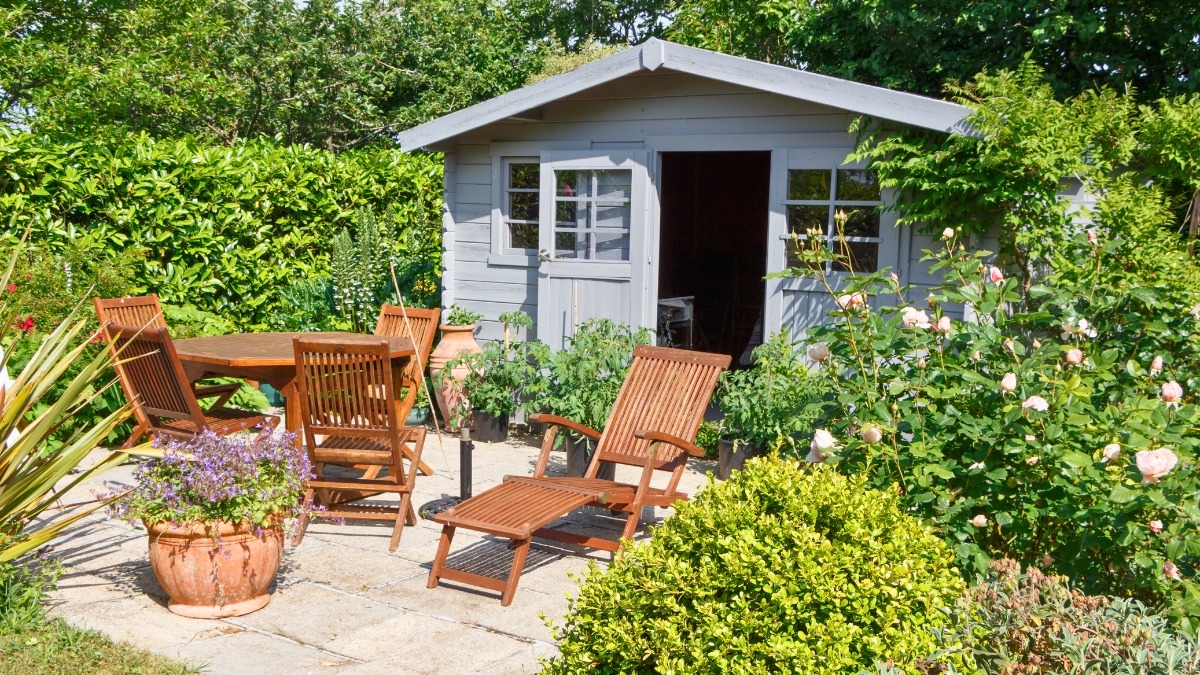
Shed planning permission
“Do I need planning permission for a shed?” It’s a question that pops up in almost every home improvement conversation. Whether you are eyeing a simple garden or DIY tool store, or a high-end garden studio, the “fear of the unknown” regarding local councils can be a real hurdle.
The good news? Most garden structures don’t need a formal application. However, there are a few “tripwire” rules that can lead to an enforcement notice if ignored. As a property owner, you are legally responsible for ensuring your project stays on the right side of the law.
The quick answer: Can I build a shed without permission?
In most cases, yes. Under “permitted development rights,” you can usually build a shed or outbuilding without planning permission, provided it is for a purpose incidental to the house (like storage or a hobby) and stays within specific height and size limits.
What are permitted development rights?
A major update to the law back in 2008—which remains the gold standard—means that many outbuildings are pre-approved. These “permitted development rights” apply to sheds, garages, greenhouses, and even structures like dog kennels or sauna cabins.
The magic phrase to remember is “incidental to the enjoyment of the dwelling house.” This means the building should support your life in the main house, rather than becoming a separate house itself.
Caution: Your local council can use an Article 4 direction to remove “permitted development” rights (often used in conservation areas). If your property is covered by one, you will need to apply for planning permission for work that usually wouldn’t require it. Always contact your local planning department to double check.
When you definitely need planning permission
Before we look at the measurements, let’s clear up the “deal-breakers.” You will almost certainly need to submit a planning application if:
- It’s for living in: If the structure contains a bedroom or is intended as self-contained accommodation, it is no longer “incidental.”
- It’s in the front garden: Any structure placed “forward of the principal elevation” (the front of your house) requires permission.
- You live in a listed building: Most “curtilage” buildings near a listed property require Listed Building Consent.
The “golden rules” for shed size and height
To qualify for permitted development, your shed must meet these external criteria. If it fails even one, you should contact your local planning department immediately.
1. Height and boundaries
This is where most people get caught out. The height allowed depends entirely on how close the shed is to your fence or wall.
- Within 2 metres of a boundary: The entire structure (including the roof) must not exceed 2.5 metres in height.
- More than 2 metres from a boundary: * Maximum eaves height: 2.5 metres.
- Maximum overall height: 4 metres (for a dual-pitched roof) or 3 metres (for any other roof type).
2. Total garden coverage
You cannot turn your entire garden into a giant shed. Outbuildings and extensions must not cover more than 50% of the total land around the original house.
3. Building features
- No balconies or verandas: These are strictly prohibited under permitted development.
- Raised platforms: Decking or platforms associated with the shed must not be higher than 30cm from the ground.
The 15sqm and 30sqm rule (building regulations)
People often confuse Planning Permission (how it looks and where it is) with Building Regulations (how it is built).
- Under 15 square metres: Building regulations usually do not apply, provided there is no sleeping accommodation.
- Between 15 and 30 square metres: You still won’t usually need building regulations approval, provided the building is at least 1 metre from your boundary or constructed substantially of non-combustible materials.
Note: If your floor area exceeds 30 square metres, you will almost certainly need to deal with Building Control. You can find more details on building regulation approval here.
Common exceptions to the rules
Designated land
If you live in a National Park, Area of Outstanding Natural Beauty (AONB), or a Conservation Area, the rules are tighter. For example, any outbuilding located more than 20 metres from the house must not exceed 10 square metres in size to be exempt from planning permission.
Running a business
If you want a garden office to work from home, it’s usually fine. However, if your business involves clients visiting the house regularly or creates noise and fumes, the council may decide there has been a “change of use,” requiring permission.
The Party Wall Act 1996
If you are building right up against a neighbour’s wall or digging foundations very close to their property, you may need to follow the Party Wall etc. Act 1996. This isn’t a planning rule, but it is a legal requirement to notify your neighbours.
You may find this article helpful: Party Wall Act explained (2026): notices, costs and neighbour rights UK
Frequently asked questions
Do I need planning permission for a brick shed?
The material doesn’t change the rules. Whether it’s timber, brick, or metal, the same height and placement restrictions apply.
Can I put a toilet in my shed?
Adding a toilet or sink is usually allowed under permitted development, but it will likely trigger Building Regulations due to the plumbing and drainage requirements. It does not automatically mean you need planning permission, provided the use remains “incidental.”
What is the maximum size shed without planning permission?
There is no “maximum size” in terms of floor area, as long as you stay under the 50% garden coverage rule. However, practically speaking, most people stick to under 30 square metres to avoid the complexities of Building Regulations.
Shed planning permission: Summary checklist
- [ ] Is it in the back or side garden? (Must not be in the front).
- [ ] Is it under 2.5m tall? (If it’s within 2m of the fence).
- [ ] Does it cover less than 50% of the garden?
- [ ] Is it for storage, a gym, or an office? (No sleeping!).
If you can tick all those boxes, you are likely ready to build. If you have any doubt, use the Government’s Planning Portal for a final check.
Helpful links for your project:
- Find your local planning authority
- Official Planning Portal: Outbuildings Guide
- Technical Guide to Permitted Development
This guide is based on general principles of English and Welsh law, is intended for informational purposes only, and does not constitute legal advice or establish a professional relationship.






Leave a Reply