Quick answer
Shared driveway problems usually arise when one neighbour blocks or interferes with another’s access—often leading to frustration, repeated inconvenience, and in some cases, serious legal disputes. In England and Wales, your rights depend on whether you have:
- a legal right of way (easement)
- a long-term right through use (prescriptive right)
- or simple permission from a neighbour
If your access is substantially interfered with, you may have legal remedies. However, most shared driveway disputes can be resolved through communication and practical solutions before legal action becomes necessary.
Introduction
Shared driveways are increasingly common across England and Wales, particularly in new-build developments where space is at a premium. While many neighbours manage these arrangements without issue, shared driveway problems and disputes do arise—and they can quickly become stressful and difficult to resolve.
If you are dealing with a neighbour blocking your driveway or a right of way dispute, understanding your legal rights and practical options is the first step toward resolving the issue calmly and effectively.
What is a shared driveway?
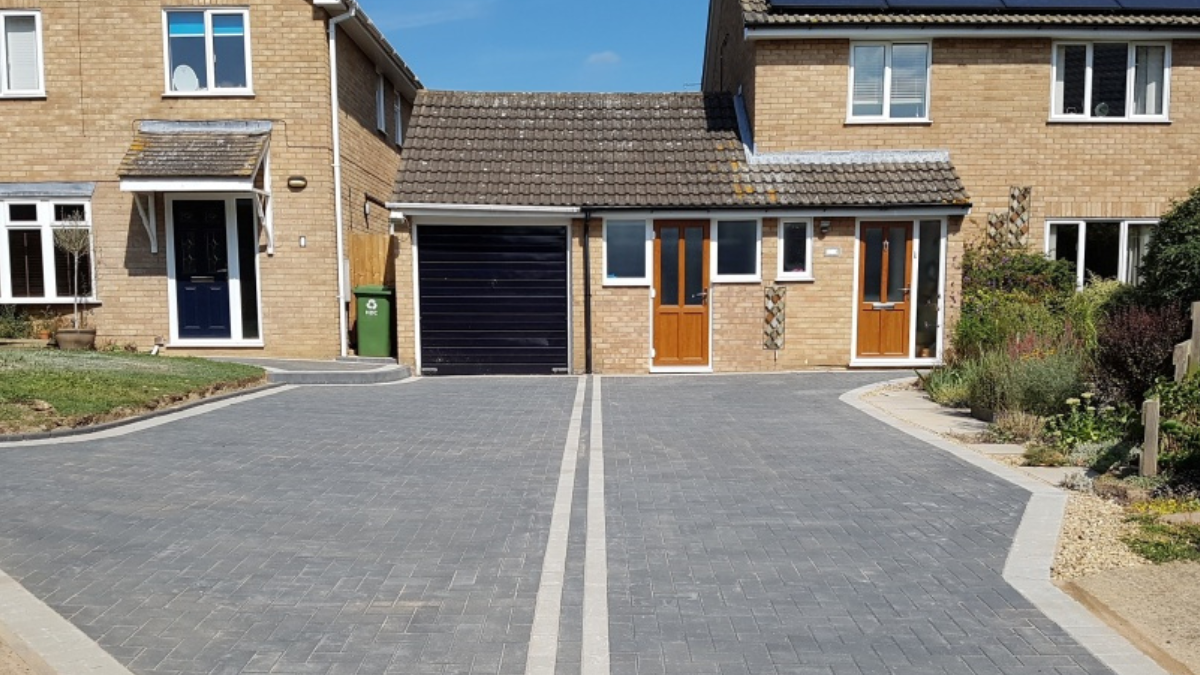
A shared driveway (also known as a shared accessway or right of way) is a route used by more than one property for access, parking, or both. Common examples include:
- Right of way over neighbouring land: One property relies on access across another property’s land to reach the road.
- Adjacent narrow driveways: Two properties have side-by-side driveways that require cooperation for parking or access.
- Open-plan new-build developments: Several properties share a frontage that is often (sometimes unofficially) used for parking.
Common shared driveway problems
Most shared driveway disputes and neighbour access issues fall into one core category: interference with access. Typical problems include:
- Blocking the driveway with parked vehicles
- Repeated obstruction (even if temporary)
- Placing skips or building materials on the accessway
- Installing gates, fences, or barriers
- Disputes over parking arrangements or space usage
Sometimes this behaviour is accidental—but in other cases, it can be persistent or even deliberate.
In most situations, the key issue is whether access has been significantly restricted—not just made slightly inconvenient.
Legal rights on shared driveways
To resolve a shared driveway dispute, you first need to understand your legal position. In England and Wales, there are three main types of rights:
Express rights (in title deeds)
These are formal legal rights granted in the property’s title deeds.
- They “run with the land”
- They bind future owners
- They are usually the strongest form of protection
Always check your title register and plan via HM Land Registry.
Prescriptive rights (long use)
You may acquire a legal right of way if:
- You have used the access for at least 20 years
- The use has been continuous, without permission, and without interruption
- The use has been without force or secrecy
If proven, you may be able to formally register this right.
Permissions (informal arrangements)
These are verbal or informal agreements between neighbours.
- They can be withdrawn at any time
- They do not bind future owners
- They offer the weakest legal protection
In most cases, resolving a shared driveway dispute comes down to proving a legal right of way and showing that it has been significantly obstructed.
When does interference become unlawful?
Not every inconvenience will give you a legal claim. The courts apply a specific test. To bring a successful claim:
- You must have a valid right of way
- Your neighbour must substantially interfere with that right
- The interference must make the access less convenient in a real and practical way compared to how it was used before
In simple terms: minor inconvenience is not enough—there must be a real and meaningful obstruction.
Courts have confirmed this approach in cases such as West v Sharp (1999), where the focus was on whether access remained reasonably usable.
What can the court do?
If the legal test is met, a court in England and Wales may:
- Grant an injunction (ordering the neighbour to stop interfering)
- Award damages if you have suffered financial loss
However, legal action is usually a last resort due to the cost, time involved, and the potential long-term impact on neighbour relationships.
How to resolve shared driveway disputes
Before considering legal action, it’s usually best to focus on practical, low-conflict solutions.
1. Start with a conversation
It sounds obvious, but it is often effective.
- Your neighbour may not realise there is a problem
- They may not understand your legal rights
- A calm discussion can prevent escalation
2. Check your documents
Review:
- Title deeds
- Land Registry plans
- Any written agreements
This can quickly clarify who has the right to do what.
3. Agree practical arrangements
Where possible, agree on:
- Parking positions
- Access arrangements
- Use during building works
Even informal agreements can work well where both parties cooperate.
4. Consider mediation
If discussions stall, a neutral third party can help resolve the dispute without going to court.
5. Use legal action as a last resort
Going to court should be the final step because:
- It is expensive
- It is time-consuming
- You must disclose neighbour disputes when selling your home
- It can permanently damage neighbour relationships
In many cases, these disputes are more manageable than they first appear.
Why shared driveway disputes matter when selling
Many homeowners overlook this—but it can have serious financial consequences. If a dispute escalates:
- You may need to declare it when selling your property
- This can deter buyers or reduce the value
- Ongoing conflict can delay or even derail a sale
Resolving issues early helps protect both your peace of mind and your property value.
You may also find this helpful: Property litigation costs UK: A practical guide for homeowners
Frequently asked questions
Can my neighbour block a shared driveway?
No. If you have a legal right of way, your neighbour must not substantially interfere with it. Occasional obstruction may not be unlawful, but repeated or persistent blocking is likely to be.
Who owns a shared driveway?
It depends. The driveway may be:
- Owned by one property (with rights granted to others), or
- Jointly owned
Ownership details are set out in the title deeds.
Can I park on a shared driveway?
Only if your legal rights allow it. Many rights of way are for access only, not parking.
What if there is no written agreement?
You may still have a prescriptive right if you have used the access for at least 20 years without permission.
Can I put a gate across a shared driveway?
Only if it does not interfere with another person’s right of way. Even then, it can be legally contentious.
Shared driveway problems: Conclusion
Shared driveway problems are common—but most can be resolved without going to court. The key is understanding your rights, communicating clearly, and avoiding unnecessary escalation.
If you are dealing with a neighbour dispute, it is important to act early—but also to take a measured and informed approach. In many cases, a practical solution can be reached without turning a short-term issue into a long-term conflict.
This guide is based on general principles of English and Welsh law, is intended for informational purposes only, and does not constitute legal advice or establish a professional relationship.






Leave a Reply