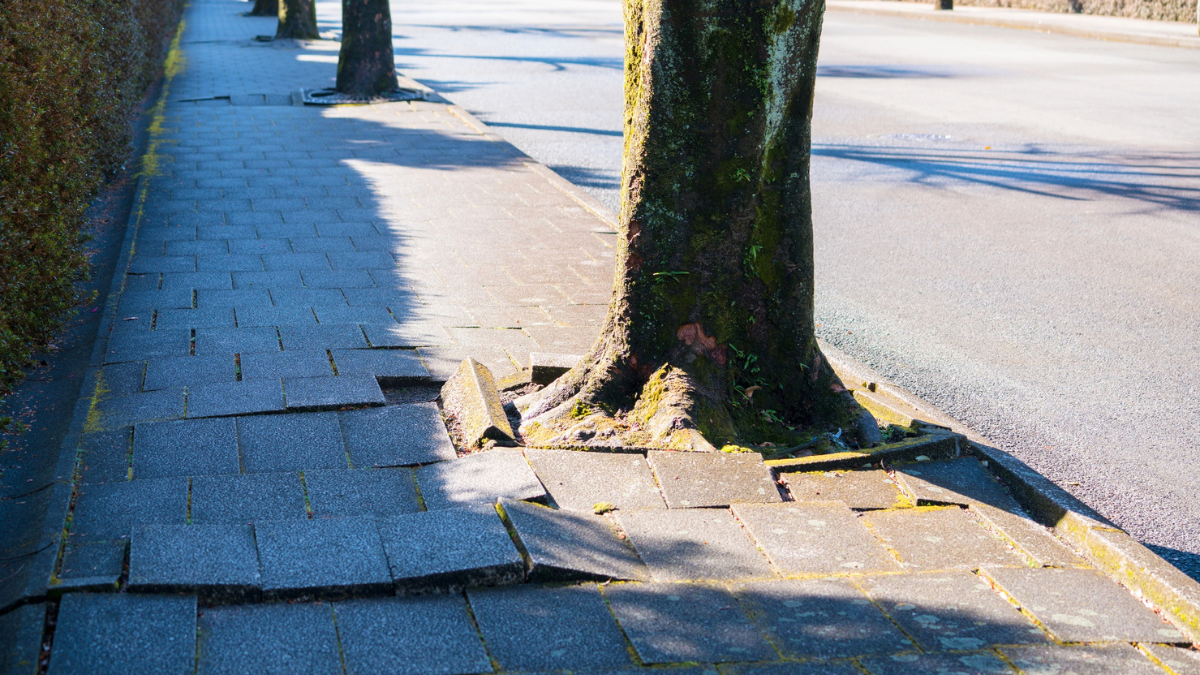
Tree root damage is a leading cause of subsidence and property damage in the UK, particularly in built-up areas with clay soil. If you’ve noticed cracks in walls, sinking ground, or damaged drains, you may be wondering: Can you claim compensation for tree root damage—and who is responsible?
This guide explains the law in England and Wales, how to prove a claim, and what compensation you may be entitled to.
You might also find this helpful: Tree root and branch liability UK: A practical guide for homeowners
Quick answer: Can you claim compensation for tree root damage in the UK?
Yes—you can claim compensation if you prove that:
- Tree roots caused or materially contributed to the damage
- The damage was reasonably foreseeable
- The tree owner knew, or ought reasonably to have known, about the risk
If successful, a tree root damage claim can include repair costs, professional fees, and sometimes compensation for reduced property value.
What counts as tree root damage?
Tree root damage generally falls into two categories: direct damage and subsidence-related damage.
Direct damage from tree roots
This occurs where roots physically interfere with structures, such as:
- Drains, pipes, and underground services
- Foundations and footings
- Driveways, patios, and garden walls
This type of damage is often visible and easier to trace.
Indirect damage: subsidence and heave
Most high-value claims involve subsidence caused by tree roots. This happens when:
- Trees extract moisture from shrinkable clay soil
- The soil contracts during dry periods
- The soil re-expands when moisture returns
This movement can cause:
- Cracking walls and ceilings
- Uneven floors
- Structural instability
Crucially, roots do not need to cross a boundary to cause subsidence.
Why tree root subsidence claims are expensive
Tree root subsidence claims are often high-value because they involve structural repairs. Typical costs include:
- Underpinning foundations
- Structural crack repairs
- Rebuilding walls, paths, or driveways
- Drain excavation and replacement
In addition, you may need to remove or manage the tree, which is essential to prevent the damage recurring.
Which trees cause the most subsidence in the UK?
Some species are far more likely to cause subsidence damage in England and Wales, particularly near buildings.
High water-demand and invasive root trees
- Willow – extremely high water uptake and aggressive roots
- Poplar – fast-growing with roots spreading up to 40 metres
Large canopy, high-demand trees
- Oak – extensive root systems and significant moisture demand
- Ash – fast-growing with wide root spread
The closer these trees are to a property, the greater the risk of subsidence.
Who is liable for tree root damage in England and Wales?
Liability is usually based on the legal principle of private nuisance.
The tree owner may be liable if:
- The risk of damage was foreseeable
- They knew—or should reasonably have known—about it
- They failed to take reasonable steps to prevent the damage
This applies even if:
- The roots have not physically crossed the boundary
- The issue began before they bought the property
A new owner can still be liable if they fail to act after becoming aware (or deemed aware) of the problem.
How to prove a tree root damage claim (causation)
The biggest hurdle in any tree root compensation claim is proving causation. It is not enough to suspect a neighbour’s tree—you must show that:
- The damage was caused by that specific tree
- Other causes (e.g. poor construction or natural settlement) are unlikely
Expert evidence is essential
Most successful claims rely on:
- An arboriculturalist (tree expert)
- A chartered surveyor
- A structural engineer
They assess:
- Whether the tree caused or contributed to subsidence
- The extent of the damage
- The appropriate remedial works
Roots can spread significant distances, so the responsible tree may not be obvious.
The following organisations can help you find a relevant specialist:
- Arboricultural Association
- Royal Institution of Chartered Surveyors (RICS)
- Institution of Structural Engineers
Claims involving council-owned trees
Many UK subsidence claims involve local authority trees. Councils are expected to:
- Operate regular inspection programmes
- Maintain trees near buildings and highways
This makes it easier to argue that the risk was known (or should have been known).
A claim against a council is more likely to succeed where:
- Damage was reasonably foreseeable
- The tree was a significant contributing factor
What compensation can you recover?
A successful tree root damage claim in the UK can include:
Repair and reinstatement costs
- Underpinning and structural repairs
- Drain and pipe repairs
- Rebuilding damaged structures
Preventative works
- Tree removal
- Pruning or long-term management
Professional fees
- Surveyors, engineers, and arboricultural experts
Injunctions (in serious cases)
A court may order the tree owner to:
- Remove the tree, or
- Take steps to prevent further damage
Diminution in value: Can you claim for loss of property value?
Yes—this is often overlooked.
If your property is affected by subsidence linked to tree roots, it may:
- Be harder to sell
- Attract lower offers
- Require higher insurance premiums
This is known as diminution in value, and claims can sometimes reach up to 20% of the property’s value.
Tree root damage and buildings insurance
Most UK buildings insurance policies cover:
- Subsidence
- Tree root damage
However:
- Insurers typically do not cover diminution in value
- They focus only on the insured repair costs
You must notify your insurer early
Failing to report a potential subsidence claim promptly may:
- Invalidate your policy
- Prevent you from recovering repair costs
Even if you later pursue a neighbour or council, early notification is critical.
Mediation vs court: resolving tree root disputes
Not all disputes need to go to court.
Mediation is often effective
A mediator helps both parties:
- Reach a practical agreement
- Avoid legal costs and delays
Courts in England and Wales actively encourage mediation, and it is often:
- Faster
- More cost-effective
- Less confrontational
You may also find this helpful: Property litigation costs UK: A practical guide for homeowners
Frequently asked questions
Who pays for tree root damage in the UK?
Usually the tree owner, if they are legally liable under private nuisance.
Can I claim for subsidence caused by a neighbour’s tree?
Yes—if you can prove the tree caused or contributed to the subsidence and the risk was foreseeable.
Do roots have to cross the boundary?
No—indirect damage can occur without encroachment.
How do you prove tree root subsidence?
Through expert evidence, including arboricultural and structural reports.
Can I force my neighbour to remove a tree?
Only through legal action—typically via an injunction if damage is proven.
Does insurance cover tree root damage?
Usually for repairs, but not for loss of property value.
Compensation for tree root damage: Final thoughts
Tree root damage claims in England and Wales are often complex—but the legal principles are clear. To succeed, you need to show:
- A clear link between the tree and the damage
- That the risk was foreseeable
- That the tree owner failed to act
Because these claims often involve high repair costs and technical evidence, early investigation and expert input are key.
Handled properly, many disputes can be resolved without court proceedings—but strong evidence is always the foundation of a successful claim.
This guide is based on general principles of English and Welsh law, is intended for informational purposes only, and does not constitute legal advice or establish a professional relationship.





Leave a Reply