Few homeowners read their Land Registry title for pleasure. It usually sits unnoticed until a sale, remortgage, extension or disagreement with a neighbour suddenly makes every word, and every red line, seem rather important.
Then something does not look right.
Your surname is misspelt. A right of way you thought belonged to the house is missing. The old mortgage is still showing. Or, more alarmingly, part of the garden appears to sit outside the red edging on the title plan.
The natural reaction is: How can the official record of my home be wrong?
Sometimes it is. HM Land Registry can correct mistakes in the register and title plan. But not every apparent discrepancy is actually a Land Registry error. A title plan may simply be showing a general boundary, an old deed may contain the original mistake, or the register may need updating because something has changed since it was created.
Quick answer: If you think there is a straightforward mistake in a Land Registry entry, title plan or copy document, you can report it to HM Land Registry using its online error-reporting service. More substantial problems may require a formal application supported by deeds, plans or other evidence. If correcting the register would affect another owner’s rights, they may be notified and can object. An unresolved objection may ultimately be referred to the Land Registration division of the First-tier Tribunal.
If a register mistake causes financial loss, compensation, known as indemnity, may sometimes be available. Correction and compensation are separate questions, however, and neither follows automatically simply because something appears wrong.
Jurisdiction: This guide concerns registered land in England and Wales. Scotland and Northern Ireland have different land registration systems.
Contents
- What is a Land Registry error?
- Common Land Registry errors
- Is the register really wrong?
- What if the title plan looks wrong?
- How do you correct a Land Registry error?
- What if the mistake is in the original deed?
- Alteration and rectification: What is the difference?
- What if another owner objects?
- Can an innocent owner in possession lose registered land?
- Can you claim compensation for a Land Registry mistake?
- What if the registration application is still pending?
- What if the error is holding up a sale or remortgage?
- What if fraud or forgery is suspected?
- Should you complain or ask for a correction?
- How long does it take to correct a Land Registry error?
- Frequently asked questions
What is a Land Registry error?
A Land Registry error is, broadly, something mistakenly included in or omitted from the registered title.
The mistake might have been made by HM Land Registry itself. But the statutory concept is wider than a caseworker simply typing the wrong information. A register can also become mistaken because registration proceeded on the basis of defective information, an invalid document or, in serious cases, fraud or forgery.
The error may appear in the written register, the title plan or another document held or issued by HM Land Registry.
The important question is: is the register actually mistaken, or does the problem lie somewhere else?
A title may be legally accurate but out of date because a change has not yet been registered. The red line on a title plan may look imprecise because it shows only a general boundary. Or the register may accurately reproduce wording from an older deed that was itself drafted incorrectly.
Those problems may still need resolving. They do not necessarily involve correcting a mistake in the register under the Land Registration Act 2002.
Common Land Registry errors
Some errors are little more than an administrative irritation. Others can affect ownership, value or the ability to sell or mortgage the property.
Examples include:
- a proprietor’s name being recorded incorrectly;
- land being mistakenly included in or omitted from a registered title;
- a right of way or other easement being wrongly omitted;
- a restriction, covenant or mortgage being entered or removed incorrectly; and
- registration taking place under a forged or invalid transfer or mortgage.
A missing access right is a good example of why it is worth investigating rather than jumping to conclusions. A house may have used the same drive for decades even though the register does not contain the right the owner expected to see. That does not necessarily mean the right does not exist. It does mean the documents need to be examined.
Is the register really wrong?
Before asking HM Land Registry to correct anything, start by identifying exactly what appears to be wrong.
Obtain an up-to-date copy of the title register and title plan, together with any transfer, conveyance, lease or other filed deed referred to in the register.
Do not rely on a bundle of papers left over from a purchase 15 years ago. The registered title may have changed since then.
HM Land Registry’s official property information service explains how to obtain current title information.
Then compare the register with the document from which the relevant entry came.
That simple exercise can reveal that the problem is not what it first appeared to be.
A change is not necessarily an error
If you have changed your name or correspondence address, that is usually an update to the register rather than correction of a Registry mistake.
The same is true where ownership has changed but the appropriate registration has not yet been completed.
An old mortgage can also remain visible until the discharge has been registered. The fact that the loan was repaid does not, by itself, show that HM Land Registry made an error.
HM Land Registry explains the routes for updating or correcting the register.
What if the title plan looks wrong?
This is probably the area in which most understandable false alarms arise.
I know the temptation is to treat the Land Registry title plan as an official aerial photograph of precisely what you own. It is not.
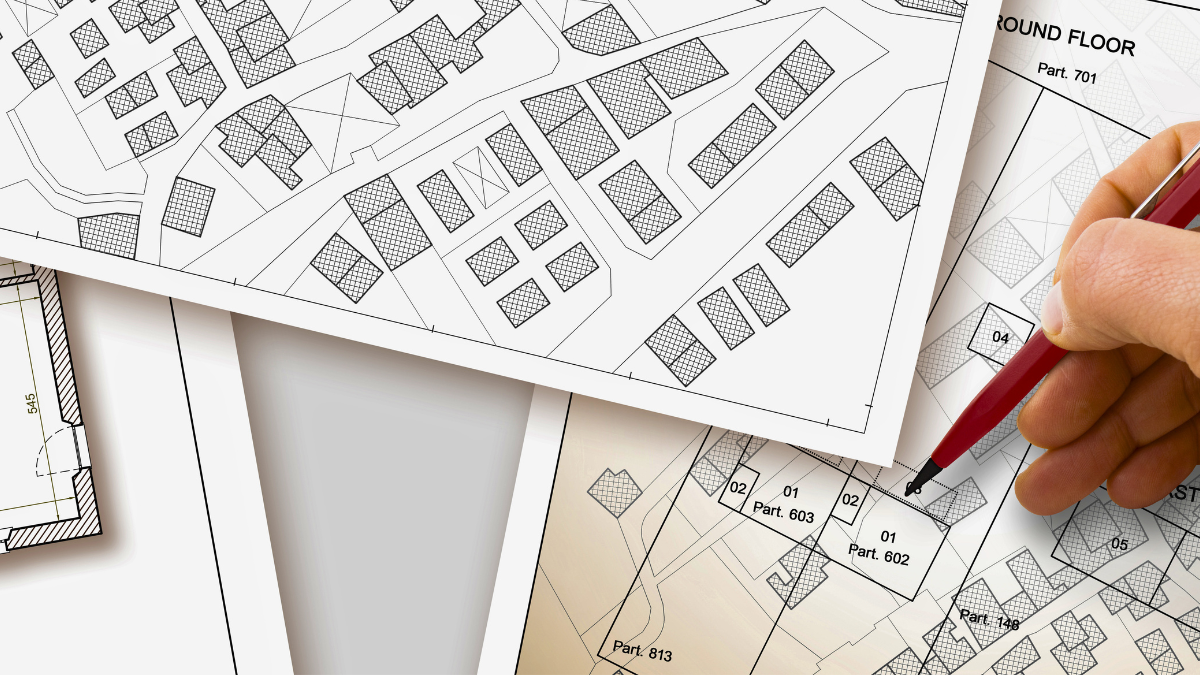
For the great majority of registered properties, the title plan shows general boundaries. The red edging identifies the general extent of the registered land but does not usually fix the legal boundary to the width of a fence post.
HM Land Registry’s current guidance confirms that there is no standard tolerance or number of centimetres by which the red line can be said to differ from the legal boundary. Enlarging the title plan does not turn it into a precision survey.
So a fence appearing slightly inside or outside the red edging does not, on its own, establish that the plan contains an error.
My separate guide explains in detail how to identify the legal boundary of a property.
There can, however, be genuine mapping mistakes. A substantial piece of land may have been omitted from a title even though the original conveyance clearly included it, or land may have been registered under the wrong title.
In that situation the original deeds, historic plans and registration history become important. The question is not simply where the present fence stands, but whether the registered title properly reflects the land that should have been registered.
HM Land Registry’s guidance on title plans and boundaries explains the general-boundaries rule.
How do you correct a Land Registry error?
The appropriate route depends on the type of mistake.
Start with the evidence
Gather the documents that explain why the register is wrong.
Depending on the issue, these might include an old conveyance or transfer, a lease, a plan attached to a deed, a mortgage discharge, identity or name-change evidence, the conveyancing file, statements of truth, photographs or a surveyor’s plan.
The evidence should address the legal problem rather than simply demonstrate that the current position is inconvenient.
For example, photographs showing where a fence stands today may be useful evidence in a boundary investigation. They do not necessarily prove what land was transferred 40 years ago.
Report a straightforward error
HM Land Registry introduced a dedicated online error-reporting service in March 2026.
It can be used if you believe something is wrong in a register entry, title plan, copy document or search of the index map.
Give as much detail as possible, including the title number, any HM Land Registry reference and documents supporting the correction.
You can use the HM Land Registry error-reporting service.
HM Land Registry may be able to correct the problem from the information supplied. Alternatively, it may ask for more evidence or tell you that a formal application is required.
A substantial correction may need a formal application
Where the change affects ownership, the extent of the registered land or another substantive right, a formal application and supporting evidence may be necessary.
Form AP1 is commonly used for applications affecting an existing registered title, although the correct form and supporting documents depend on what is being requested.
If the proposed change involves adding or removing land, a properly prepared plan may also be required.
There is an important difference between saying:
“The title plan is wrong.”
and explaining:
“The transfer dated 14 May 1986 included the land shown blue on this plan, but that land was mistakenly omitted when title AB123456 was first registered.”
The second gives HM Land Registry something capable of being investigated.
What if the mistake is in the original deed?
This is an important trap.
Suppose a transfer was meant to give a house a right over a private driveway, but the solicitor who drafted the transfer accidentally left that right out.
If HM Land Registry then registered the transfer exactly as it was written, the register may accurately reflect the legal document supplied to it.
The mistake is in the deed, not necessarily in the register.
HM Land Registry cannot simply rewrite a private legal instrument because the parties later say it does not express what they intended.
Where everybody agrees, it may be possible to correct matters through an appropriately executed deed and a further registration application. In a disputed case, court or tribunal proceedings may sometimes be necessary.
HM Land Registry’s guidance on amending deeds affecting registered land explains the distinction.
Alteration and rectification: What is the difference?
The terminology can be confusing because “rectification” is often used in ordinary conversation to mean correcting anything.
The Land Registration Act 2002 uses it more narrowly.
Alteration is the broader concept. The register can be altered for specified purposes, including correcting a mistake and bringing the register up to date.
Rectification is a particular type of alteration. It involves correcting a mistake and doing so in a way that prejudicially affects the title of a registered proprietor.
A simple spelling correction may therefore be an alteration but not rectification.
Removing a valuable strip of garden from somebody’s registered title because it was wrongly included could amount to rectification.
The distinction matters because special rules apply to rectification, particularly where the registered proprietor is in possession of the land, and because rectification can give rise to rights to indemnity.
HM Land Registry’s current Practice Guide 83 on alteration of the register explains the statutory framework.
What if another owner objects?
A correction is easy to describe as administrative when it affects only your own paperwork.
It looks rather different if the proposed correction would remove land from a neighbour’s title, reinstate a right over their property or otherwise reduce rights they currently appear to have.
HM Land Registry may notify anyone whose registered interest could be affected. That person can object.
An objection must have proper grounds. A completely groundless objection can be rejected, but if the objection is not groundless HM Land Registry cannot simply decide that the applicant seems more convincing and complete the disputed application.
The parties may first be given an opportunity to reach agreement.
If the application or objection is not withdrawn and the dispute cannot be resolved, HM Land Registry must refer it to the Land Registration division of the Property Chamber, First-tier Tribunal.
The tribunal is independent of HM Land Registry and can determine land registration disputes. In an appropriate case it may direct that proceedings should instead be brought in court.
HM Land Registry’s guidance on objections and Land Registry disputes explains the procedure.
A dispute that begins with somebody circling a red line on a title plan can therefore become substantial litigation. That is worth bearing in mind before positions harden.
Can an innocent owner in possession lose registered land?
Not automatically.
The Land Registration Act gives additional protection where rectification would affect a registered proprietor who is in possession of the land.
In broad terms, rectification against a registered proprietor in possession cannot normally be made unless:
- they consent;
- their fraud or lack of proper care caused or substantially contributed to the mistake; or
- for some other reason it would be unjust not to rectify the register.
This can make substantial title mistakes particularly difficult. The present owner may have bought in good faith and occupied the land for years even though an earlier registration mistake placed it in the wrong title.
That is a very different problem from correcting a misspelt name.
Can you claim compensation for a Land Registry mistake?
Sometimes.
The Land Registration Act 2002 contains an indemnity scheme under which HM Land Registry may have to compensate somebody who suffers qualifying loss because of a mistake in the register or its correction.
One example is where rectification corrects a mistake but, in doing so, causes somebody to lose land or another valuable registered interest.
Compensation may also sometimes be available where the register is left unchanged because altering it would unfairly prejudice another registered owner.
But the existence of a mistake does not automatically produce a compensation payment.
There must be a right to indemnity under the statutory scheme and an actual recoverable loss. Issues can also arise over causation, valuation, costs and whether the claimant contributed to the loss through fraud or lack of proper care.
HM Land Registry’s Practice Guide 39 on rectification and indemnity explains when compensation may be available.
If substantial professional costs are likely to be incurred in connection with an alteration or indemnity claim, the rules about recovering those costs should be considered before they are run up.
What if the registration application is still pending?
Sometimes the problem is spotted before HM Land Registry has completed the application that would create it.
A buyer’s conveyancer might notice that the transfer plan submitted after completion is wrong, that a name has been entered incorrectly or that a document lodged with the application does not reflect what was intended.
The person or conveyancer who submitted the application should contact HM Land Registry promptly.
A straightforward clerical problem may be capable of being dealt with while the application is still being processed. A substantive problem in a signed transfer or other deed may require something more formal.
The important point is not to wait for an incorrect registration to be completed merely because the application has already been sent.
Checking the completed title is part of the post-completion work described in my step-by-step guide to the residential conveyancing process.
What if the error is holding up a sale or remortgage?
This is how many Land Registry problems first come to light.
Your buyer’s conveyancer notices that the garage is outside the registered title. A lender questions a restriction. A right of access that everybody assumed existed cannot be found. Suddenly an issue that has caused no practical difficulty for 20 years is stopping a transaction.
Tell HM Land Registry if there is an urgent reason why the matter needs to be dealt with.
Where a formal registration application is already pending and a delay is putting a property transaction at risk, HM Land Registry has an application-expedition process for cases that meet its criteria.
Expedition does not make an inadequate application acceptable or resolve a disputed title. It can, however, bring a properly supported urgent application forward for consideration.
If you are buying a property and the seller’s title problem has not been resolved, do not assume it can safely be sorted out after completion. The effect on ownership, mortgageability and any connected property chain needs to be understood before you become committed.
What if fraud or forgery is suspected?
A registration problem involving fraud or forgery is in a different category from an incorrect spelling or mapping discrepancy.
Examples include a forged transfer, a fraudulent mortgage or somebody impersonating the true owner.
Contact HM Land Registry promptly and obtain legal advice. Depending on the circumstances, the police, lender or other organisations may also need to be informed.
If you own property that you do not occupy, or are particularly concerned about title fraud, HM Land Registry also offers its free Property Alert service, which can notify you of certain activity affecting a registered property.
Should you complain or ask for a correction?
These are different things.
If you say that the legal register or title plan is wrong, use the error-reporting or registration process appropriate to that problem.
A complaint is about the service HM Land Registry has provided, for example unreasonable delay, poor communication or failure to follow its procedures.
The complaints process cannot decide a contested question about who owns a strip of land or override the statutory objection and tribunal process.
So if the problem is that your title is wrong, complaining about HM Land Registry is not a substitute for explaining what the title should contain and supplying the evidence to prove it.
How long does it take to correct a Land Registry error?
There is no single timetable because the phrase “Land Registry error” covers everything from a typographical mistake to a disputed ownership claim.
For errors reported through its dedicated service, HM Land Registry currently says that where it can correct the error, its estimated completion time is 20 working days. More complex errors can take longer.
If further evidence or a formal application is required, the timetable will depend on the type of application and whether anybody else has to be notified.
If another person objects, the matter can take substantially longer. Negotiations, a tribunal reference and any related court proceedings operate on a completely different timescale from an uncontested clerical correction.
HM Land Registry says it treats requests to correct errors as a priority, but there is an obvious practical difference between correcting a name and deciding whether registered land should be removed from somebody else’s title.
Frequently asked questions
Can I correct a Land Registry mistake myself?
Yes, in some cases. Anyone can report an error to HM Land Registry, although it may seek further information if you are not the registered proprietor or do not have the proprietor’s consent.
A straightforward administrative correction may not require a conveyancer. A disputed alteration involving ownership, boundaries, easements, fraud or another person’s registered rights is much more likely to justify specialist advice.
Can HM Land Registry change my title plan?
Yes, where there is a proper basis for altering it. But a small apparent mismatch between a physical fence and the red edging does not necessarily mean the title plan is wrong because most plans show general boundaries.
Does the Land Registry title plan prove my boundary?
Usually not to the degree of precision people expect. The title plan normally shows the general extent of the registered title. The legal boundary may need to be identified from the transfer or conveyance, its plan and other evidence.
What if part of my garden is missing from the title plan?
Investigate why before assuming there has been a Registry mistake. Compare the current title with the deed under which the land was originally transferred. The answer may be a registration error, a general-boundaries issue, an error in the historic deed or a question about ownership arising from events on the ground.
Can a neighbour object to a Land Registry correction?
Yes, if the proposed alteration affects them. If the objection is not groundless and cannot be resolved by agreement, the dispute may ultimately be referred to the First-tier Tribunal.
Can I get compensation if HM Land Registry made a mistake?
Possibly. The Land Registration Act provides an indemnity scheme for specified losses caused by mistakes and rectification. Whether compensation is payable depends on the nature of the mistake, the loss suffered and the statutory conditions.
A small error can hide a much bigger problem
Many Land Registry errors are corrected without drama. A name is wrong, the evidence is clear and the official record is put right.
Others only look like clerical mistakes. They may really involve a badly drafted deed, an uncertain boundary, a missing right, a forged document or land that has been registered to the wrong owner.
That is why I would resist starting with the question, “Which Land Registry form do I need?”
Start instead with three simpler questions: What does the register say? What should it say? And what evidence shows the difference?
Once those questions are answered, the correct procedure is usually much easier to identify.
And it is worth dealing with a genuine discrepancy when you discover it. Something that causes no practical difficulty while you are living happily in the property can become remarkably urgent when a buyer, lender or neighbour asks the same awkward question.
Last legally reviewed: 31 August 2026
This guide is based on general principles of English and Welsh law, is intended for informational purposes only, and does not constitute legal advice or establish a professional relationship.