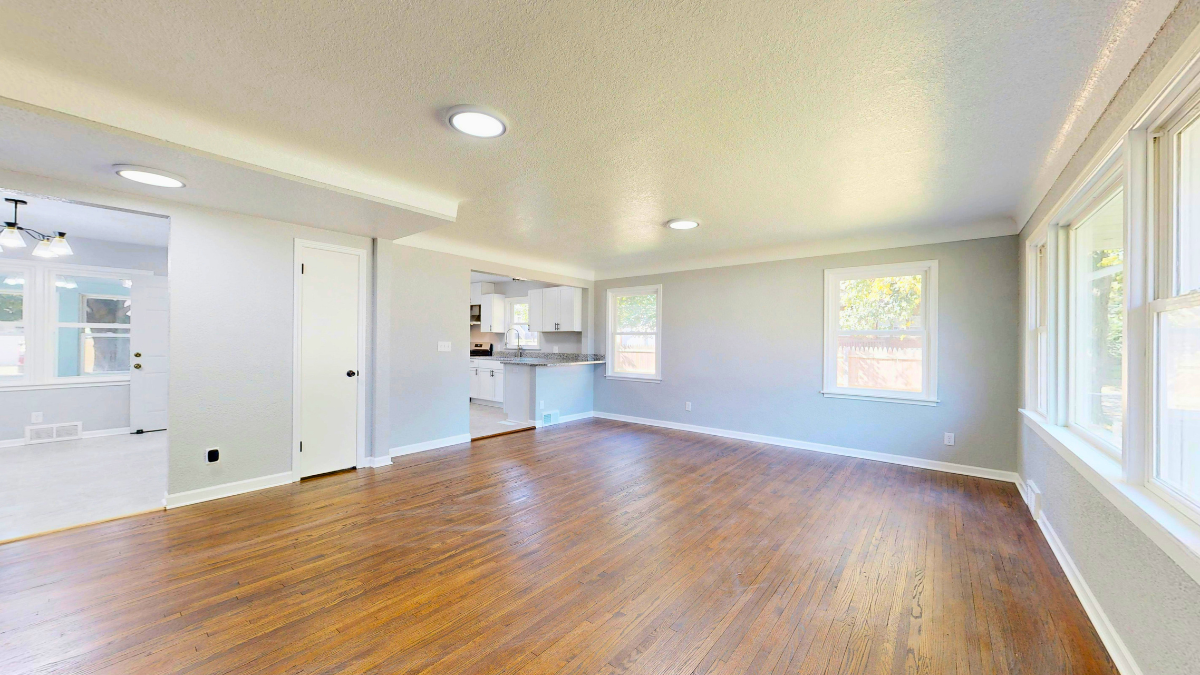
A licence to occupy before completion can appear to solve a particularly awkward problem.
Perhaps your tenancy ends on Friday, but your purchase will not complete until the following week. The house is already empty, your removals are booked and the seller seems happy for you to collect the keys early. From the outside, it may feel unnecessarily formal to involve solicitors at all.
Unfortunately, moving into a property before you legally own it is rarely as simple as handing over a spare set of keys.
I have seen how quickly an apparently helpful arrangement can create uncertainty. Who insures the building? Who pays if a pipe bursts? Can the buyer decorate? What happens if the mortgage money does not arrive—or the purchase never completes?
A properly documented licence to occupy before completion can sometimes provide a solution, but it should be treated as an exception. Both sides need advice, the lenders and insurers may need to agree, and the tax consequences must be considered before the buyer enters the property.
Quick answer: Can I move into a house before completion?
Yes, but only if the seller agrees and the arrangement is properly documented.
In an ordinary residential sale, early occupation should normally happen only after contracts have been exchanged. The sale contract may then incorporate the Law Society’s Standard Conditions of Sale, which contain provisions allowing the buyer to occupy as a licensee rather than a tenant.
The buyer will commonly have to:
- pay a licence fee;
- meet or reimburse the property outgoings;
- keep the property in its existing condition;
- avoid alterations;
- comply with any leasehold restrictions; and
- leave when the licence ends.
Early occupation may also amount to “substantial performance” of the purchase contract. That can bring forward the effective date for Stamp Duty Land Tax in England or Land Transaction Tax in Wales.
Do not collect keys, move belongings or begin living at the property merely because the seller or estate agent has said informally that it is acceptable. Both conveyancers should agree the precise terms in writing first.
Contents
- What is a licence to occupy before completion?
- Can you move in before exchange of contracts?
- What terms apply under the Standard Conditions of Sale?
- Why is the buyer a licensee rather than a tenant?
- How much is the licence fee?
- Who pays the council tax and utility bills?
- Who insures the property?
- Do the mortgage lenders need to agree?
- Can early occupation trigger Stamp Duty Land Tax?
- What is the position in Wales?
- Can the buyer decorate before completion?
- Is access to carry out work the same as occupation?
- What happens if the property is damaged?
- What happens if completion is delayed?
- What happens if the purchase falls through?
- Are leasehold properties more complicated?
- When might early occupation be reasonable?
- What should the licence cover?
- Practical advice for buyers
- Practical advice for sellers
- Frequently asked questions
- A practical solution that needs careful boundaries
What is a licence to occupy before completion?
A licence to occupy before completion is a contractual permission allowing the buyer to live in the property temporarily while legal ownership remains with the seller.
Exchange and completion are separate stages. At exchange of contracts, the buyer and seller become legally committed to the transaction. On completion day, the remaining purchase money is paid and legal ownership transfers.
A licence bridges part of the period between those two stages. The buyer is permitted to occupy, but has not yet become the legal owner.
The Law Society’s Standard Conditions of Sale are designed primarily for residential conveyancing and are commonly incorporated into sale contracts. Standard Condition 5.2 deals specifically with occupation by the buyer pending completion.
A bespoke licence or additional special conditions may still be needed. The standard wording may not deal adequately with matters such as pets, substantial works, furniture, security deposits, garden maintenance or an unusually long period before completion.
Can you move in before exchange of contracts?
It is legally possible for a seller to grant a separate licence before exchange, but doing so is considerably more dangerous.
Before exchange, neither side is ordinarily bound to complete the sale. The seller could withdraw, accept another offer or change the terms. The buyer could move in, spend money on the property and then decide not to proceed.
Standard Condition 5.2 will not protect the parties merely because they expect to exchange later. It operates as part of the sale contract once that contract has been made and the relevant conditions incorporated.
A pre-exchange arrangement also creates greater uncertainty about the occupier’s legal status. Calling an agreement a “licence” does not always settle the question: the courts look at the substance of the rights granted, including whether the occupier has exclusive possession.
In practice, a buyer should be extremely reluctant to move in before exchange. The seller should be equally reluctant to surrender control of the property to somebody who is not yet legally obliged to buy it.
What terms apply under the Standard Conditions of Sale?
Where the contract incorporates the fifth edition of the Standard Conditions of Sale and the terms have not been varied, Standard Condition 5.2 sets out the basic arrangement.
The buyer is described as a licensee rather than a tenant. The licence is personal and cannot be transferred, although members of the buyer’s household may occupy with them.
The buyer must pay or indemnify the seller against the property’s outgoings and other expenses. They must also pay a licence fee calculated at the contract rate on the purchase price, less any deposit already paid, for the period of occupation.
The buyer must keep the property in as good a state of repair as it was when occupation began, allowing for fair wear and tear. Alterations are prohibited.
Where the property is leasehold, the buyer must not do anything that puts the seller in breach of the lease. The buyer must leave when the licence ends.
The licence ends at the earliest of:
- the completion date;
- rescission of the sale contract; or
- the expiry of five working days’ notice given by either party.
These are default contractual terms rather than an inflexible statutory code. The conveyancers may amend them to suit the transaction.
Why is the buyer a licensee rather than a tenant?
The distinction is intended to ensure that temporary occupation does not give the buyer an ordinary residential tenancy or continuing security of tenure.
The buyer’s right to live in the property depends upon the contractual licence. They do not own the property and cannot remain indefinitely merely because their belongings are there.
That does not mean the seller can ignore the agreement or physically remove the buyer without considering the proper legal procedure. If the sale collapses and the buyer refuses to leave, possession may become a serious and potentially expensive problem.
A carefully drafted arrangement is therefore important. A brief email saying “you can move in and pay us £500 a month until everything is sorted” may create far more uncertainty than a licence tied expressly to an exchanged sale contract.
How much is the licence fee?
Under the unamended Standard Conditions, the fee is calculated using the contractual interest rate on the unpaid purchase price.
For example, if the price is £400,000 and the buyer has paid a £40,000 deposit, the calculation would normally apply the contract rate to the remaining £360,000 for the days covered by the licence.
That does not mean the fee must always be calculated this way. The parties can agree a different sum through a special condition or separate licence.
The fee should not casually be described as rent. Its purpose is to compensate the seller for allowing occupation before receiving the balance of the purchase money.
The document should state when the fee begins, when it is payable and whether it is calculated daily. It should also deal with council tax, energy, water, service charges and other expenses.
Who pays the council tax and utility bills?
The buyer will normally take responsibility for the practical cost of occupying the property.
Under the Standard Conditions, the buyer must pay or indemnify the seller against all outgoings and other expenses relating to the property during the licence.
The parties should record meter readings when occupation begins and notify the utility providers. The licence should also specify how council tax, water charges, broadband, service charges and any communal heating costs will be handled.
The contractual agreement between buyer and seller does not necessarily determine which person a council or utility company can pursue under the relevant statutory or supply rules. The indemnity protects the seller by requiring the buyer to reimburse sums for which the seller remains externally liable.
Who insures the property?
Insurance must be resolved before the buyer is given the keys.
Under the Standard Conditions, the property is generally at the buyer’s risk from exchange unless the contract provides otherwise. That is why a buyer will commonly need buildings insurance from exchange rather than waiting until completion. Leasehold buildings are often insured through the freeholder or management arrangements instead.
Early occupation changes the factual risk. The buyer is physically present in a building still legally owned and possibly mortgaged by the seller. The seller’s insurer may impose conditions or exclude certain claims, while the buyer’s policy must cover the correct interest and period of occupation.
Neither side should assume that an existing policy automatically provides suitable cover. Both insurers should be told the truth about:
- the date occupation begins;
- who will live there;
- whether furniture is being moved in;
- whether any work will take place; and
- whether the property is freehold or leasehold.
The licence should also address contents insurance, public liability and responsibility for any excess or uninsured loss.
My guide to house insurance on exchange of contracts explains why the insurance risk often passes before ownership does.
Do the mortgage lenders need to agree?
The seller’s existing mortgage terms must be checked before possession is given to somebody else. Allowing another person to occupy without the lender’s required consent may breach the mortgage conditions.
The buyer’s lender should also be told. The lender is relying on a particular purchase structure and may have conditions relating to occupation, insurance, the effective tax date and vacant possession.
The UK Finance Mortgage Lenders’ Handbook requires conveyancers to consider material restrictions and occupation issues and to comply with the individual lender’s instructions. Some government-backed lending arrangements expressly prohibit a buyer from occupying under a tenancy or licence between exchange and completion.
Consent should not be assumed merely because completion is expected shortly. A delay that was supposed to last four days can easily become four weeks.
Can early occupation trigger Stamp Duty Land Tax?
Yes.
In England, a purchase contract may be treated as substantially performed when the buyer takes possession of the whole or substantially the whole of the property.
HMRC says this can occur when the buyer receives the keys and becomes entitled to occupy. It does not matter whether possession is described as arising under the purchase contract, a temporary lease or a licence.
The date of substantial performance can become the effective date of the land transaction. A notifiable SDLT return and any tax due must normally be dealt with within 14 days of that date, rather than within 14 days of the later legal completion.
A further return may be required when the legal transfer subsequently completes if the relevant figures or tax liability have changed.
This is not merely an administrative technicality. It can affect:
- the filing and payment deadline;
- the rates that apply on the effective date;
- eligibility for particular reliefs; and
- whether the buyer owns another dwelling at the relevant time.
The buyer’s conveyancer must consider the SDLT consequences before occupation begins.
What is the position in Wales?
Properties in Wales are subject to Land Transaction Tax, not Stamp Duty Land Tax.
The Welsh Revenue Authority similarly treats a contract as substantially performed when the buyer takes possession of the whole or substantially the whole of the property. It expressly states that this can occur under a licence, temporary lease or tenancy at will.
Where substantial performance occurs before legal completion, the effective date is brought forward. A Land Transaction Tax return is generally required within 30 days beginning on the day after the effective date. Completion may create a further return obligation.
The Welsh tax position is an important omission from many general articles about early occupation. A buyer should not be advised about “stamp duty” without first identifying which side of the border the property is on.
Can the buyer decorate before completion?
Under the ordinary Standard Conditions licence, the buyer must not alter the property.
Painting walls, removing flooring, changing fittings or beginning renovation therefore requires express written permission. A verbal assurance from the seller or estate agent is not enough.
The risks extend beyond obtaining consent. If completion fails:
- the buyer may lose the money spent;
- the seller may demand reinstatement;
- unfinished work may reduce the property’s value;
- responsibility for damage may be disputed;
- building regulations or planning issues may arise; and
- the works may invalidate or restrict insurance.
Even apparently harmless decorating can create disagreement. The seller may think they agreed to repainting; the buyer may remove fitted cupboards, carpets or tiles on the assumption that the property will shortly be theirs.
I would keep permitted work extremely limited and describe it precisely in the licence.
Is access to carry out work the same as occupation?
Not necessarily.
Standard Condition 5.2 distinguishes occupation from access granted solely to perform work agreed by the seller. A buyer who is allowed in during the day to measure rooms or undertake defined work may therefore not be treated as occupying under that particular contractual provision.
The distinction depends on the reality of the arrangement. Giving the buyer all the keys, allowing furniture to be stored and permitting unrestricted access may look much more like possession than a builder attending between specified hours.
Tax law also applies its own substantial-performance test. HMRC’s guidance indicates that access for fitting-out work can amount to possession in some circumstances, while the result ultimately depends on the rights granted and the facts.
The words “access only” should not be used as a magic formula. The conveyancer must examine what the buyer will actually be entitled to do.
What happens if the property is damaged?
The licence should state who is responsible for damage caused by the buyer, their family, removal contractors, tradespeople or visitors.
Under the standard terms, the buyer must keep the property in as good a state of repair as it was when occupation began, except for fair wear and tear.
Both parties should therefore create a clear record of condition before the keys are released. Dated photographs and meter readings can prevent arguments about existing marks, broken fittings or leaks.
If serious insured damage occurs, the position may involve the sale contract, the licence and one or more insurance policies. A fire or flood could leave the buyer legally committed to purchase while ownership remains with the seller.
That is precisely why the insurance arrangements should be confirmed in writing rather than left until a claim occurs.
What happens if completion is delayed?
A licence may be granted because the parties expect a brief delay. The document still needs to deal with the possibility that completion does not happen when expected.
Under the standard wording, either side can end the licence by giving five working days’ notice. That may leave the buyer having to arrange emergency accommodation and storage even though the purchase contract remains alive.
The licence should address:
- whether the fee continues during a delay;
- who meets additional outgoings;
- whether the buyer can remain after the contractual completion date;
- what happens if a notice to complete is served;
- whether the buyer must provide access for valuations or repairs; and
- how belongings will be removed if the licence ends.
The buyer should not assume that moving in gives them a right to remain until legal ownership transfers.
What happens if the purchase falls through?
The consequences depend on why the contract ends.
If the buyer is in breach, the seller may have rights under the sale contract concerning the deposit, resale losses, interest and other damages. If the seller is in breach, the buyer may have contractual remedies of their own.
The occupation licence does not remove those rights. Under the Standard Conditions, the licence ends if the sale contract is rescinded.
The immediate practical question then becomes possession. The buyer may need to remove an entire household from a property they had expected to own, while the seller may be unable to sell again until the property is vacant.
The seller should not assume that changing the locks or removing the buyer’s belongings will always be lawful. If the buyer refuses to leave, urgent legal advice may be required.
Are leasehold properties more complicated?
Usually, yes.
The seller remains the leaseholder until completion and continues to owe obligations to the freeholder or management company.
The buyer’s occupation must not cause the seller to breach terms concerning:
- subletting or parting with possession;
- residential use;
- pets;
- alterations;
- flooring;
- noise;
- parking; or
- occupation by particular categories of person.
The lease may require the freeholder’s consent to the arrangement. The buildings insurance is also likely to be held under block arrangements rather than directly by the seller or buyer.
A licence between the buyer and seller cannot override the lease. Consent and insurance requirements should be checked before occupation begins.
When might early occupation be reasonable?
A licence may be appropriate where contracts have been exchanged, the transaction is secure and a short unforeseen delay prevents completion.
Examples might include:
- a probate or administrative issue arising after exchange;
- a short delay in releasing completion funds;
- an unavoidable mismatch between the end of a tenancy and completion;
- urgent personal circumstances; or
- a vacant new-build or resale property where all relevant lenders and insurers consent.
Even then, the parties should first ask whether temporary accommodation or storage would be safer.
A licence becomes much harder to justify where:
- contracts have not been exchanged;
- completion depends on unresolved finance;
- the seller’s lender has not agreed;
- insurance is uncertain;
- substantial renovation is proposed;
- the delay could continue indefinitely; or
- relations between the parties are already strained.
The fact that the property is empty does not remove the legal risks.
What should the licence cover?
The sale contract and licence should deal expressly with:
- the date and time occupation begins;
- who may live at the property;
- the licence fee and payment dates;
- council tax, utilities and other outgoings;
- insurance;
- repairs and damage;
- keys and security;
- pets;
- permitted access by the seller;
- prohibited and permitted work;
- leasehold obligations;
- the tax consequences;
- how and when the licence ends; and
- removal of belongings if completion does not occur.
The document should also record any lender, insurer, freeholder or management-company consent.
The estate agent should release keys only after the seller’s conveyancer confirms that every required condition has been satisfied.
My guide to what a conveyancing solicitor does explains why arrangements of this kind must be coordinated through the legal representatives rather than agreed casually between buyer and seller.
Practical advice for buyers
Do not move in merely because doing so is convenient.
Ask your conveyancer to explain:
- when the licence can be terminated;
- what fee and outgoings you will pay;
- what insurance you require;
- whether your mortgage lender agrees;
- when SDLT or LTT becomes due;
- whether you can bring in furniture or carry out work; and
- what happens if completion fails.
Avoid spending substantial money on improvements before ownership transfers. Even where the sale contract is binding, unexpected events can still prevent or delay completion.
Keep enough money available for temporary accommodation and storage. A right that can end on five working days’ notice is not the same as secure ownership.
Practical advice for sellers
Allowing early occupation is a favour with potentially significant consequences.
Before agreeing, establish:
- whether your mortgage lender permits it;
- whether your insurer will continue cover;
- whether the buyer has suitable insurance;
- whether the property is leasehold;
- how the fee and outgoings will be paid;
- what condition record will be prepared; and
- how possession will be recovered if the contract ends.
Do not hand over keys until the written agreement has been completed. Avoid informal arrangements negotiated through the estate agent.
Consider whether the problem can instead be resolved by bringing completion forward. A shorter gap between exchange and completion may be safer than creating a separate period of occupation.
Frequently asked questions
Can I collect the keys before completion?
Only with the seller’s express agreement and after the conveyancers have documented the arrangement.
The estate agent should not release the keys merely because the property is empty or removals have arrived early.
Do I need a formal licence to move in early?
Yes, the terms should be recorded formally.
Where the Standard Conditions apply, they provide a basic contractual licence, but additional or amended terms may still be necessary.
Can the seller charge me rent?
The payment under Standard Condition 5.2 is described as a licence fee rather than rent.
It is normally calculated at the contractual interest rate on the purchase price less the deposit, although the parties can agree another calculation.
Can the seller make me leave before completion?
Under the unamended Standard Conditions, either party can end the licence on five working days’ notice.
The licence also ends on completion or rescission of the purchase contract, whichever occurs first.
Can I change the locks?
Not without express agreement.
The seller remains the legal owner. The licence should specify who holds keys and whether locks or security systems may be changed.
Can I move furniture in without living there?
Possibly, but storage can still create legal, insurance and tax issues.
Permission should be recorded in writing, together with responsibility for loss, damage and removal if the transaction does not complete.
Can I start building work before completion?
Only with the seller’s written consent and after the insurance, planning, building-regulations, leasehold and tax implications have been considered.
In most ordinary residential purchases, substantial work should wait until after completion.
Does moving in early bring forward stamp duty?
It can.
In England, taking possession may amount to substantial performance and bring forward the SDLT effective date. In Wales, the equivalent rule applies to Land Transaction Tax.
What if I already rent the property I am buying?
A buyer already occupying under an existing tenancy is in a different position.
HMRC and the Welsh Revenue Authority recognise that entering the purchase contract does not necessarily trigger substantial performance merely because the existing tenant remains in occupation under the continuing tenancy. The precise tax and contractual position needs individual advice.
Is a licence safer than a tenancy?
For a buyer occupying under an exchanged purchase contract, a carefully documented licence is usually the intended structure.
It is not risk-free. The buyer has limited security, while the seller remains exposed as legal owner and mortgagor.
A practical solution that needs careful boundaries
A licence to occupy before completion can solve a genuine short-term problem. It can prevent a buyer becoming temporarily homeless and allow a vacant property to be used while an administrative delay is resolved.
It can also turn a straightforward conveyancing delay into an insurance, tax, mortgage and possession dispute.
The safest approach is to begin with the assumption that the buyer should not move in until completion. Depart from that position only where there is a compelling reason, contracts have been exchanged and every legal and practical issue has been addressed in writing.
In my experience, the difficulty is rarely persuading the parties that early occupation would be convenient. It is persuading them to think seriously about what happens if the transaction does not proceed exactly as expected.
More guidance on exchange, completion, insurance and buying a home can be found in my residential property section.
Last legally reviewed on 27 July 2026
This guide is based on general principles of English and Welsh law, is intended for informational purposes only, and does not constitute legal advice or establish a professional relationship.