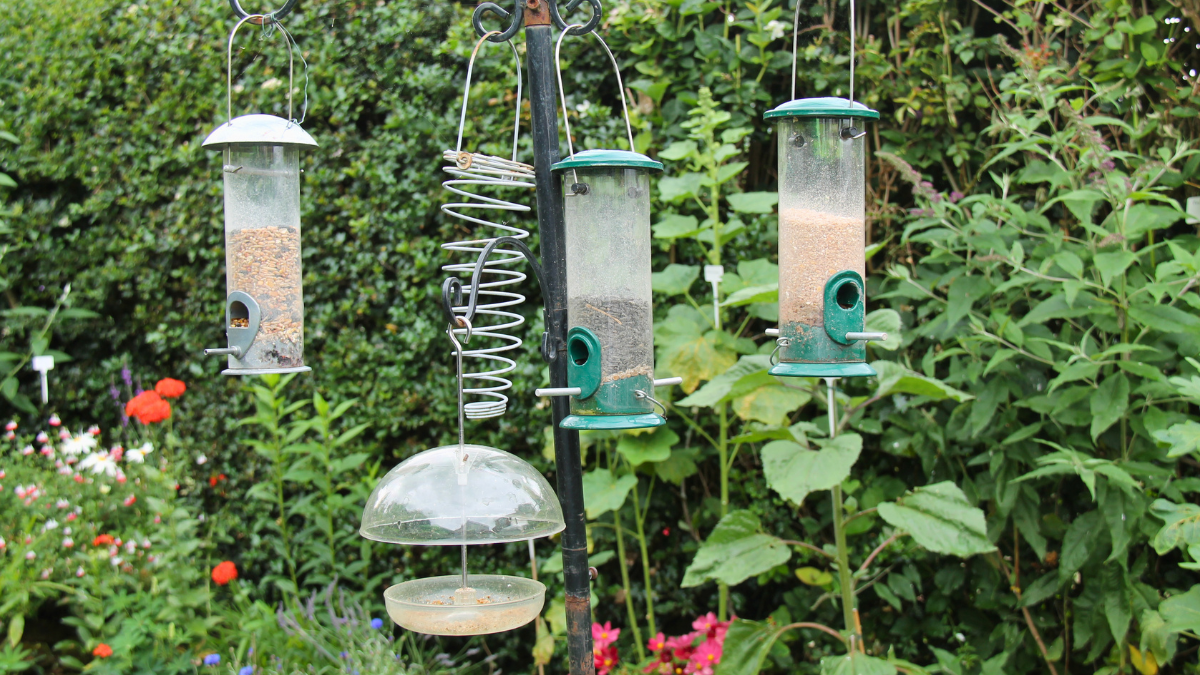
A neighbour feeding birds is not usually something anyone wants to complain about. Seeds and other food bring a multitude of garden birds close to the house, and objecting can feel rather mean-spirited.
The picture changes when food is scattered by the bowlful, pigeons or gulls gather on neighbouring roofs, droppings cover patios and cars, or rats begin appearing beneath the feeder and then under nearby sheds. What looks like kindness from one garden can feel very different next door.
These disputes are often difficult precisely because neither side sees the same problem. One person believes they are helping wildlife. The other is cleaning droppings from garden furniture and worrying about where the rat they have just seen will go next. Beginning with an accusation rarely helps.
So, what can you do if a neighbour is feeding birds and attracting rats or causing another serious problem? Feeding wild birds in a private garden is not generally unlawful in itself. However, excessive or careless feeding can bring environmental health, pest-control, anti-social behaviour and private nuisance law into play. The practical challenge is proving the consequences and choosing the right route.
Quick answer: Can the council stop a neighbour feeding birds?
Potentially, but not merely because birds visit the garden or you dislike seeing them.
A council may be able to act where excessive feeding causes or materially contributes to a rat or mouse infestation, an accumulation of rotting food, or another condition that is prejudicial to health or amounts to a statutory nuisance. In a sufficiently serious and persistent case, anti-social behaviour powers may also be available.
Noise, ordinary bird activity or a modest amount of droppings will not necessarily cross the legal threshold. Councils also need evidence connecting the feeding with the problem. A photograph of a rat in your garden proves that a rat was there; by itself, it does not prove where it lives or what attracted it.
Record what is happening, check for other sources of food or shelter and ask the neighbour for a specific change. If that fails, report the facts to environmental health, pest control or the council’s anti-social behaviour team.
Contents
- Is it illegal to feed birds in your garden?
- When can bird feeding become a legal problem?
- What is the law where bird food attracts rats or mice?
- Can excessive bird feeding be a statutory nuisance?
- Can the council issue a Community Protection Notice?
- How do you prove the feeding is attracting rats?
- What should you do about a neighbour feeding birds?
- What can the council do?
- What if the neighbour is a tenant or leaseholder?
- Can you take your own court action?
- How can the problem be reduced without harming birds?
- Frequently asked questions
Is it illegal to feed birds in your garden?
There is no general law in England or Wales prohibiting somebody from feeding wild birds in their own garden. Council guidance commonly makes that clear. For example, Cornwall Council’s guidance on wild birds and gulls states that there is no specific law stopping a person feeding wild birds in their garden.
That does not provide an unrestricted right to feed birds in any quantity or manner. The legal question is usually not, “Are they allowed to feed a robin?” It is whether the way food is being put out has caused a sufficiently serious problem.
Different rules can apply in public places. A Public Spaces Protection Order or local byelaw may prohibit feeding birds within a defined town centre, park or similar area, but such restrictions do not automatically extend to private gardens.
A tenancy agreement, occupation contract, lease or estate regulation may also restrict feeding from balconies, windows or communal areas, particularly where it causes fouling, pests or nuisance. The document needs to be checked rather than assuming that every block or housing provider uses the same rule.
When can bird feeding become a legal problem?
A well-maintained hanging feeder used in moderation is a long way from repeatedly throwing bread, leftovers or large quantities of seed on the ground. Frequency, quantity, location and consequences all matter.
The problem becomes more likely to justify intervention where uneaten food accumulates or rots; rats or mice are regularly attracted; large numbers of pigeons, gulls or crows create substantial fouling or noise; gutters or drains become blocked; or the use of a neighbouring home or garden is seriously affected. Where sound is the main issue, my guide to noisy neighbours explains the separate legal tests.
There is no fixed number of birds, rat sightings or handfuls of seed that automatically makes the activity unlawful. The council or court looks at the actual conditions and their effect.
What is the law where bird food attracts rats or mice?
Under section 2 of the Prevention of Damage by Pests Act 1949, local authorities must take the steps necessary, so far as practicable, to keep their districts free from rats and mice. This includes inspecting where appropriate, dealing with infestations on council land and enforcing the Act against owners and occupiers.
That does not mean every council must provide free domestic pest treatment, but a credible report about rats or mice and a neighbouring source is more than an ordinary quarrel about birds.
Where the statutory conditions are met, section 4 of the 1949 Act allows the council to serve a notice on an owner or occupier requiring specified steps to destroy rats or mice or keep land free from them. Depending on the circumstances, the required work may include removing food or materials that provide harbourage, treating the infestation or carrying out repairs.
These powers do not make your neighbour automatically liable for a pest-control bill whenever a rat crosses the boundary. Rats travel through drains and several gardens; bins, compost, pet food, decking and damaged drains may all provide food or shelter. The source needs investigating.
Can excessive bird feeding be a statutory nuisance?
Possibly, although bird feeding is not separately named as a statutory nuisance.
Section 79 of the Environmental Protection Act 1990 lists several conditions that can amount to statutory nuisance. The most relevant are likely to be premises in such a state as to be prejudicial to health or a nuisance, and an accumulation or deposit that is prejudicial to health or a nuisance.
Food will not qualify merely because it looks untidy. A substantial build-up of rotting food, a serious infestation or persistent conditions that materially affect neighbouring homes may meet the test.
The distinction between the activity and its result is important. A council may conclude that bird noise and droppings are an unfortunate but ordinary private matter, while reaching a different view if decomposing food and rats are present. My separate guide explains the wider law on nuisance smells, waste and the condition of neighbouring premises.
Can the council issue a Community Protection Notice?
A Community Protection Notice may be considered in a serious case, but it is not the routine response to a bird feeder.
Under section 43 of the Anti-social Behaviour, Crime and Policing Act 2014, an authorised person can issue a notice where conduct is having a detrimental effect of a persistent or continuing nature on the quality of life of those in the locality, and the conduct is unreasonable. A written warning must first be given, allowing enough time for the behaviour to stop or change.
A notice can require specified conduct to stop or reasonable steps to be taken. Excessive feeding that continues after warnings and causes significant fouling, pests or disturbance may meet the test; occasional responsible feeding is unlikely to do so.
This power is genuinely used. In 2021, the Vale of Glamorgan Council prosecuted a resident for breaching a Community Protection Notice after excessive feeding caused persistent problems for neighbours. The example illustrates the seriousness required; most complaints will not lead to prosecution.
How do you prove the feeding is attracting rats?
This is frequently the decisive issue.
Record when and where food is put out, where it accumulates and when rats appear. Photographs or video taken lawfully from your own home or garden can show spilled food, the pattern of feeding, birds gathering and rats using the same area. Keep a brief diary giving dates, times and the effect on your property.
A pest-control contractor may identify burrows, runs, entry points and likely food sources. Their report will usually carry more weight than an assumption based on the direction from which a rat ran. As Wirral Council’s bird-feeding guidance cautions, photographs of rats on your land do not by themselves prove their source.
Also inspect your own property. Secure bins, remove accessible pet food, check compost, clear debris and look for holes around drains, air bricks and outbuildings. That does not accept responsibility for a neighbour’s conduct. It protects your home and prevents the dispute being sidetracked by an avoidable source on your side.
I would be particularly careful about exaggeration. An angry claim that rats are “pouring over the fence” is far less persuasive than dated photographs, a clear diary and a professional report.
What should you do about a neighbour feeding birds?
Raise the practical problem
If it feels safe, begin with a calm conversation or short note. The neighbour may not have seen the rats or realised how far seed is travelling. Describe what you have observed and ask for a specific change.
“We have seen rats feeding beneath the bird table on four evenings this week, and seed is also coming through the fence. Would you mind pausing the feeding and clearing the food from the ground while we work out where the rats are coming from?”
That is easier to respond to than “Stop feeding vermin”. It recognises the neighbour’s intention without minimising the effect.
Suggest a workable adjustment
The answer need not be a permanent end to bird feeding. Moving a feeder from the boundary, putting out less food, avoiding ground feeding and clearing leftovers promptly may resolve the problem.
If earlier conversations have become heated, my guide to resolving neighbour disputes without unnecessary escalation explains how to put a concern in writing and preserve useful evidence.
Report the facts to the council
If the problem continues, use the GOV.UK local council finder and look for Environmental Health, pest control, pollution or anti-social behaviour.
Explain whether the complaint concerns rats or mice, accumulated food, fouling, noise or several of those things. Provide representative dates, photographs and any pest-control report. Ask which team is considering the complaint and under what powers.
Some councils ask for diary sheets; others begin with an advisory letter. An informal response may solve the problem without enforcement.
What can the council do?
The response depends on what officers find. The council may advise, ask the neighbour to change how they feed, inspect the land, request a pest survey or monitor conditions.
If the legal requirements are satisfied, it may serve a pest-control notice, an abatement notice under section 80 of the Environmental Protection Act or, in a persistent unreasonable case, a Community Protection Notice. Each has its own test, appeal rights and consequences.
If the council decides that ordinary bird noise or droppings do not amount to statutory nuisance, ask for its reasons in writing. It may still be worth asking the landlord or managing agent to consider the matter, or using mediation.
You can ask the council to keep your identity confidential, but anonymity cannot be guaranteed. A neighbour may infer who complained, and formal proceedings may require evidence identifying the affected person.
What if the neighbour is a tenant or leaseholder?
Report the problem to the landlord, housing association, council housing team, freeholder or managing agent as appropriate.
A tenancy, Welsh occupation contract, lease or estate regulation may prohibit nuisance, anti-social behaviour or feeding from windows, balconies and communal areas. A housing provider may be able to issue a warning, enforce the term or agree a practical arrangement.
The landlord is not automatically responsible for an occupier’s conduct. Its powers depend on the agreement, the housing and whether a defect or communal area is involved. Still, a report supported by dates and photographs is harder to overlook than a general complaint about pigeons.
Can you take your own court action?
There are two possible routes, but neither is the natural next step after one unsuccessful conversation.
A person affected by a statutory nuisance can make a complaint directly to the magistrates’ court under section 82 of the Environmental Protection Act 1990. For this type of non-noise nuisance, at least 21 days’ written notice must normally be given to the proposed defendant before proceedings begin. You must prove that the statutory nuisance exists or, if it has stopped, is likely to recur.
A separate civil claim in private nuisance may be possible where the use of neighbouring land causes a substantial and unreasonable interference with your use and enjoyment of property. Depending on the facts, a court can award damages or grant an injunction. The claimant normally needs a sufficient legal interest in the affected land, such as ownership or exclusive possession under a tenancy.
Neither route guarantees an order that the neighbour never feed a bird again. Any remedy should address the proven legal wrong proportionately.
Court proceedings carry costs risk. Before considering them, read my guide to property litigation costs and the financial risks of a neighbour dispute.
How can the problem be reduced without harming birds?
Do not put down poison for birds, interfere with nests, throw contaminated material over the boundary or enter the neighbour’s garden. It is generally an offence intentionally to kill, injure or take a wild bird, to take or destroy its eggs, or to damage or destroy its nest while it is being built or used. Government guidance explains the legal protection given to wild birds and the limited circumstances in which licensed control is permitted.
If treatment is needed, use a competent pest professional who will protect children, pets and non-target wildlife. Killing visible rats without removing food and harbourage is unlikely to last.
There is plenty of room for compromise. The RSPB’s current seasonal and safe bird-feeding guidance recommends feeding in moderation, clearing old food and debris, cleaning and moving feeders weekly and avoiding flat feeding surfaces. It also advises pausing seeds and peanuts from 1 May to 31 October because of the increased risk of disease spreading among birds, while allowing small amounts of mealworms, fat balls or suet.
Those measures protect birds while reducing leftovers and large gatherings. A neighbour who wants to help wildlife may be more receptive to that approach than to a threat of legal action.
Frequently asked questions
Can I report my neighbour for feeding birds?
Yes. Report the consequences rather than the mere fact of feeding. Tell the council if food is accumulating, rats or mice are present, or the activity is causing serious and persistent fouling, noise or interference.
Can the council force my neighbour to stop?
Potentially. The council must first identify an applicable power and be satisfied that its legal test is met. It may require feeding to stop or change through a pest-control notice, abatement notice or Community Protection Notice. It cannot impose a blanket private-garden ban simply because one neighbour objects.
Is it illegal to feed pigeons or seagulls?
There is no general national prohibition on feeding wild birds in a private garden. Local restrictions may prohibit feeding within designated public spaces. Excessive private feeding may still lead to action if its effects satisfy pest, nuisance or anti-social behaviour legislation.
What if bird droppings are damaging my car or property?
Photograph the pattern and damage, keep cleaning or repair invoices and raise the problem promptly. A private nuisance or negligence claim may be possible in an exceptional case, but responsibility is not automatic. You must connect the damage to the neighbour’s conduct and establish the relevant legal requirements.
Must my neighbour pay for pest control?
Not automatically. You would need to establish a legal basis for recovering the cost, including causation and responsibility. Notify your landlord or insurer where appropriate and keep reasonable invoices. A council notice may separately require an owner or occupier to carry out pest-control work on their land.
Focus on the food and its consequences
Feeding a few garden birds responsibly is not a legal wrong. Repeatedly leaving enough food to support rats, create a substantial accumulation or cause serious disturbance may be quite different.
In my experience, these disagreements became easier once the conversation stopped being about whether somebody was a bird lover or an unreasonable neighbour. The useful questions were less personal: How much food is left? Where is it landing? Are rats using it? What change would remove the problem?
Record the evidence, investigate the source and ask for a practical adjustment. If that fails, give the council or housing provider a precise account of the consequences. That offers both households the best chance of resolving the problem before it becomes a much larger dispute.
For guidance on other boundary, nuisance and neighbour problems, visit my property disputes hub.
Last legally reviewed: 22 August 2026
This article is based on general principles of English and Welsh law, is intended for informational purposes only, and does not constitute legal advice or establish a professional relationship.





2 responses to “Neighbour feeding birds and attracting rats: What can I do?”
[…] If an infestation appears to be linked to food put out for wild birds, my separate guide explains what you can do when a neighbour is feeding birds and attracting rats. […]
[…] noise from large numbers of wild birds attracted by a neighbour’s feeding—see my guide to neighbour feeding birds and attracting rats; […]