Neighbour disputes have a peculiar ability to take over daily life. The problem may look modest from outside—a fence moved a few inches, music through a wall, a car across a drive or branches hanging over a garden—but it is happening at home, often every day, and the person on the other side of it lives only a few feet away.
During my years in legal practice, I saw sensible people become exhausted by disputes that had started with one avoidable misunderstanding. I also saw apparently serious problems resolved by a calm conversation, a carefully worded letter or one practical compromise. The law matters, but so do tone, timing and evidence.
This guide explains how neighbour disputes are approached in England and Wales, which organisation may be able to help, when mediation is worthwhile and what court action can—and cannot—achieve. Scotland and Northern Ireland have different legal systems.
Quick answer: How should you deal with a neighbour dispute?
Unless there is an immediate safety risk, begin by checking the facts and deciding what practical outcome you need. Speak to your neighbour calmly if it feels safe to do so. If that fails, put the problem in writing, explain its effect and propose a realistic solution.
Keep a dated record of incidents, photographs, messages and relevant property documents. Then use the route that matches the problem: a landlord or management company for tenancy or lease issues; the council for possible statutory nuisance, high hedges or planning enforcement; the police for crime, violence, threats or harassment; and mediation or legal advice for unresolved private disputes.
Court proceedings should usually be the last resort, although urgent advice may be needed where building work, trespass, obstruction, damage or threatening behaviour is continuing. The Government’s own step-by-step guide to resolving neighbour disputes follows broadly the same progression: talk, involve the landlord where appropriate, consider mediation, contact the council or police where their powers apply, and litigate only if necessary.
What counts as a neighbour dispute?
A neighbour dispute is a continuing disagreement about the use, condition or enjoyment of neighbouring property. It may concern land ownership, behaviour, building work, access, parking, plants, animals, noise, privacy or damage.
Not every disagreement is a legal wrong. The law does not guarantee silence, an unchanged view, an empty parking space outside the house or complete freedom from ordinary domestic life. A neighbour may behave inconsiderately without committing trespass, nuisance, harassment or any other actionable wrong.
Before asking, “How do I make them stop?”, identify what is happening, which right or obligation may be involved and what workable result would solve it. That might be moving a camera angle, keeping music down after a particular time, removing a vehicle from a right of way or agreeing the line for a replacement fence. Precise problems are easier to resolve than a general conviction that the neighbour is impossible.
How to resolve a neighbour dispute step by step
Start with safety
Do not approach a neighbour in person if there has been violence, a credible threat, stalking, harassment or behaviour that makes you feel unsafe. In an emergency, call 999. Non-emergency crime and anti-social behaviour can be reported online or through 101.
Avoid retaliation. Do not block an access in return, throw cut branches over the fence, enter the other garden, damage a camera or begin a campaign of noise because “they started it”. That can create a second claim and obscure the original problem.
Decide what outcome you need
A legal remedy is not always the same as a useful outcome. You may ultimately want compensation or an injunction, but the immediate need might simply be quiet at night, safe access, protection from water damage or enough notice before contractors arrive.
I found that asking what somebody could realistically live with often changed the direction of a case. A defined compromise is not surrender. It may give both homes certainty at a fraction of the cost of proving who was completely right.
Check the facts
For a land or access dispute, obtain the title register, title plan and any deeds referred to in the register. Most Land Registry title plans show general boundaries, not a surveyor-accurate line. My guide to property boundaries in England and Wales explains why enlarging the red line rarely settles a dispute.
For leasehold property, read the lease and estate regulations. For building work, check the planning history and whether the Party Wall etc. Act 1996 applies. For parking or access, identify whether the land is public highway, private land, a shared drive or subject to an easement.
Planning permission does not authorise trespass or override a covenant. A title plan does not decide fence ownership. A council officer cannot determine a private right of way simply by looking at the road.
Speak before positions harden
If it is safe, choose a quiet moment rather than confronting your neighbour while the problem is happening. Describe the conduct, its effect and the change you are asking for. Avoid guessing at motives.
“I do not know whether you realise how clearly the music carries into our bedroom. Could we agree that it will be turned down after 10.30 pm?”
That is more likely to produce a solution than an accusation about character. It identifies both the problem and a possible answer.
Put the issue in writing
If conversation fails, send a short factual letter or email. Set out what has happened, include a few representative dates, explain the effect and propose a reasonable step. Ask for a response within a sensible period.
Do not turn the first letter into pleadings for a trial. Nor does writing “without prejudice” at the top automatically make it private from the court: that protection generally applies to genuine settlement negotiations, not every letter carrying the label.
Keep useful evidence
Keep a diary recording dates, times, duration, what happened and how it affected you. Retain messages, council reference numbers, photographs, plans and reports. Preserve original files, avoid provoking incidents or trespassing to obtain evidence, and do not publish allegations on social media.
Check your insurance early
Buildings or contents insurance sometimes includes legal-expenses cover for property disputes. Cover may also arise through a bank account or membership organisation. Notify the insurer before incurring substantial costs, as approval may be required and earlier fees may not be reimbursed.
Common neighbour disputes and your rights
Boundaries, fences and encroachment
There is no general rule that every homeowner owns the fence on the left or the right. Fence posts, the “good side” and whoever last paid for a panel do not conclusively establish ownership. The deeds may contain useful wording or T-marks, but those must be read in context.
A neighbour cannot lawfully enlarge their garden simply by moving a fence onto your land. Equally, the previous fence may not have followed the legal boundary, so preserve photographs and measurements before removing anything. Read my guides to boundary fence rules and planning permission for fences before treating ownership, height and planning as if they were the same question.
Where a misplaced feature has remained for many years, adverse possession may need to be considered. The rules differ for registered land and unregistered land. Ten or 12 years does not automatically transfer every disputed strip.
Trees, hedges, roots and invasive plants
You can usually cut branches and roots encroaching onto your land back to the boundary, provided you do not trespass, cause avoidable damage or breach a tree preservation order, conservation-area control or other restriction. The cut material remains the tree owner’s property and should be offered back rather than thrown over the fence.
Liability for damage is more complicated. It often depends on foreseeability, notice, causation and whether reasonable steps were taken after the risk became apparent. My guides explain tree-root and branch liability, compensation for tree-root damage and what can be done when a neighbour’s bamboo spreads into your garden.
A hedge is not automatically unlawful because it exceeds two metres. A council complaint may be available for a qualifying line of two or more evergreen or semi-evergreen trees or shrubs over two metres that adversely affects the reasonable enjoyment of a home. The council does not simply order every hedge to be reduced to two metres. For the detailed rules, see my guide to hedge law and the Government’s high-hedge guidance.
Noise, smells and equipment
Noise is judged in context. Volume matters, but so do duration, frequency, time of day, locality and the character of the noise. There is no universal rule that any level of noise is permitted until 11 pm or prohibited after it.
The council may investigate noise, smoke, fumes, smells, artificial light and certain other conditions as possible statutory nuisances. Ordinary living noise and occasional inconvenience will not necessarily meet the legal test. My detailed guides cover:
Parking, driveways and rights of way
A householder does not normally own or reserve the public road outside their home. Cones, bins and handwritten notices do not usually create a private parking space. The position changes where parking blocks a dropped kerb, obstructs the highway, interferes with private land or substantially prevents the exercise of a legal right of way.
The relevant guide depends on the problem:
- parking across a driveway without a dropped kerb;
- saving a parking space with cones; or
- shared driveway problems.
Where the title grants a right of way, the owner of the burdened land may often make reasonable use of it, but must not substantially interfere with the right. Read:
Building work, party walls and access
Planning permission is not a neighbour’s private consent. It does not permit foundations, gutters or walls to cross a boundary, authorise scaffolding on adjoining land or remove the need to comply with the Party Wall etc. Act 1996.
The Party Wall Act applies only to specified work, including certain work to party structures, building at the boundary and qualifying excavation. It is not a general system for objecting to every extension. My Party Wall Act guide explains the notice and surveyor process, while a separate article deals with the urgent position where a neighbour has ignored the Party Wall Act.
A neighbour can initially refuse an ordinary request to enter their garden. Access may nevertheless be available through the deeds, the Party Wall Act or a court order under the Access to Neighbouring Land Act 1992 for qualifying preservation work. It is not a general right to use the garden next door as a convenient building site. See whether a neighbour can refuse access for repairs.
Privacy, CCTV, overlooking and light
There is no broad legal right to complete privacy in an ordinary garden or to preserve a pleasant view. That does not mean every form of surveillance or overlooking is acceptable.
A domestic CCTV system that captures beyond the user’s boundary can bring data-protection obligations into play. The camera should be used proportionately, and the Information Commissioner recommends directing it away from neighbouring property where possible or using privacy masking. Read:
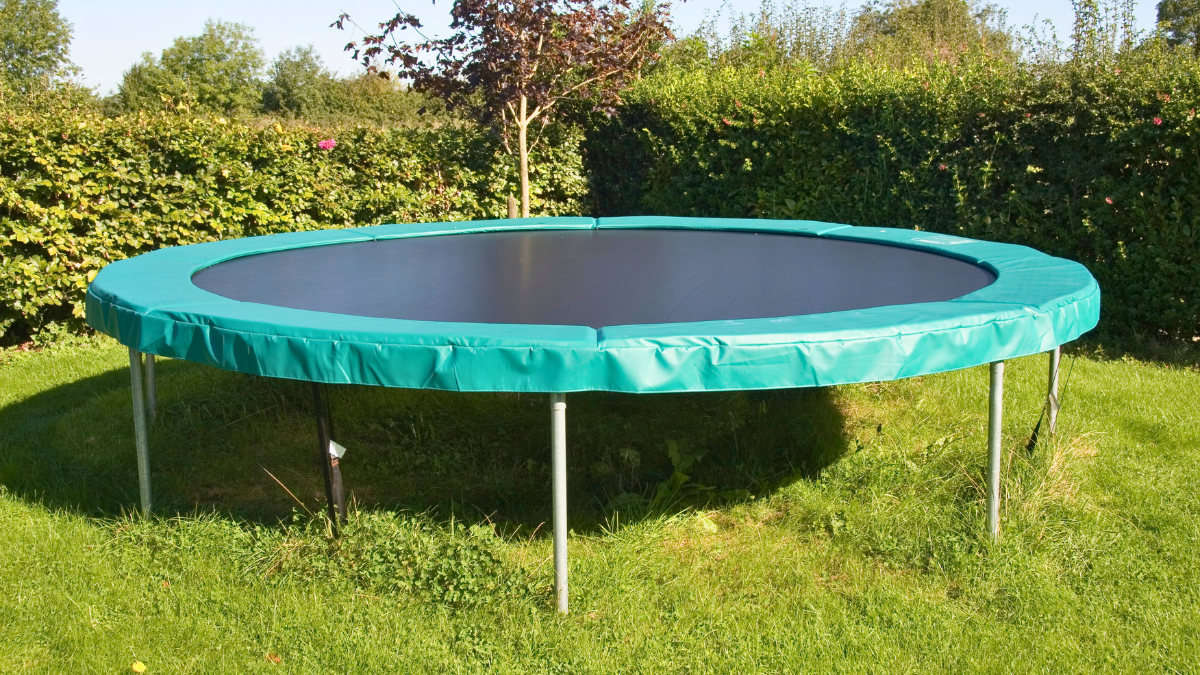
Overlooking from play equipment can be distressing without necessarily creating an actionable claim. My guide considers the practical and planning issues where a neighbour’s trampoline overlooks your garden. Loss of light is different from loss of view or privacy: in some circumstances a building may interfere with an acquired right of light.
Water, drainage and flooding
Water disputes depend heavily on source and cause. Naturally flowing surface water is treated differently from water diverted by paving, defective drainage, building work or an artificial discharge. Responsibility may involve nuisance, negligence, drainage rights, statutory bodies or the terms of the deeds.
Photograph the flooding, record weather conditions and identify the source before assuming that the owner of the higher land must always pay. My guide to surface-water runoff law explains the main distinctions.
Which legal rules may apply?
Trespass
Trespass is an unjustified direct interference with land in another person’s possession. It may include entering without permission, placing a structure across the boundary or leaving objects on the land. Physical damage is not always required.
Private nuisance
Private nuisance generally concerns a substantial and unreasonable interference with the use or enjoyment of land, or physical damage to it. Nature, intensity, duration, frequency and locality all matter. Nuisance is not simply a legal synonym for “annoying”.
Negligence
Negligence may apply where a neighbour owes a duty of care, fails to take reasonable care and causes foreseeable loss. It is often relevant to unsafe structures, escaping water and damage from trees or building work.
Property rights and statutory controls
Rights of way, drainage rights, covenants and lease terms may control what each property can do. Planning law, environmental protection, data protection, anti-social behaviour powers and the Party Wall Act operate alongside those private rights. One regime rarely answers every question: planning permission may exist while the work still causes trespass or breaches a covenant.
When can the council help?
Your local council may be the correct body where the complaint concerns possible statutory nuisance, a qualifying high hedge, unauthorised development, an unsafe building, waste, some forms of anti-social behaviour or a breach of tenancy by a council tenant.
For statutory nuisance, the council will assess whether the condition is prejudicial to health or amounts to a nuisance within Part III of the Environmental Protection Act 1990. If satisfied that a statutory nuisance exists, has occurred and is likely to recur, it will generally have to serve an abatement notice. The Government explains the council process in its statutory nuisance guidance.
The council is not a general referee for all neighbour disagreements. It will not normally decide:
- the exact position of a private boundary;
- who owns a fence;
- the meaning of a private right of way;
- whether damages are payable for trespass; or
- which neighbour behaved more reasonably in an ordinary personal argument.
Planning enforcement is also separate from private rights. The council may investigate a planning breach, but enforcement is discretionary and focuses on planning harm. A neighbour does not acquire a private injunction merely because work lacks permission, and retrospective permission does not cure trespass.
If persistent anti-social behaviour has been reported but the relevant agencies appear not to have responded adequately, you may be able to request an anti-social behaviour case review, formerly called the community trigger. Local thresholds and procedures apply.
When should you contact the police?
The police should be contacted where there is violence, a threat of violence, harassment, stalking, criminal damage, hate crime, dangerous behaviour or another suspected offence. Call 999 where there is immediate danger or a crime is in progress. Use 101 or online reporting for non-emergencies.
Ordinary disagreements about fences, overhanging branches, parking on a public road, planning permission and title rights are usually civil matters. Reporting every civil disagreement as harassment will not turn it into a criminal case.
That said, a civil dispute can develop a criminal dimension. Repeated targeted conduct, threats, damage or intimidation should be recorded and reported on its facts, without assuming that the original property issue prevents police involvement.
Does neighbour mediation work?
Mediation brings in an independent person who helps both sides negotiate. The mediator does not decide who wins and cannot impose a result.
That flexibility is particularly useful between neighbours. A court may decide a boundary or grant an injunction, but mediation can produce a detailed arrangement about bins, hedge maintenance, contractor access, parking times, privacy screening and future communication.
Mediation is confidential and usually conducted on a without-prejudice basis. Any settlement should be recorded clearly and, where land rights are affected, formalised with appropriate legal and registration advice. Government guidance describes mediation as generally quicker and less expensive than court proceedings; the official civil mediation guide explains how to find an accredited mediator.
It may not be suitable where there is intimidation, serious imbalance, an urgent need for protective relief or no genuine willingness to participate.
When is legal action appropriate?
Legal action may be necessary where a neighbour is continuing to build across a boundary, blocking an essential right, causing serious damage, refusing to stop an actionable nuisance or engaging in harassment. Depending on the claim, the court may grant a declaration, injunction, damages or an order regulating access or works.
An injunction is discretionary. The court will consider the right involved, seriousness of the interference, delay, conduct, practical effect and whether damages would be adequate. Urgent interim applications require careful preparation and may expose the applicant to a cross-undertaking in damages if the order should not have been made.
Before issuing an ordinary civil claim, the parties are expected to exchange enough information to understand each other’s position, explore settlement and consider alternative dispute resolution. The Practice Direction on pre-action conduct allows the court to consider non-compliance when managing the case and deciding costs.
The court can order parties to engage in alternative dispute resolution and may take an unreasonable failure to do so into account on costs. Refusing mediation merely because you believe you are right can therefore be unwise.
A person aggrieved by some forms of statutory nuisance may also have a separate route to the magistrates’ court under section 82 of the Environmental Protection Act 1990. Notice requirements and costs risk apply, so advice should be taken before using it.
How much can a neighbour dispute cost?
Costs vary enormously. A conversation or community mediation may cost little or nothing. A surveyor’s report, expert evidence, solicitors’ correspondence, an injunction application and a contested trial can take the cost into many thousands of pounds.
The value of the disputed strip or damaged fence is not the same as the financial risk of the case. Claims seeking declarations or injunctions may be legally and factually complex even where little money is claimed, and they are not automatically treated as small claims.
The general rule in ordinary civil litigation is that the unsuccessful party may be ordered to pay a substantial proportion of the successful party’s reasonable costs, but the court has a wide discretion. Winning does not usually produce complete reimbursement. Conduct, offers, proportionality and engagement with mediation can all affect the result.
My separate guide to property litigation costs explains court fees, expert costs, legal fees and adverse-costs risk in more detail.
Before spending heavily, compare the likely cost with the value of the remedy. That does not mean tolerating serious wrongdoing. It means choosing the least expensive route capable of protecting what genuinely matters.
Do you have to disclose a neighbour dispute when selling?
Neighbour disputes can become relevant when a property is sold. The current Law Society Property Information Form for standard residential sales in England and Wales asks about past and present disputes and concerns involving neighbouring or nearby property.
A seller should answer the form and any further enquiries accurately, discussing uncertain points with their conveyancer. The Law Society’s TA6 explanatory notes make clear that buyers will want to know about past or current disputes and issues that concern either side, even where formal action has not yet been taken.
This does not mean that every polite request to trim a hedge becomes a permanent legal dispute. The facts, seriousness, history and documentation matter. Nor is concealment a sensible solution: an inaccurate answer may create a later misrepresentation claim.
One reason to record a settlement properly is that a clear written outcome is much easier to explain to a future buyer than an unresolved chain of accusations.
What if your neighbour is complaining about you?
Do not assume that a complaint is malicious merely because you disagree with it. Ask what is alleged, when it occurred, how it affected them and what change they want. Check whether a modest adjustment would solve the problem without conceding a legal wrong.
Keep your own record and respond to the facts. If a landlord, council or police officer contacts you, ask for enough detail to understand the allegation and comply with reasonable requests for information. Do not pressure the neighbour to withdraw a report.
Sometimes a complaint is unfounded; sometimes it is partly justified. In my experience, the most constructive response was often: “I do not accept everything you say, but I can see that this part is causing a problem, and this is what I will do.”
Frequently asked questions
Can I make an anonymous complaint?
You can ask a council, landlord or other body to keep your identity confidential, but anonymity cannot be guaranteed. Investigation or enforcement may require detailed evidence, a witness statement or disclosure of the substance and source of the complaint.
What if my neighbour rents their home?
Contact the landlord, housing association or council where the behaviour may breach the tenancy. Provide dates and evidence. The landlord may use tenancy-management powers but is not automatically responsible for everything the tenant does.
Do I need a solicitor?
Not necessarily. Many disputes are resolved through direct discussion, the council, a landlord or mediation. Early specialist advice is sensible where title is unclear, serious damage is occurring, an injunction may be needed, harassment is alleged or you have received a formal legal letter or claim.
Can I claim compensation?
Possibly, if you establish a recognised cause of action and prove resulting loss. Compensation is not awarded merely because a neighbour behaved badly or caused stress. An injunction, declaration or practical agreement may be the more important remedy.
Can the council force my neighbour to move a fence?
Not merely because you say it crosses the private boundary. The council may deal with a planning breach or dangerous structure, but ownership and trespass are private-law issues.
What if my neighbour refuses to mediate?
You cannot normally force a private settlement. Make a clear written invitation and identify a suitable mediator. If proceedings follow, the court may consider whether the refusal was unreasonable and may order alternative dispute resolution during the case.
How long should I allow for a response?
There is no universal period. Seven to 14 days may be reasonable for a straightforward non-urgent issue; complex matters may require longer. Immediate danger, active damage or imminent building work can justify urgent action.
Protect the home, not the argument
A neighbour dispute is rarely improved by treating every compromise as defeat. The law protects rights and provides remedies; it does not reward whichever household can remain angry for longest.
Start with the smallest effective step. Establish the facts, preserve the evidence, explain the problem and ask for a workable change. Escalate only to the landlord, council, police, mediator or court that has the right powers.
I have seen disputes consume far more money and peace of mind than the original issue deserved. Knowing your legal position gives you a firmer footing; using that knowledge proportionately gives you the best chance of enjoying your home again.
For detailed guidance on individual problems, visit my property disputes guides.
Last legally reviewed: 29 July 2026
This article is based on general principles of English and Welsh law, is intended for informational purposes only, and does not constitute legal advice or establish a professional relationship.