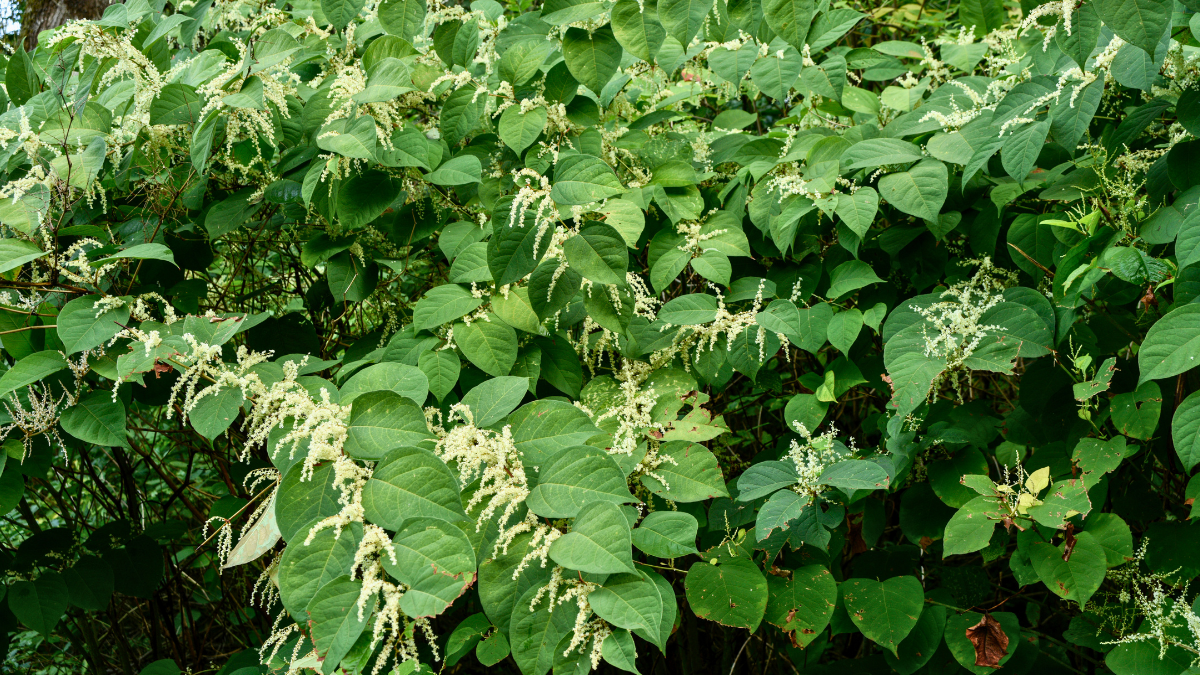
Japanese knotweed has a remarkable ability to cause panic before anyone knows whether it has caused any damage at all. You spot a few reddish shoots beside the fence, realise there is a larger patch in your neighbour’s garden, and suddenly start wondering about foundations, mortgages and whether you will ever be able to sell.
The reality is more measured. Japanese knotweed can cause genuine problems, particularly when its underground rhizomes spread across a boundary. But some of its fearsome reputation is outdated, and finding it next door does not automatically mean that your house is damaged or unmortgageable.
The legal position is more nuanced too. A neighbour is not automatically liable simply because Japanese knotweed grows on their land. Liability can arise, however, where it spreads onto your property and the neighbour knew, or ought reasonably to have known, about the problem but failed to take reasonable steps.
If I discovered suspected knotweed beside a boundary, my first move would not be to reach for a spade. I would photograph it, establish whether it really is Japanese knotweed and work out where it appears to be coming from. Those simple steps can make everything that follows much easier.
Quick answer: What can I do if my neighbour’s Japanese knotweed is spreading into my garden?
If Japanese knotweed appears to be spreading from neighbouring land, tell the landowner promptly and keep a written record. If it has already crossed the boundary, consider obtaining a specialist survey before cutting, digging or treating it.
Japanese knotweed spreading from neighbouring land can amount to a private nuisance. You do not necessarily have to wait until it cracks a wall or damages the foundations of your house. The courts have recognised that encroaching rhizomes themselves can interfere with the use and enjoyment of land.
But proximity alone is different. The mere fact that Japanese knotweed is growing somewhere next door does not automatically make the neighbour liable or give you a compensation claim.
Contents
- Is it definitely Japanese knotweed?
- Is it illegal to have Japanese knotweed in your garden?
- When is a neighbour responsible for Japanese knotweed?
- Does Japanese knotweed have to cross the boundary?
- What do the leading Japanese knotweed cases tell us?
- Who pays for Japanese knotweed treatment?
- Does the Japanese knotweed three-metre rule mean my neighbour is liable?
- Will neighbouring Japanese knotweed affect a house sale or mortgage?
- Can I remove Japanese knotweed myself?
- What evidence should I collect?
- What if my neighbour refuses to deal with the knotweed?
- Frequently asked questions
Is it definitely Japanese knotweed?
Before starting a neighbour dispute, make sure the plant has been identified correctly.
Japanese knotweed is frequently confused with other plants, and its appearance changes significantly through the year. Previous herbicide treatment can also produce distorted regrowth that looks quite different from the familiar photographs.
The Government’s guidance on Japanese knotweed links to identification information and explains how it spreads. New plants can develop from very small pieces of rhizome, which is one reason careless digging or movement of contaminated soil can make the problem worse.
If there is a serious possibility that knotweed has crossed the boundary, a specialist survey can help identify the plant, record its visible extent and consider the likely source of the infestation.
Is it illegal to have Japanese knotweed in your garden?
No. It is not illegal simply to have Japanese knotweed growing on private land, and there is no general requirement to eradicate it merely because it is present.
There are, however, controls on its spread and disposal. Under the Wildlife and Countryside Act 1981, it is an offence to plant Japanese knotweed or otherwise cause it to grow in the wild. Government guidance also says landowners must prevent Japanese knotweed on their land from spreading off their property.
That criminal regime should not be confused with a dispute between two neighbours. If knotweed spreads from one garden into another, the more important question for the affected homeowner is usually whether the spread amounts to a private nuisance.
Disposal also needs care. Soil and plant material contaminated by knotweed may be treated as controlled waste, and specific rules apply if it is removed from the site. This is not ordinary garden waste that should simply be put in a green bin or taken to the tip.
When is a neighbour responsible for Japanese knotweed?
Japanese knotweed can amount to a private nuisance where it causes a substantial and unreasonable interference with the use and enjoyment of neighbouring land.
That does not make the person whose garden contains the plant automatically liable. The law does not expect a landowner to prevent every naturally occurring problem before they have any reason to know about it.
Knowledge and the response to it matter. Once an owner knows, or ought reasonably to know, that knotweed on their land presents a foreseeable risk to a neighbour, they may be required to take reasonable steps to prevent or minimise that interference.
There is therefore a considerable difference between a neighbour who discovers knotweed and promptly puts a sensible treatment programme in place, and one who knows that rhizomes are spreading beneath the fence but simply ignores the problem.
This is also where Japanese knotweed differs from the problem covered in neighbour’s bamboo spreading into my garden. Both spread through rhizomes and can cross boundaries, but Japanese knotweed has its own environmental controls and important case law.
Does Japanese knotweed have to cross the boundary?
For the type of Japanese knotweed nuisance claim most homeowners are concerned about, actual encroachment is important.
The Court of Appeal has rejected the idea that a homeowner can claim simply because knotweed growing nearby makes buyers or mortgage lenders nervous and reduces the property’s value. Private nuisance does not exist merely to protect the financial value of a house as an investment.
Where knotweed rhizomes have actually spread into neighbouring land, however, the position can be different. Their presence can interfere with how that land is used because contaminated ground may be more difficult and expensive to excavate, landscape or develop.
So these are not the same problem:
“There is Japanese knotweed in the garden next door.”
and:
“Japanese knotweed from next door has spread underneath the boundary into my garden.”
The first is a reason to keep an eye on the position and perhaps speak to the neighbour. The second may potentially amount to an actionable encroachment.
What do the leading Japanese knotweed cases tell us?
Two cases are particularly important.
In Network Rail Infrastructure Ltd v Williams [2018] EWCA Civ 1514, Japanese knotweed had spread from a railway embankment into neighbouring residential properties. Network Rail knew, or ought to have known, about the risk and had not implemented an adequate treatment programme.
The Court of Appeal rejected a claim based simply on the effect of nearby knotweed on market value. But it accepted that actual rhizome encroachment could interfere with the amenity and utility of the land even without physical damage to the houses themselves.
You can read the Court of Appeal judgment in Network Rail v Williams.
The second case is Davies v Bridgend County Borough Council [2024] UKSC 15.
It is sometimes described as though the Supreme Court decided that compensation can no longer be recovered for Japanese knotweed. It did not.
The difficulty for Mr Davies was timing. The knotweed had already encroached onto his property before the council became legally at fault for failing to treat it. He claimed for a continuing reduction in the property’s value, but the Supreme Court held that this particular loss had not been caused by the council’s later breach.
The lesson from Davies is therefore about causation. Even where a neighbour has acted unreasonably, you still have to show that the loss you are claiming was actually caused by that legal wrong.
The Supreme Court’s Davies case page contains the judgment and summary.
Who pays for Japanese knotweed treatment?
There is no rule that the neighbouring owner automatically has to pay your treatment bill simply because the knotweed originated on their land.
If private nuisance and causation are established, reasonable losses caused by that nuisance may potentially be recoverable. Depending on the facts, that could include appropriate investigation, treatment and reinstatement costs, together with compensation for other proven loss or interference.
The important word is “caused”. After Davies, it is particularly unsafe to assume that every financial consequence associated with knotweed can be passed to the neighbouring owner.
Equally, somebody who has allowed a known infestation to spread cannot necessarily avoid responsibility simply because no crack has appeared in the house. Williams confirms that the effect of rhizomes on the use and amenity of the land itself can matter.
A court can also grant an injunction in an appropriate nuisance case, although that is not automatic and the precise remedy must be workable and proportionate.
For any substantial claim, the likely value needs to be considered against the cost of proving it. The guide to property litigation costs explains why that calculation matters before a neighbour dispute escalates.
Does the Japanese knotweed three-metre rule mean my neighbour is liable?
No. The three-metre rule is not a rule of law.
You may still come across older articles referring to a seven-metre rule. That came from the previous RICS approach to assessing Japanese knotweed risk and was replaced in 2022.
Under the current RICS standard on Japanese knotweed and residential property, visible knotweed on adjoining land within three metres of the property boundary is relevant to a surveyor’s assessment.
The distance reflects modern evidence about the likely lateral spread of rhizomes. It does not mean that a neighbour becomes legally liable when a stem moves from 3.1 metres to 2.9 metres away.
Nor does it mean that knotweed more than three metres away can always be ignored. An unusually extensive or uncontrolled infestation may still deserve attention.
The legal question remains what has actually happened: has the plant encroached, what interference has resulted, what did the neighbour know and what reasonable steps have they taken?
Will neighbouring Japanese knotweed affect a house sale or mortgage?
It can, although the modern position is considerably less alarmist than it once was.
RICS moved away from the idea that any knotweed within seven metres of a property should automatically be treated as a major problem. Its current approach considers where the plant is, whether structures or amenity are affected and what management is appropriate.
For mortgage valuations, visible knotweed on adjoining land within three metres of the boundary is reported. RICS does not suggest that a borrower should routinely be required to remediate land they do not own.
A sale may also raise the issue through the Law Society’s TA6 property information process. The current TA6 explanatory notes say properties are usually considered at risk where Japanese knotweed is growing on the property or within three metres of its boundary.
The notes also recognise a practical difficulty that anyone who has dealt with knotweed will understand: you cannot necessarily know what is underground simply by looking at the garden. Sellers should answer the form truthfully and accurately from their knowledge, and “not known” may be appropriate where they genuinely do not know.
If the issue is inaccurate information supplied when a property was bought, that may raise separate questions about misrepresentation rather than neighbour nuisance.
Can I remove Japanese knotweed myself?
This is one plant where enthusiasm with a spade can be counterproductive.
Government guidance advises against treating knotweed yourself unless you have the necessary skills and experience. Herbicide control usually requires repeated treatment and can take at least three years. Rhizomes may remain dormant and regrow if the soil is later disturbed.
Digging can break rhizomes into fragments and spread them through previously unaffected soil. If contaminated material is then moved off site, waste controls may apply.
I would be particularly reluctant to start excavation where the source and responsibility are disputed. Once the ground has been dug up, useful evidence about where the plant was growing and how far it had spread may have disappeared with it.
A specialist can advise whether the sensible solution is herbicide treatment, excavation, a root barrier or a combination of measures.
Whatever happens on your side of the fence, do not enter the neighbour’s land or treat plants there without permission.
What evidence should I collect?
Start before anybody cuts, sprays or digs.
Take dated photographs showing the suspected knotweed, the boundary and any visible growth on the neighbouring land. Keep correspondence with the neighbour and make a note of anything said about previous treatment or how long the plant has been present.
If the identification or source is disputed, obtain a specialist report. Where compensation is claimed, the evidence may also need to address treatment costs, causation and any effect on the use or value of the property.
Keep a simple chronology. When was the plant first noticed? When was the neighbour told? When was encroachment confirmed? What treatment was then carried out?
That sort of record is usually far more useful than a long chain of increasingly angry messages.
What if my neighbour refuses to deal with the knotweed?
Start by separating concern from actual encroachment.
If knotweed is merely visible on neighbouring land, sensible monitoring and a factual conversation may be enough at that stage. If rhizomes have already crossed the boundary, specialist evidence becomes much more important.
Tell the neighbour what has been found and what you are asking them to do. Where both gardens need treatment, a coordinated programme will often make far more sense than repeatedly treating one side while a substantial source infestation remains next door.
If agreement proves difficult, mediation may be worth considering before legal proceedings. The broader guide to resolving neighbour disputes explains some of the practical options.
Where there is a proven and continuing nuisance and the neighbour still refuses reasonable action, a claim for damages or injunctive relief may ultimately be possible.
If the knotweed is growing on council, railway or other institutional land, report it to the organisation responsible and keep a record. Public bodies are not outside the ordinary principles of private nuisance, as the cases involving Network Rail and Bridgend Council demonstrate.
Frequently asked questions
Can I sue my neighbour just because they have Japanese knotweed?
No. The presence of Japanese knotweed next door does not automatically give you a claim. Encroachment, interference with your use and enjoyment of the land, the neighbour’s knowledge and whether reasonable action was taken can all matter.
Do I have to wait until Japanese knotweed damages my house?
No. Network Rail v Williams established that encroaching knotweed rhizomes can interfere with the amenity and utility of land even without structural damage to the house.
Can Japanese knotweed damage house foundations?
Its reputation for attacking substantial buildings has been exaggerated. RICS says substantial structures on sound foundations are unlikely to suffer structural damage from Japanese knotweed. Like other plants, it is more likely to exploit existing weaknesses or affect lighter structures, paving, walls and poorly constructed surfaces.
Is Japanese knotweed within three metres automatically a nuisance?
No. Three metres comes from the RICS property-assessment framework. It is not a legal boundary for private nuisance and does not determine whether a neighbour is liable.
Can I cut Japanese knotweed back at the boundary?
Do not treat it like ordinary overhanging vegetation. Cutting, digging and moving contaminated soil can spread viable material and may create disposal problems. Establish what you are dealing with and consider specialist advice before disturbing it.
Take the knotweed seriously, but not the mythology
Japanese knotweed deserves sensible attention. It does not deserve the mythology that has grown around it.
The most useful questions are practical ones. Has the plant actually crossed the boundary? Where has it come from? Does the neighbour know about it? And are reasonable steps being taken to stop the problem getting worse?
Where the answers are reassuring, a frightening-looking patch next door may be entirely manageable. Where rhizomes are already established in your garden and the source is being ignored, the law can provide a remedy.
Either way, the best first step is usually the least dramatic one: identify it properly, photograph it and resist the temptation to start digging.
Last legally reviewed: 25 August 2026
This article is based on general principles of English and Welsh law, is intended for informational purposes only, and does not constitute legal advice or establish a professional relationship.