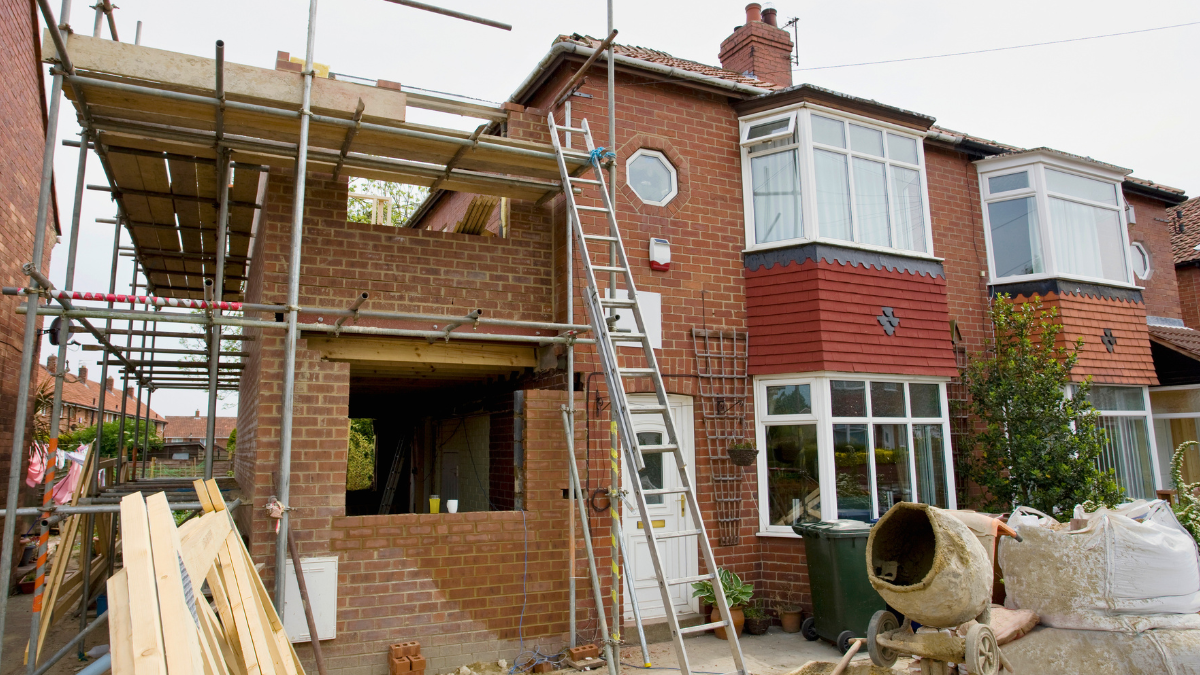
Few garden alterations sound less controversial than bringing in some extra soil or building a new patio. But when the garden next door is suddenly 30, 50 or even 100 centimetres higher than it used to be, the effect on your own property can be surprisingly dramatic.
A fence that once gave you privacy may no longer do so. People standing on a new raised area may be able to look straight into your garden or windows. Rainwater may begin flowing towards your property, while extra soil piled against a boundary fence or wall can create pressure and damp problems that simply did not exist before.
One thing I have seen repeatedly with neighbour disputes is how quickly everyone reaches for a simple rule. With raised gardens, that rule is usually “30 centimetres”. Unfortunately, the law is more nuanced than that.
Quick answer: A modest change to a garden level may not require planning permission, but more substantial land-raising can amount to development requiring permission. Decking or another raised platform more than 30 cm high will normally fall outside the ordinary householder permitted development rules. A patio created by raising the underlying land can require a different analysis, because substantial alteration of ground levels may itself amount to development. Privacy, drainage and support for the extra soil may also create separate issues.
This guide explains the position in England and Wales. Although the broad principles are similar, the detailed permitted development rules are not identical, so the rules applying to the particular property should always be checked.
Contents
- Does my neighbour need planning permission to raise their garden?
- What does the 30 cm rule actually mean?
- What if the raised garden overlooks my property?
- Can I put up a higher fence to restore my privacy?
- What if the raised garden causes flooding or runoff?
- Who is responsible for retaining the extra soil?
- Does the Party Wall Act apply?
- What if the work has already been completed?
- What should I do if my neighbour has raised their garden?
- Frequently asked questions
Does my neighbour need planning permission to raise their garden?
Possibly. There is no rule saying that every alteration to a garden level requires a planning application, but changing the level of land is not automatically outside planning control.
Planning law treats the carrying out of building, engineering, mining or other operations on land as “development”. Substantial land-raising can therefore amount to an engineering operation, depending on its scale, character and effect.
At the other end of the spectrum, ordinary gardening work and very small changes in level are unlikely to amount to material development at all. Spreading a thin layer of topsoil over a lawn is plainly different from importing enough material to raise much of a rear garden by half a metre.
The Planning Portal guidance on raising garden levels reflects that distinction. It says that raising a garden by a small amount is likely not to require planning permission, while increases of more than 30 cm may require permission, particularly where drainage or neighbouring properties may be affected.
The important word is “may”. Thirty centimetres is not a universal dividing line between lawful and unlawful land-raising.
If, for example, a neighbour has levelled a steep garden by constructing retaining walls and importing large quantities of material, that is very different from simply improving the lawn with a modest layer of soil.
What does the 30 cm rule actually mean?
This is probably where most confusion starts.
There is an important 30 cm rule for raised platforms, including garden decking. But it should not be treated as a general right to raise the underlying land by up to 30 cm.
England
In England, Government householder permitted development guidance defines a raised platform as one more than 0.3 metres high. Garden decking may fall within permitted development where it remains within that limit and the other relevant requirements are satisfied.
A raised platform more than 30 cm high will normally fall outside the ordinary Class E householder permitted development right and require planning permission.
Wales
The detailed Welsh rules are different, but the same 30 cm threshold is important. Welsh Government guidance on decking and raised platforms says that decking or a raised platform can be permitted development where, among other requirements, it is no more than 30 cm above the ground.
These householder rights apply to houses rather than giving flats and maisonettes the same freedom to carry out work.
What about a raised patio?
The answer depends on what has actually been built.
A patio might simply be paving laid close to the existing ground level. At the other extreme, it might sit on a constructed terrace or platform well above the original garden. Alternatively, the neighbour may have imported soil or hardcore, raised the land itself and then laid paving on top.
Those situations should not automatically be treated as identical.
If the patio is effectively a raised platform, the 30 cm permitted development threshold is highly relevant. If the land itself has been substantially raised, the separate question is whether those works amount to development in their own right.
So can my neighbour simply raise the soil by 29 cm?
No automatic right follows from the decking rule.
The 30 cm threshold provides a clear planning rule for raised platforms. It does not create a blanket entitlement to import soil, rubble or other material until the whole garden is 29 cm higher than before.
Scale matters. So does the nature of the work and the effect it has on the adjoining properties.
What if the raised garden overlooks my property?
This is often the point at which landscaping becomes a genuine neighbour problem.
A two-metre fence may have provided perfectly adequate privacy when both gardens were at roughly the same level. Raise one garden by half a metre and the experience changes immediately. Someone standing on the higher side may now have a direct view over the fence into a patio, living-room window or previously secluded part of the neighbouring garden.
If planning permission is required, overlooking and loss of privacy can be material planning considerations. The Planning Portal’s explanation of material planning considerations includes overlooking and loss of privacy among the matters that may be relevant.
The effect will always depend on the particular properties. There is no national rule saying that every raised patio must sit a fixed distance from a boundary.
A specific objection is usually much more useful than a general complaint. “The new raised area allows a direct view into our first-floor bedroom” tells the planning authority far more than simply saying that the neighbours can now see into the garden.
That distinction matters because there is no general private-law right to complete privacy in an ordinary garden. Some overlooking between neighbouring homes is simply part of residential life. The real issue is whether the new development has created a significant additional impact.
If the problem involves an elevated outdoor space, you may also find my guide to a neighbour’s balcony overlooking your garden useful.
Can I put up a higher fence to restore my privacy?
Possibly, but do not assume that a taller fence is automatically allowed simply because your neighbour has raised their garden.
As a general planning rule, a fence, wall or gate can be up to two metres high without planning permission where it is not adjacent to a highway used by vehicles. The usual permitted height beside such a highway is one metre. There are exceptions, including listed buildings and situations where permitted development rights have been removed.
Things become more complicated where adjoining gardens are at different levels or somebody has artificially altered the land.
It is therefore risky to reason that “their patio is now half a metre higher, so I can simply add another half metre to my fence”.
If extra screening is needed, my separate guide explains planning permission for fences and the one-metre and two-metre rules.
Sometimes the better solution is screening on the raised side. That can restore privacy without forcing the lower neighbour to live beside what may appear from their garden to be a very tall and overbearing barrier.
What if the raised garden causes flooding or runoff?
Changing the level or surface of a garden can change where rainwater goes.
A natural slope that once absorbed water gradually may behave very differently after soil is compacted, a large paved area is installed or a retaining wall interrupts the previous drainage route. Water may become concentrated at one point or directed towards the neighbouring property.
A homeowner is not automatically responsible simply because naturally occurring rainwater travels downhill from higher land. The position can change where works have materially increased, concentrated or redirected the flow.
Depending on what has happened, private nuisance or negligence may become relevant. The key question is often not simply whether the water came from the higher garden, but whether the neighbour’s works changed its quantity, direction or concentration.
My detailed guide to surface-water runoff law and neighbour responsibility explains that distinction in more detail.
If the work is recent, record what happens during heavy rain. Photographs showing where water collects and videos showing the direction in which it flows can be far more useful than trying to reconstruct events months later.
Who is responsible for retaining the extra soil?
Raising land close to a boundary creates another practical problem: something may have to hold the additional soil back.
An ordinary timber fence is not normally designed to act as a retaining wall. Piling soil against fence panels or gravel boards can introduce substantial sideways pressure, trap moisture and shorten the life of the structure.
A neighbour should not simply assume that an existing boundary feature can become part of their retaining system without considering ownership, structural suitability and the effect on the adjoining property.
If soil or another material physically crosses the legal boundary, trespass may arise. If the works cause damage or an unreasonable interference with the neighbouring property, nuisance or negligence may also be relevant depending on the circumstances.
There is, however, no universal rule that the owner of the higher garden always owns or must repair every retaining wall. Much depends on why the difference in levels exists. The higher owner may have raised their land, the lower owner may historically have excavated theirs, or the difference may be natural.
That is why I would be wary of anyone who begins with “the higher property is always responsible”. My separate guide explains who may be responsible for a retaining wall between neighbouring properties.
Does the Party Wall Act apply?
Not simply because one garden has become higher than the other.
The Party Wall etc. Act 1996 applies to particular types of work. Raising soil or laying a patio away from the boundary does not, by itself, trigger the Act.
It may become relevant where the project includes constructing a new wall at the boundary, carrying out specified work to an existing party wall or party fence wall, or excavating sufficiently close to and below the foundations of a neighbouring building or structure.
A retaining wall can sometimes be relevant, particularly where it is a masonry wall standing astride the boundary, but not every retaining wall is a party wall.
Planning permission and the Party Wall Act should also be kept separate. A project can comply with one regime while still requiring action under the other.
My Party Wall Act guide explains when notices may be required and how the rules work.
What if the work has already been completed?
Start by checking the planning history of the neighbour’s property on your local authority’s website. The work may already have permission, form part of an earlier approved scheme or have been considered by the council.
If there is no relevant permission and you reasonably believe the altered levels amount to development requiring consent, you can report the matter to the council’s planning enforcement team.
Evidence of the change can be important. Old photographs, estate-agent particulars, planning drawings and photographs taken while the work was under way may help establish the previous levels and the scale of what has been done.
Planning enforcement is discretionary. A council does not automatically require every unauthorised development to be removed merely because planning permission should have been obtained.
In England, current Government planning enforcement guidance emphasises that enforcement action should be proportionate. A local authority may decide that a minor breach causes insufficient planning harm to justify formal action, or it may invite a retrospective application.
A retrospective application is not an automatic approval. The council still has to consider the planning merits, including matters such as overlooking, drainage or visual impact where they are relevant.
The Welsh planning system also provides enforcement powers in relation to unauthorised development.
Planning enforcement should not be confused with private legal rights. A council cannot determine a disputed boundary or award compensation for damage. Equally, planning permission does not authorise trespass or give someone a general right to damage neighbouring property.
Does raising the garden level change the legal boundary?
No. Altering the physical surface of the land does not move the legal boundary between the properties.
Difficulties can arise because landscaping may bury, replace or obscure an old boundary feature. That can make the evidence harder to interpret later, but it does not redraw the title.
If there is uncertainty about where the legal boundary lies, see my guide to property boundaries in England and Wales. Title plans will usually show general boundaries rather than determine the line to centimetre accuracy.
What should I do if my neighbour has raised their garden?
Begin with the change itself rather than the argument.
Try to establish how much the garden has been raised, over what area and when the work took place. Record the original and altered levels if you can do so safely from your own property. Keep photographs of materials being brought onto the site and note what has been constructed at or close to the boundary.
Then identify the actual problem. Is it overlooking? Water? Pressure against a wall? Soil crossing the boundary? Or simply concern that the work did not have planning permission?
Different problems lead to different answers.
If privacy is the issue, photographs taken from normal standing height can help demonstrate the change. If water is the problem, record what happens while it is raining. If a retaining structure is cracking or moving, a structural or civil engineer may be more useful than competing opinions between neighbours.
Where possible, speak to the neighbour before positions harden. They may not appreciate how different the work looks or feels from the lower side of the boundary. A screen, drainage channel or modest alteration to the edge of a raised area can sometimes solve a problem that would otherwise develop into months of correspondence.
During my years in practice, I often found that neighbour disputes became expensive because people started by trying to prove the other person was wrong rather than identifying what practical change would actually solve the problem.
If discussion fails, separate the issues carefully. Planning concerns go to the local planning authority. Physical damage may need to be notified to insurers. A boundary or private-right dispute may require surveyor or legal advice. If the disagreement has become wider, my general guide explains how to approach a neighbour dispute and the options for resolving it.
Frequently asked questions
Can my neighbour raise their garden by 30 cm without planning permission?
Not automatically. The well-known 30 cm threshold specifically applies to raised platforms such as decking. A small change to garden levels may not amount to development requiring permission, but there is no universal rule allowing an entire garden to be raised by 30 cm.
Does a raised patio need planning permission?
It depends on how the patio has been created. If it amounts to a raised platform, the 30 cm permitted development threshold is important. If the underlying land has itself been substantially raised, the separate question is whether those works amount to development requiring permission.
Can my neighbour raise their garden so they can see over my fence?
The resulting overlooking does not automatically make the work unlawful. However, where planning permission is required, significant new overlooking and loss of privacy can be material planning considerations.
Can my neighbour pile soil against my fence?
An ordinary timber fence should not simply be assumed to be capable of retaining significant quantities of soil. If material crosses the boundary, damages your fence or places inappropriate pressure on a structure belonging to you, private legal rights may arise.
What if the raised garden sends water onto my property?
A neighbour is not automatically liable for naturally occurring rainwater flowing downhill. The position can be different where landscaping, paving or altered levels materially increase, concentrate or redirect the flow and cause damage or an unreasonable interference with your property.
The important question: What has the extra height changed?
Raised garden disputes are a good example of why a single number rarely provides the whole legal answer.
Thirty centimetres matters, but it does not settle every planning question. What usually matters more is the practical effect of the works. Has the change created a new view into your home? Has it redirected rainwater? Is extra soil now being retained against a fence or wall? Has the physical relationship between the two properties materially changed?
Once those questions are separated out, the problem becomes much easier to analyse. The useful question is not simply “is my neighbour allowed to raise their garden?” but “what has raising it actually done?”
Last legally reviewed: 24 August 2026
This article is based on general principles of English and Welsh law, is intended for informational purposes only, and does not constitute legal advice or establish a professional relationship.