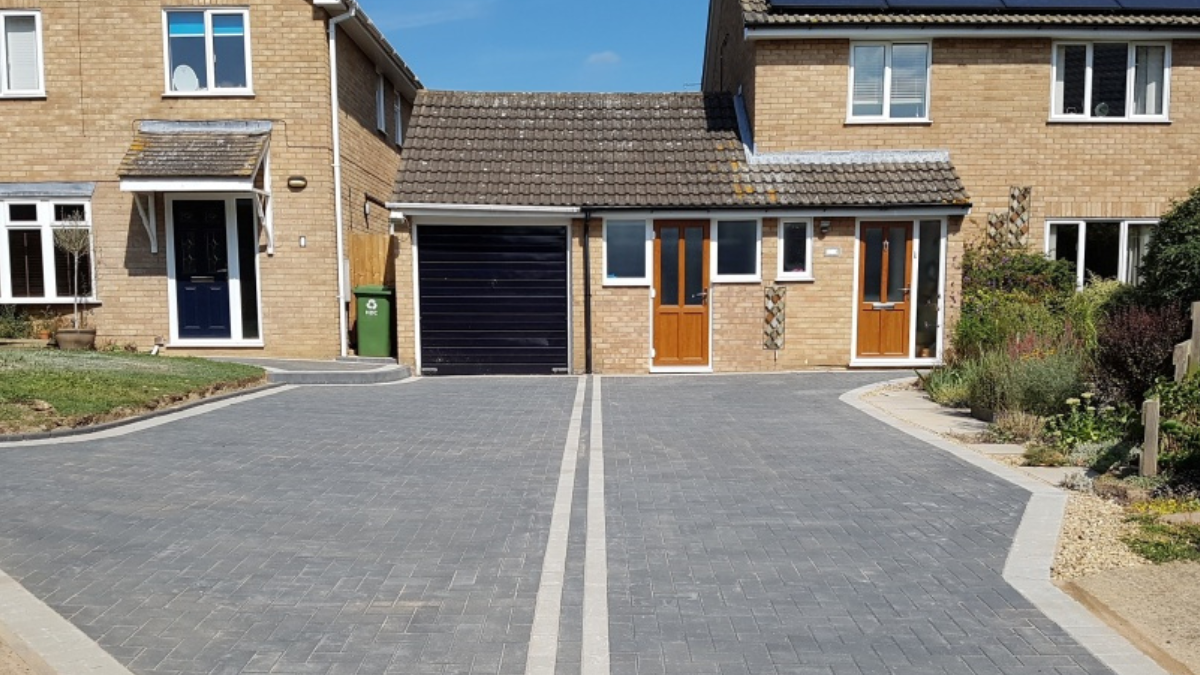
Shared driveways work perfectly well until somebody parks in the wrong place, installs a gate or receives a quotation for resurfacing.
The difficulty is that the phrase “shared driveway” says very little about the legal arrangement. One neighbour may own the whole drive while the other has a right to pass over it. Each property may own half, with reciprocal rights over the other half. On a newer estate, the land might belong to a management company.
Those differences determine who can park, who may install gates, who pays for repairs and what happens when access is obstructed.
A legal right of way will normally protect access, but it does not give the benefiting owner possession of the driveway. The landowner can continue using their land provided that they do not substantially interfere with the right granted.
During my years in legal practice, I found that shared driveway problems often grew because each neighbour was arguing from a different starting point. One said, “I own it.” The other said, “I have a right over it.” Quite often, both statements were true.
This guide explains shared driveway rights and disputes in England and Wales, including parking, gates, repair costs, how access rights may arise and practical ways of resolving obstruction.
Quick answer: what are my rights on a shared driveway?
Your rights depend on the title documents and the history of the access.
A neighbour who has a legal right of way is entitled to exercise it without substantial interference. That does not necessarily mean that the driveway must remain completely empty at every moment, but parking, gates, skips or building materials may be unlawful if they make reasonable access materially less convenient.
A right of way is generally a right to pass and repass. It does not automatically include parking, storing bins, leaving vehicles unattended or using the route for land that does not benefit from the easement.
Repair and maintenance costs are governed primarily by the deeds. They are not automatically split equally merely because two households use the driveway.
Begin by obtaining both title registers, title plans and any transfers or conveyances referred to in them through the official HM Land Registry service. HM Land Registry confirms that the register can identify easements and that copies of filed transfers, leases and other deeds may be ordered separately.
Contents
- What is a shared driveway?
- Check the documents, not just the title plan
- How can rights of way arise?
- What does a right of way allow?
- Parking and obstruction on a shared driveway
- Gates, bollards and barriers
- Ownership and maintenance
- Repairs, alterations and EV charging
- Moving or changing the use of the driveway
- What should you do when access is blocked?
- What remedies can a court grant?
- Buying and selling a property with a shared driveway
- Frequently asked questions
- The practical point: Separate ownership, access and parking
What is a shared driveway?
“Shared driveway” is an everyday description rather than a single legal category.
It may describe several quite different arrangements.
One property owns the driveway
One homeowner may own the entire surface, while a neighbouring property has an easement allowing access over it.
The driveway owner is the servient owner. The property benefiting from the right is the dominant property.
Ownership gives the servient owner substantial control over the land, but that control must be exercised consistently with the easement.
Each property owns part of the driveway
Two neighbouring properties sometimes each own a long strip extending from the road, with each enjoying a right of way over the other strip.
Neither owner can use their section in a way that substantially prevents the other exercising the reciprocal right.
This arrangement can look like a jointly owned driveway on the ground even though the title is divided down the middle.
The driveway is jointly owned
Both neighbours may be registered proprietors of the driveway itself.
Joint ownership does not necessarily answer how the land may be used. A declaration of trust, transfer, lease or other agreement may regulate parking, costs and decision-making.
A management company owns it
On a modern development, a management company or estate owner may retain the private road or shared access.
Individual homeowners may have access and parking rights while also being required to contribute through an estate charge.
The company’s ownership does not allow it to disregard rights granted to the houses, but the estate rules may impose detailed obligations concerning vehicles, repairs and alterations.
There is only informal permission
Sometimes one household has crossed the other’s land for years under a neighbourly understanding rather than a registered right.
That may amount to a licence rather than an easement. A licence is usually personal and may be revocable, but its terms and surrounding circumstances matter. Permission given under a contract may not be terminable immediately, and exceptional cases can raise proprietary-estoppel arguments.
Do not erect a fence solely because the register appears silent. Implied or prescriptive easements can exist without an obvious entry.
Check the documents, not just the title plan
The title plan shows the general extent of registered land. It may help identify who owns the driveway, but it rarely contains the wording defining how it can be used.
The title register may refer to a transfer, conveyance or deed containing the actual right. Common wording includes:
“A right of way at all times and for all purposes with or without motor vehicles over and along the accessway shown coloured brown.”
Every part of that wording can matter.
Check:
- who may use the route;
- whether access is pedestrian, vehicular or both;
- which property or land benefits;
- the route and width;
- the permitted purposes;
- whether gates are authorised;
- whether parking or turning is mentioned;
- who must repair it;
- how costs are divided; and
- whether the landowner retained a right to alter or relocate the route.
The register often summarises a deed rather than reproducing it. Where it says “copy filed”, order the underlying document.
For the limitations of title plans, see Property boundaries in England and Wales: How to find the legal boundary.
Express rights of way
An express right is deliberately granted or reserved in a deed, transfer or lease.
Where registered land is involved, an express legal easement created under the current registration system normally has to be entered against the burdened title and, where registered, the benefiting title. Until the relevant registration requirements are met, a newly granted right may operate only in equity rather than as a legal easement.
That does not mean that every missing or imperfect entry defeats the right. Older deeds, overriding interests, equitable rights and registration history can complicate the position.
An express grant is interpreted principally from the language of the document, read in its proper context. The neighbours’ present preferences cannot rewrite it.
Implied rights of way
A right can sometimes arise when land is divided even though the transfer does not state it expressly.
Possible routes include:
- necessity;
- common intention;
- the rule in Wheeldon v Burrows; and
- section 62 of the Law of Property Act 1925.
An easement of necessity usually requires more than inconvenience. Broadly, the land must otherwise lack any lawful access reasonably capable of use.
Other implied easements can arise where an existing route was used before the common owner divided the properties and the legal conditions are satisfied.
These doctrines are technical. The fact that the access was visibly used on completion may be important, but it does not by itself prove which implied right arose or its exact scope.
HM Land Registry confirms that implied easements can take effect without first being completed by registration and may qualify as overriding interests.
Prescriptive rights through long use
A right of way can sometimes arise through long use even though nothing appears in the deeds. Broadly, prescription requires at least 20 years’ qualifying use without force, secrecy or permission.
The details matter. The use must be sufficiently continuous, and the right acquired reflects what actually happened. Twenty years of pedestrian access will not ordinarily create a right to drive over the land.
If the shared driveway has been used for many years without a written right, see my separate guide to prescriptive rights of way and the 20-year rule. It explains permission, objections, continuity, the scope of the right, evidence and Land Registry registration.
What does a right of way allow?
The wording and circumstances of the grant determine its scope.
A right “on foot” does not ordinarily permit vehicles. A vehicular right does not automatically permit parking. A right benefiting one house cannot normally be used simply to serve unrelated adjoining land.
A broadly worded right “at all times and for all purposes connected with the use of the property” may accommodate changes in ordinary residential life, including different vehicles and use by residents, visitors, tradespeople and delivery drivers.
The right is not necessarily frozen according to the exact number or model of vehicles used when it was created.
However, the user must remain within:
- the physical route;
- the type of access granted;
- the purposes of the easement; and
- the land to which the benefit is legally attached.
Can you park on a shared driveway?
Not merely because you have a right of way.
A right to pass and repass ordinarily allows movement along the route. Parking involves remaining stationary and can be a different use altogether.
An express right to park may exist separately. The documents might also designate a specific parking or turning area.
Temporary stopping may sometimes be part of reasonable access—for example, pausing to open a gate or briefly load and unload. That does not necessarily justify leaving a vehicle unattended for hours.
The landowner may use and even park on their own driveway provided that the parking does not substantially interfere with the easement. Ownership of the surface is not a licence to block the route.
Similarly, the benefiting owner cannot turn a right of access into permanent parking simply because enough width appears to remain.
For the broader parking rules, see Parking disputes with neighbours: Your legal rights.
When does parking become unlawful obstruction?
The law does not require every right of way to remain completely empty.
The test is whether the conduct amounts to substantial interference with the reasonable exercise of the right.
The courts have framed the question in terms of whether the easement can still be substantially and practically exercised as conveniently as before, provided that the beneficiary’s insistence on using the right originally granted is reasonable.
The landowner cannot reduce an ample right and then argue that a skilful driver could manage with the narrower arrangement.
In Emmett v Sisson, a proposed wall and single entrance would have restricted access along the length of a private driveway. The Court of Appeal considered the actual extent of the right and whether the proposed arrangement would be an actionable interference.
Relevant factors in a parking case include:
- the available width;
- the size of vehicles reasonably using the route;
- whether vehicles can pass without complex manoeuvring;
- loss of turning space;
- how long the obstruction lasts;
- how frequently it happens;
- risks to pedestrians or property;
- access for deliveries and emergency vehicles; and
- whether gates or garages can still be used.
A five-minute obstruction can be serious if it occurs every morning when somebody must leave for work. An occasional vehicle may be tolerable on a very wide drive but actionable on a narrow one.
The issue is practical effect, not simply whether a theoretical route remains.
Can a neighbour put a gate across the driveway?
Potentially.
A gate is not automatically unlawful merely because a right of way exists. The driveway owner can generally make reasonable use of their land, including improving security, provided that the deed does not prohibit the gate and it does not substantially interfere with access.
The practical details matter:
- Is the gate manual or automatic?
- Must the driver leave the vehicle on a busy road to open it?
- Is a key or code provided?
- Is the opening wide enough?
- Can visitors and delivery drivers gain entry?
- Does the gate delay emergency access?
- Is it suitable for an elderly or disabled user?
- Does it prevent access at points along the drive that the easement protects?
A light gate that remains open during the day may have a very different legal effect from a heavy padlocked barrier.
The fact that the gate improves security does not automatically outweigh the easement. Equally, the beneficiary cannot insist on a gate-free driveway merely because opening one causes a momentary inconvenience.
Can a code or key be required?
Possibly, provided access remains reasonably convenient.
The beneficiary should receive sufficient keys, fobs or reliable access codes for the people who may reasonably exercise the right. Arrangements should address visitors, carers, deliveries and emergencies.
A code that changes without notice or a gate that repeatedly fails may become a substantial interference even though access works in theory.
Can bollards, fences or barriers be installed?
The same broad test applies.
A bollard may be acceptable where it does not narrow or interrupt the authorised route. A fence can be unlawful where the easement includes access along the entire boundary and the fence restricts it to one opening.
Before installing anything, check both the route shown in the deed and the rights of entry into the dominant property. The right may extend across the full width or permit access at more than one point.
Planning permission for the barrier does not settle private easement rights.
Can bins, skips or building materials be left on it?
Only where doing so is consistent with the legal rights.
A short-lived delivery or bin collection may cause no substantial interference. A skip occupying half a narrow accessway for several weeks may be very different.
The owner undertaking building work should consider:
- whether access can remain usable;
- advance notice;
- alternative parking;
- delivery times;
- protecting the surface; and
- whether the neighbour’s consent is required.
A planning permission or party wall award does not automatically authorise obstruction of a separate private right of way.
Where access across neighbouring land is needed for repairs rather than merely storage, see Can a neighbour refuse access for repairs?
Who owns the shared driveway?
Ownership must be distinguished from rights over the land.
The driveway may be:
- entirely within one title;
- divided between two titles;
- registered jointly;
- owned by a third party or company; or
- partly unregistered.
The title register identifies the registered owner. The title plan shows the general extent of the land. It does not necessarily identify the exact boundary or prove the detailed position of an easement.
Ownership alone does not decide use. The owner of the entire driveway may be unable to park on it because another property enjoys vehicular access. Conversely, the person exercising the right does not gain ownership of the surface.
Who pays to maintain a shared driveway?
There is no universal 50:50 rule.
The transfer or deed may require:
- equal contributions;
- a specified fraction;
- payment according to use;
- payment by the dominant owner alone;
- maintenance by the management company through an estate charge; or
- one owner to undertake work and recover a contribution.
Read the wording closely. A covenant to contribute “one half of the expense reasonably incurred” is not necessarily an obligation to approve every proposed improvement.
The work should fall within the covenant, be reasonably necessary and be charged according to the stated mechanism.
What if the deeds are silent?
The owner of land burdened by an easement is not ordinarily under an automatic positive duty to repair the driveway for the beneficiary.
Equally, the dominant owner does not become automatically obliged to resurface it merely because they use the right.
The beneficiary usually has an ancillary right to enter and perform work reasonably necessary to use the easement, provided it is carried out carefully, within the route and without imposing an unreasonable burden.
That does not authorise unilateral luxury improvements or wholesale redesign.
A badly rutted track may justify filling potholes. Replacing it with decorative block paving and demanding half the cost presents a very different question.
Can I stop access until my neighbour pays?
Generally, do not obstruct an easement as leverage over an unpaid maintenance contribution.
The right of way and the obligation to pay are usually separate legal matters. Breach of a contribution covenant may support a debt or covenant claim, but it does not automatically suspend the access right.
A deed can contain express conditions, and the law concerning taking a benefit subject to a related burden can be complicated. Obtain advice before installing a barrier or withholding a key.
Can one neighbour resurface or alter the driveway?
That depends on ownership, the easement and the proposed work.
The landowner may repair or improve the surface provided that the work does not substantially interfere with the easement or breach a covenant.
The beneficiary may usually carry out reasonably necessary maintenance ancillary to using the right, but should give notice, agree the specification where possible and avoid changing more than is required.
EV charging can raise a similar issue. If a charging cable or channel needs to cross a shared driveway, a right of way does not, by itself, entitle the person benefiting from it to dig into or install apparatus in somebody else’s land. Equally, the owner of the driveway should not install charging equipment in a way that substantially interferes with an existing right of way.
My guide to EV charging cables across pavements and shared access explains the different issues that arise on public pavements, shared driveways and other private accessways.
Potential disputes include:
- replacing gravel with tarmac;
- altering levels or drainage;
- narrowing the route;
- adding speed bumps;
- moving kerbs;
- removing turning space; and
- changing access onto the highway.
A surface that is convenient for one household may create drainage, noise or access problems for the other.
Record the agreement in writing, including materials, contractor, cost, working period and responsibility for damage.
What if one neighbour damages the driveway?
The person responsible for negligent or excessive damage may be liable for reasonable repair costs.
Ordinary wear should be distinguished from identifiable damage caused by heavy vehicles, building contractors, oil spills or excavation.
Keep photographs, contractor reports and invoices. Establish the condition before major construction begins.
Where several properties use the route, proving who caused a particular pothole can be difficult. A sensible maintenance arrangement often costs less than commissioning competing expert reports about tyre loading and drainage.
Can the route be moved?
Not ordinarily by one owner acting alone.
The servient owner cannot usually relocate an established right of way simply because a new route appears equally convenient or would allow development of the existing one.
A relocation power may be included in the original deed. Otherwise, the beneficiary’s agreement is normally required.
The formal solution is commonly a deed releasing the old route and granting the replacement, supported by an accurate plan and Land Registry applications.
See Can a right of way be removed in England and Wales? for the rules on release, relocation and abandonment.
Can the driveway be used for a new house or business?
The right benefits the land identified expressly or legally as the dominant property. It does not automatically benefit additional neighbouring land acquired later.
A homeowner cannot generally buy a field behind the house and use the residential right of way to serve it merely by opening a connecting gate.
Development within the existing dominant property is more complicated.
In McAdams Homes Ltd v Robinson, the Court of Appeal considered whether a change to the dominant land involved a radical change in its character or identity and whether that change caused a substantial increase or alteration in the burden on the servient land.
The test does not mean that every additional journey is prohibited. Ordinary changes in family size, vehicle ownership and residential use may fall comfortably within a broadly worded grant.
Greater concern arises where:
- one house becomes several;
- residential land becomes a busy business;
- substantial commercial traffic is introduced;
- the route is used for land outside the original dominant title; or
- the physical burden changes significantly.
Planning permission for the development does not expand the private easement.
Can visitors and delivery drivers use the driveway?
Usually, where their use is reasonably connected with enjoyment of the dominant property and falls within the grant.
A right given to owners and occupiers will normally be capable of exercise through people legitimately visiting or serving them, such as:
- guests;
- carers;
- tradespeople;
- postal and delivery workers; and
- emergency services.
That does not necessarily allow the general public, customers of an unrelated business or users of neighbouring land to exercise the right.
The wording and ordinary use of the dominant property remain central.
What if no written right can be found?
Do not assume either that access is secure or that it can immediately be stopped.
Investigate:
- historic conveyances;
- both titles;
- previous ownership;
- old photographs and plans;
- the physical layout when the land was divided;
- evidence from former owners; and
- the duration, frequency and basis of use.
The access may be implied or prescriptive. Alternatively, it may be only a licence that the new owner is not required to continue.
Where the property depends entirely on undocumented access, the issue can affect saleability and mortgage lending. A formal deed of easement may provide a cleaner solution than relying indefinitely on disputed historic use.
What should you do when access is blocked?
Record the obstruction
Take dated photographs showing the vehicle or object, the width remaining and the practical effect.
Record whether access was delayed, impossible or unsafe. Include attempted manoeuvres only where they can be undertaken safely.
A photograph showing a parked car is less useful than evidence demonstrating why your vehicle could not pass.
Check the deeds
Obtain the full wording before declaring that the neighbour is trespassing or breaching an easement.
Establish the route, users, purposes and any parking or gate provisions.
Explain the practical problem
A measured message is often more effective than a legal threat:
“When the vehicle is parked in that position, we cannot turn through the entrance without crossing the flowerbed. Could it be kept behind the marked point?”
That focuses on the actual interference rather than beginning an abstract argument about ownership.
In my experience, driveway disputes were easier to solve when measurements replaced adjectives. “Completely blocked” invited an argument. “Only 1.9 metres remains, while the garage opening requires a wider turning movement” gave the neighbours something concrete to address.
Propose a defined arrangement
An agreement might cover:
- where vehicles may park;
- keeping a turning area clear;
- deliveries and visitors;
- bin days;
- gates and codes;
- building work;
- maintenance contributions; and
- how future disagreements will be raised.
Record any lasting arrangement in writing. Where it changes legal rights, use a formal deed and register it where necessary.
Consider mediation
A mediator can help neighbours agree a practical solution without deciding that one must win every point.
Shared-driveway mediation can address matters a court judgment may not resolve elegantly, such as visitor parking, resurfacing dates and how an elderly neighbour will operate a gate.
My wider guide to neighbour disputes explains how to frame a practical request, preserve evidence, use mediation effectively and decide whether formal escalation is genuinely necessary.
Send a formal letter before proceedings
Where substantial obstruction continues, a solicitor’s letter should identify:
- the legal right;
- the relevant deed wording;
- the incidents relied upon;
- the practical interference;
- the remedy requested; and
- a reasonable deadline.
Avoid demanding that the driveway remain entirely empty unless the right genuinely requires that outcome.
Can the council or police help?
A private shared-driveway dispute is normally a civil property matter.
The council will not usually interpret an easement or decide whether a neighbour may park on private land. The police are unlikely to enforce a private right of way unless separate criminal conduct, danger, threats or public-highway obstruction is involved.
Where the disputed area forms part of the adopted highway or a vehicle obstructs access from the public road, parking and highway rules may apply separately.
Do not describe a private easement dispute as a police emergency merely because access is inconvenient.
What remedies can a court grant?
The court can make a declaration identifying the existence and scope of the right.
It may grant an injunction requiring a neighbour to stop or prevent substantial interference. An injunction could address parking, barriers or structures placed on the route.
Damages may be awarded for proven loss or, in an appropriate case, instead of an injunction.
An injunction is discretionary. The court considers the right, seriousness and persistence of the interference, conduct, delay, proportionality and whether damages would be adequate.
Self-help should be approached cautiously. Moving or damaging a neighbour’s car, gate or property can expose the person asserting the right to their own claim.
Court proceedings over a narrow strip of driveway can produce substantial legal costs. Read Property litigation costs UK: A practical guide for homeowners before litigation is threatened.
Buying a property with a shared driveway
Do not rely solely on the estate agent’s description.
Ask the conveyancer to establish:
- who owns the surface;
- whether the property has vehicular and pedestrian access;
- whether the easement is properly registered;
- whether parking is included;
- who pays for maintenance;
- whether gates or restrictions exist;
- whether the route serves other development; and
- whether any disputes or informal arrangements have arisen.
Visit at different times if parking looks tight. Check whether the car can enter and leave without relying on another owner’s goodwill or crossing land outside the legal right.
An attractive open frontage can look uncomplicated while the deed contains a narrow and precisely defined route.
Selling a property with shared driveway problems
Provide the conveyancer with deeds, maintenance agreements, correspondence and details of disputes or concerns.
Current conveyancing enquiries ask about neighbouring disputes and matters that may affect the property. Significant written complaints, persistent access problems, mediation or proceedings may therefore be relevant.
Not every polite request to move a car becomes a formal dispute. The correct approach is to give the conveyancer the facts and allow them to advise what should be disclosed.
A clear written resolution will usually be easier for a buyer to understand than an arrangement described as “We have always just worked it out between ourselves.”
Frequently asked questions
Can my neighbour block a shared driveway?
They must not substantially interfere with a valid right of way.
Not every short-lived inconvenience is actionable, but repeated or serious obstruction may justify an injunction or damages.
Can I park on a shared driveway?
Only where your ownership, easement, lease or agreement permits it and the parking does not infringe somebody else’s access.
A right of way alone does not usually include parking.
Who owns the driveway?
It may be owned by one neighbour, divided between titles, jointly owned or held by a management company.
Check the title registers and underlying deeds.
Who pays for repairs?
The deeds control where they contain a maintenance covenant.
There is no automatic rule that two users always pay half each.
Can I repair it myself?
The driveway owner can ordinarily carry out reasonable repairs.
A person benefiting from an easement may have an ancillary right to undertake reasonably necessary work, but should act proportionately, give notice and avoid imposing unnecessary changes.
Can my neighbour install a gate?
Potentially.
The gate must comply with the deed and must not substantially interfere with reasonable exercise of the right.
Can I refuse to use a gate?
Not merely because the open arrangement was more convenient.
You may object where the gate causes substantial delay, restricts authorised users, creates danger or materially reduces the right granted.
Can a gate be locked?
Possibly, where sufficient keys, fobs or codes are supplied and the practical arrangements do not substantially interfere with access.
Can my neighbour install a fence down the middle?
Only where the fence lies on their land and does not interfere with your boundary rights or the full extent of the easement.
Some driveways rely upon both halves for turning and passage.
Can I stop access because my neighbour has not paid for repairs?
Generally not.
An unpaid contribution should normally be pursued separately rather than by obstructing an established easement.
Can the route be used for a new house?
It depends on the grant and the effect of the development.
The right cannot normally serve separate additional land, and a radical change causing a substantial increase in the burden may exceed the easement.
Can delivery drivers use it?
Usually, where their use is reasonably connected with the dominant property and within the terms of the right.
Does 20 years’ use create a right automatically?
Not automatically.
The use must satisfy the legal requirements, including use without force, secrecy or permission and sufficient continuity. The exact scope must also be proved.
Can the driveway owner move the route?
Only where the deed permits it or the beneficiary agrees.
An apparently equivalent route cannot normally be substituted unilaterally.
Can the council settle the dispute?
Not usually.
A private right of way is a civil property right. The council may become involved only where planning, highway or other regulatory issues arise.
Can I remove a car blocking my access?
Do not damage, tow or interfere with it without lawful authority.
Record the obstruction, contact the owner and obtain advice about the appropriate civil remedy.
Will I need to disclose the dispute when selling?
Potentially, depending on its nature and extent.
Provide the facts and correspondence to the conveyancer and answer the relevant property enquiries accurately.
The practical point: Separate ownership, access and parking
Shared driveway problems become far easier to analyse once three separate questions are answered:
- Who owns the land?
- Who has the right to pass over it?
- Does anyone have the right to park there?
Those answers may belong to different people.
The driveway owner can continue using their property, but cannot substantially interfere with an easement. The neighbour with access can pass over the land, but does not thereby acquire a parking space or control of the whole surface.
Start with the transfer and the actual route. Then look at the practical effect of the conduct rather than assuming that every inconvenience is unlawful—or that ownership permits obstruction.
A clearly marked parking position, sensible gate arrangement and agreed maintenance plan will usually achieve more than a costly argument about whose driveway it really is.
Last legally reviewed: 2 September 2026
This guide is based on general principles of English and Welsh law, is intended for informational purposes only, and does not constitute legal advice or establish a professional relationship.