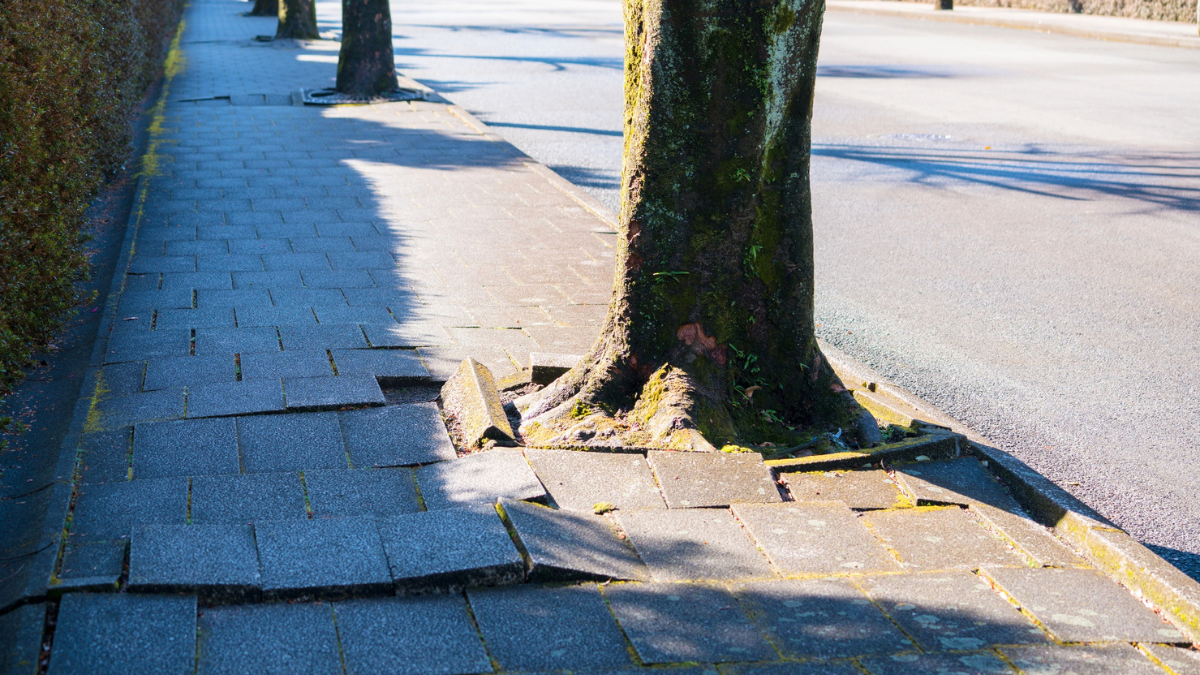
Cracks caused by suspected tree-root subsidence can be alarming. They can also begin one of the most technically difficult types of neighbour dispute.
The tree may stand several gardens away. More than one tree may be capable of causing the movement. The damage may instead result from leaking drains, shallow foundations, poor construction or ordinary settlement. Even where experts identify roots beneath the building, that does not automatically prove that the person responsible for the tree must pay.
Compensation for tree root damage can be recovered where the evidence establishes an actionable private nuisance or another legal wrong. Broadly, the claimant must prove that the tree caused or materially contributed to the damage, that the relevant risk was reasonably foreseeable and that the person controlling the tree failed to take reasonable steps once they knew—or ought to have known—about the problem.
During my years in legal practice, I learned that the first confident explanation was not always the right one. A crack that appeared to point directly towards a neighbour’s tree could have several competing causes. These cases are won or lost through careful investigation, not by measuring the distance between the trunk and the house.
This guide explains compensation for tree root damage in England and Wales, including liability, insurance, expert evidence, claims against councils, protected trees and the losses that may be recovered.
For the wider law on encroaching roots and branches, read Tree root and branch liability UK: a practical guide for homeowners.
Quick answer: Can you claim compensation for tree root damage?
Potentially, but the presence of a neighbouring tree and damage to your property are not enough by themselves.
A successful claim will usually require evidence that:
- the particular tree caused or made a legally material contribution to the damage;
- the type of harm was reasonably foreseeable;
- the person responsible knew or ought reasonably to have known of a real risk;
- they failed to take reasonable and proportionate steps; and
- the expense or other loss claimed was caused by that failure.
Tree-root nuisance is not a system of automatic liability. In Berent v Family Mosaic Housing, the Court of Appeal rejected the idea that proximity alone made subsidence damage reasonably foreseeable. There must have been a real, rather than merely theoretical, risk viewed in the circumstances known at the time.
Where liability is established, recoverable losses may include reasonable investigation and repair costs, appropriate preventative work and other proven consequential losses. There is no standard percentage award for reduced property value.
What counts as tree root damage?
Tree roots can cause damage directly or indirectly.
Direct root damage
Direct damage occurs where roots physically displace or interfere with a structure.
Examples include:
- lifting paving, patios or driveways;
- disturbing lightweight garden walls;
- deforming small outbuildings or shallow structures; and
- entering or obstructing drains and pipes.
Heavy masonry foundations are not commonly forced upwards simply by roots acting like hydraulic jacks. Direct pressure is more likely to affect lighter structures or surfaces offering relatively little resistance.
Drain cases also require care. Roots are attracted to moisture and may enter through cracks, defective joints or other weaknesses. Their presence inside a pipe does not necessarily prove that the roots caused the original defect, although they may enlarge it or create a serious blockage.
A CCTV drain survey and drainage engineer’s opinion may therefore be as important as the arboricultural evidence.
Indirect damage through subsidence
Most substantial residential claims involve clay-shrinkage subsidence.
Some clay soils change volume as their moisture content changes. During dry weather, a tree may extract enough moisture for susceptible soil to shrink. If that shrinkage occurs unevenly beneath shallow foundations, part of the building may move downwards.
The roots do not have to push against the foundation. The mechanism is the loss of moisture and resulting reduction in the soil’s load-bearing support.
The British Geological Survey identifies soil type, rainfall, drainage, tree location and the building’s characteristics as important parts of the risk. Dry weather and high temperatures can increase shrink–swell movement in susceptible clay.
Tree-related subsidence is especially fact-sensitive because several causes can operate together. A leaking drain may soften made ground while vegetation dries the clay below it. An extension may have shallower foundations than the original house. One tree may contribute to movement without being its sole cause.
What is heave?
Heave is upward ground movement caused by the soil expanding.
It can arise where a mature tree that has dried clay soil over many years is removed and the ground gradually rehydrates. That does not happen after every removal, but the risk is one reason a tree should not be felled immediately simply because roots have been found.
The Financial Ombudsman Service warns that overenthusiastic tree management can cause oversaturation and heave, and that the correct remedy may involve pruning, removal, a root barrier or a structural solution depending on the evidence.
The tree, building and soil should be assessed together before irreversible work is undertaken.
Which trees are most likely to cause subsidence?
Some tree species have greater water demand than others. Large willows, poplars, oaks and certain other mature trees are commonly investigated in clay-subsidence cases.
That does not mean one of those trees is legally responsible whenever cracking occurs nearby.
Risk depends on:
- the tree’s height, maturity and condition;
- the species and water demand;
- the distance and direction from the building;
- the depth and spread of the roots;
- the soil’s shrinkability;
- the depth and design of the foundations;
- rainfall and seasonal movement;
- drains and other water sources; and
- past tree management.
There is no universal safe or dangerous distance. The British Geological Survey advises that appropriate planting distance depends on the tree species, foundation design and soil composition.
A small tree very close to a shallow extension can present a different risk from a large oak near a well-founded modern building.
How do you recognise possible tree-root subsidence?
Possible indicators include diagonal or stepped cracking, cracks that widen during dry periods, sticking doors or windows and distortion concentrated in one part of the building.
Those symptoms are not proof. Similar cracking may result from:
- ordinary settlement;
- thermal movement;
- defective lintels;
- leaking drains;
- poor workmanship;
- inadequate foundations; or
- other forms of ground movement.
The Financial Ombudsman Service says a thorough subsidence investigation may include trial pits, boreholes, drain CCTV and crack or level monitoring. Monitoring over the seasons can help establish whether movement is continuing and whether it follows a pattern consistent with tree-related clay shrinkage.
Do not fill, decorate over or dismantle important evidence before the insurer or expert has recorded it, except where urgent work is needed for safety.
Who is legally responsible?
Liability commonly arises through private nuisance.
The relevant defendant is usually the person who owns or controls the land from which the tree is growing. The precise position can become more complicated where land is leased, managed by another organisation or occupied under arrangements that divide responsibility.
The person responsible is not an insurer against everything the tree does. The question is whether they unreasonably allowed a foreseeable nuisance to arise or continue.
Foreseeability and knowledge
The damage must have been a reasonably foreseeable consequence of the tree.
In Berent v Family Mosaic Housing, the Court of Appeal treated the relevant question as whether the defendants knew or ought to have known that the particular trees presented a real risk of causing damage to the claimant’s property. General knowledge that trees can sometimes cause subsidence was not enough.
Relevant evidence may include:
- previous subsidence claims involving the tree;
- earlier complaints or expert reports;
- known shrinkable clay;
- visible damage;
- unusual size or proximity;
- prior root identification;
- repeated seasonal movement; and
- recommendations that specific work be undertaken.
The standard is reasonableness, not perfection. A homeowner is not normally expected to commission geotechnical testing simply because a healthy tree stands near a neighbour’s house.
Does the neighbour have to be warned first?
Not invariably, but notice is often decisive in practice.
A person may already have enough information to appreciate the risk. Formal notice is not the only way of establishing knowledge.
Nevertheless, a clear written notification supported by technical evidence removes much of the uncertainty about what the tree owner knew and when. It also gives them a reasonable opportunity to inspect the property, notify their insurer and take appropriate action.
In Delaware Mansions Ltd v Westminster City Council [2001] UKHL 55, engineers identified a council-owned plane tree as the cause of damage and recommended its removal. The council declined to remove it. The House of Lords held that reasonable expenditure incurred in abating the continuing nuisance could be recovered where the council knew or ought to have known of it.
An unsupported letter saying “your tree is cracking my house” may not establish very much. A report identifying roots, clay desiccation and seasonal movement is far more significant.
What if the current owner did not plant the tree?
The fact that a tree was planted by a previous owner does not necessarily prevent liability.
Private nuisance focuses on the person who continues or adopts the problem, not simply the person who originally created it. A new owner may become responsible after acquiring the property if they know or ought to know about an ongoing nuisance and fail to respond reasonably.
They are not automatically liable for every item of historic damage caused before their ownership. The claimant must connect the current owner’s own period of responsibility to the continuing nuisance and the particular loss claimed.
That distinction matters when repairs were already necessary before the new owner received any notice.
Claims involving council-owned trees
The same broad nuisance principles apply where the tree belongs to a local authority.
Council ownership does not guarantee compensation. Nor does it provide immunity.
In Delaware Mansions, Westminster City Council was liable after receiving expert evidence and declining to remove the tree. In Berent, liability was not established because the necessary foreseeability and unreasonable response were not proved.
A claimant should not rely merely on saying that the council ought to inspect all its trees regularly. The stronger evidence will usually concern the particular tree and property:
- previous claims;
- notice given to the council;
- technical reports supplied;
- the council’s response;
- recommended works; and
- whether further damage occurred after a reasonable opportunity to act.
Report the matter through the council’s formal insurance or tree-claims procedure and keep the reference numbers and correspondence.
How do you prove that a particular tree caused the damage?
Causation is often the most difficult part of the claim.
The claimant normally needs to show that the identified tree caused or materially contributed to the damaging movement and that competing explanations are less probable.
The investigation may involve:
- crack and level monitoring;
- trial pits showing foundation depth;
- boreholes and soil analysis;
- root samples and species identification;
- soil-moisture or suction testing;
- CCTV examination of drains;
- records of rainfall and seasonal movement;
- the tree’s size, condition and management history; and
- structural analysis of the crack pattern.
No single test necessarily answers the question.
Finding roots in a trial pit proves that roots are present. It does not automatically prove that they extracted enough moisture to cause the movement. Equally, a leaking drain does not necessarily exclude a material contribution from a tree.
The experts need to bring the evidence together.
Which experts may be needed?
An arboricultural consultant considers the tree, root system, species, condition and appropriate management.
A structural engineer or chartered building surveyor assesses the building, crack pattern, movement and repair requirements.
A geotechnical engineer may be needed for soil and foundation evidence. A drainage specialist may investigate pipes and underground services.
The following organisations provide professional directories and guidance:
- Arboricultural Association
- Royal Institution of Chartered Surveyors
- Institution of Structural Engineers
Choose someone with specific experience of tree-related subsidence rather than assuming that every tree surgeon or general surveyor has the necessary forensic expertise.
A contractor who stands to be paid for removing the tree is not necessarily the best person to provide independent evidence that removal is legally and technically necessary.
Contact your buildings insurer first
Suspected subsidence should normally be reported promptly to the buildings insurer.
The insurer may appoint a loss adjuster, engineer and arboricultural consultant and arrange monitoring. Serious movement can require investigation over several seasons before a durable solution is chosen.
The Association of British Insurers says buildings insurance will usually cover qualifying subsidence damage to the home and relevant outbuildings. A special subsidence excess—often around £1,000—commonly applies. Patios, paths, garden walls and driveways are frequently excluded unless the main residence is damaged at the same time. Alternative accommodation is commonly covered where insured damage makes the home uninhabitable.
The policy wording controls. “Tree-root damage” is not necessarily a separate insured event: the insured event may be subsidence, heave, escape of water or accidental damage.
Does late notification invalidate the policy?
Not automatically.
A policyholder should notify the insurer as soon as reasonably possible, but the legal effect of delay depends on the policy terms, circumstances and any resulting prejudice.
The ABI’s domestic tree-root claims agreement specifically says that late notice alone does not prevent that inter-insurer agreement operating, although insurers remain entitled to rely upon relevant policy conditions.
Delay can still cause serious practical difficulties. Evidence may disappear, cracks may be repaired, roots may be cut and the neighbouring owner may lose the opportunity to inspect or mitigate the damage.
Prompt notice remains the right course.
How do insurers deal with domestic tree-root claims?
In many insured domestic cases, the damaged property’s insurer handles the investigation and insured repair.
The voluntary ABI Domestic Subsidence Tree Root Claims Agreement provides that subscribing insurers will generally handle qualifying claims under the damaged property’s policy and will not pursue the insurer of the domestic tree owner for the first claim. Exceptions can apply where preventative measures are not taken or damage recurs. Uninsured losses remain outside the agreement.
Not every insurer subscribes, and the agreement does not govern every council, commercial or uninsured claim.
This is one reason homeowners should involve insurers before negotiating compensation privately or commissioning irreversible work.
What if you disagree with your insurer?
Use the insurer’s formal complaints procedure first.
Common disputes concern:
- whether the movement is subsidence or settlement;
- whether a tree is actually responsible;
- whether the property has stabilised;
- whether underpinning is necessary;
- the scope or quality of repairs;
- excluded garden structures; and
- alternative accommodation.
The Financial Ombudsman Service’s current subsidence guidance explains the evidence it expects insurers to consider. After a formal complaint, the Ombudsman can normally consider the matter if the insurer has issued its final response or failed to respond within the applicable period.
What compensation can be recovered?
The purpose of damages is generally to put the claimant, so far as money can, into the position they would have occupied had the actionable nuisance not occurred.
It is not to provide a windfall or fund a more valuable property than the one damaged.
Investigation and professional fees
Reasonable costs incurred in identifying the cause and deciding how to remedy it may be recoverable.
These can include appropriate fees for structural, geotechnical, drainage, arboricultural and valuation evidence.
Recoverability depends on necessity, proportionality and causation. Commissioning several overlapping reports after liability has already been admitted may not be reasonable.
The defendant should normally be given an opportunity to inspect and participate before expensive destructive testing is undertaken, unless urgent action is required.
Repair and reinstatement costs
A claimant may recover the reasonable cost of repairing physical damage caused by the actionable nuisance.
Depending on the case, this may include:
- structural crack repairs;
- drainage repairs;
- rebuilding walls or surfaces;
- redecoration;
- monitoring;
- temporary works; and
- necessary stabilisation.
Underpinning is not automatically recoverable merely because it provides the most robust solution. The proposed repair must be reasonably necessary and proportionate.
In Delaware Mansions, the very substantial underpinning expenditure was recoverable because the continuing nuisance remained and the council had refused the less costly option of removing the tree. The decision does not mean that underpinning is appropriate in every subsidence claim.
Reasonable preventative or abatement work
Where a continuing nuisance exists, reasonable expenditure necessary to bring it to an end may be recoverable.
Possible measures include carefully designed tree management, felling, a root barrier, drainage work or structural stabilisation.
The claimant must still establish that the proposed course is reasonable. The House of Lords in Delaware Mansions recognised recovery of reasonable expenditure incurred in abating a continuing nuisance.
A court will not necessarily award the cost of the claimant’s preferred solution where a less disruptive and equally effective option was available.
Insurance excess and uninsured losses
Where the insurer pays the repair costs, the homeowner cannot recover the same expenditure again from the tree owner.
They may still have uninsured losses, potentially including:
- the policy excess;
- excluded structures;
- reasonable additional expenses;
- losses exceeding policy limits; and
- other damage not indemnified by the insurer.
The ABI tree-root agreement expressly preserves claims for uninsured losses.
Every item must be evidenced and linked to the actionable nuisance.
Alternative accommodation and loss of use
Where the property cannot safely or reasonably be occupied during repairs, reasonable alternative-accommodation and related costs may be recoverable under the policy or as consequential damages.
The period and standard of accommodation must remain reasonable. The claimant should keep invoices and cooperate in avoiding unnecessary expense.
ABI guidance confirms that buildings insurance commonly includes alternative accommodation where insured subsidence damage makes the home uninhabitable.
Can you claim for loss of property value?
Possibly, but not by applying a general percentage. There is no recognised standard figure.
A claimant would need valuation evidence establishing that, after proper repair and treatment, a measurable residual diminution remains and that it was caused by the defendant’s actionable breach. The claim must not duplicate repair costs or represent mere concern that trees or subsidence exist nearby.
In Davies v Bridgend County Borough Council [2024] UKSC 15, the Supreme Court rejected a residual diminution claim because the loss had arisen before the council’s actionable breach and would have occurred in any event. The decision concerned Japanese knotweed, but its causation reasoning applies more widely to nuisance damages.
A property may become harder or more expensive to insure following subsidence, but that fact alone does not produce an automatic damages award.
Are legal costs part of the compensation?
Reasonable pre-action costs may sometimes be recoverable if proceedings succeed, but legal costs are governed by separate court rules and discretion.
Winning does not usually mean recovering every pound spent. A claimant can succeed on liability but recover less than expected if the claim was exaggerated, evidence duplicated or settlement offers rejected unreasonably.
Read Property litigation costs UK: A practical guide for homeowners before threatening proceedings.
Can a court order the tree to be removed?
Potentially, but removal is not automatic.
A court may grant an injunction requiring the nuisance to be abated. Depending on the evidence, that might involve removal, pruning, root management or another effective solution.
An injunction is discretionary. The court will consider:
- whether a continuing nuisance is proved;
- what work is needed to end it;
- risks created by removing the tree;
- protected-tree controls;
- the effectiveness of alternative measures;
- the parties’ conduct; and
- whether damages alone would be adequate.
The fact that compensation is payable does not necessarily mean that the tree must disappear.
What if the tree is protected?
Before pruning, cutting roots or felling, check whether the tree is subject to a Tree Preservation Order or lies within a conservation area.
In England, cutting roots is treated as prohibited work to a TPO tree unless consent or a relevant exception applies. Current government guidance recognises an exception for the minimum work necessary to prevent or abate an actionable legal nuisance, but the existence and extent of that exception should not be assumed without strong evidence. Applications based on alleged structural damage should be supported by appropriate technical material.
Wales has its own application arrangements for protected trees and conservation-area work. The current form is available through the Welsh Government’s tree-works application page.
Protected status does not make the tree owner immune from nuisance liability. It does mean that the correct consent, exemption or authority must be established before work proceeds.
Can you cut the roots yourself?
A landowner generally has a common-law right to cut encroaching roots back to the legal boundary, subject to important restrictions.
That is not necessarily a sensible response to suspected subsidence.
Cutting significant roots can:
- destabilise the tree;
- damage or kill it;
- cause abrupt changes in soil moisture;
- interfere with expert evidence;
- breach protected-tree controls; and
- expose the person cutting them to liability.
Do not trespass onto the neighbouring land or cut beyond the boundary.
Where structural damage is suspected, notify the insurer and obtain arboricultural advice before carrying out root work. The separate guide to tree root and branch liability explains the wider self-help rules.
A practical claim process
The safest first step is to notify the buildings insurer and preserve the evidence.
Photograph the cracks and surrounding structures, record when they appeared and retain earlier photographs showing the property before the damage. Avoid redecorating over movement before inspection.
Establish who owns or controls the tree. For council trees, use the authority’s formal tree-claims process. For a private tree, write to the owner calmly, explain that investigations are underway and ask them to notify their liability insurer.
Once credible technical evidence exists, provide it to the tree owner or council and invite inspection. The correspondence should identify the alleged mechanism, proposed investigation and immediate measures needed to avoid further damage.
Try to agree a coordinated solution. Unilateral removal, pruning or underpinning can create additional loss and disputes about whether the chosen work was necessary.
Where liability or the remedy remains contested, a formal letter of claim should set out the legal basis, expert evidence, loss and proposed next steps. Mediation may be useful where the real disagreement concerns which solution should be adopted rather than whether movement exists.
For the wider dispute-resolution steps that sit alongside the technical and insurance evidence, see my guide to resolving neighbour disputes.
Court proceedings should be the final step, not the opening move.
How long do you have to bring a claim?
Do not assume that a continuing tree problem allows a claim to be postponed indefinitely.
The ordinary limitation period for a tort claim is commonly six years from the date on which the relevant cause of action accrued. Different questions can arise concerning progressive damage, continuing nuisance and latent negligence claims. The Limitation Act also contains special knowledge-based provisions for some latent-damage claims.
Identifying the correct start date can be difficult where cracking appeared gradually or different losses arose at different times.
Obtain advice well before any possible deadline rather than relying on the tree still being present.
Frequently asked questions
Who pays for tree root damage?
The damaged property’s buildings insurer will often handle insured subsidence damage first.
The person responsible for the tree may be liable for uninsured losses or other damages where the legal requirements of nuisance or negligence are proved. Domestic insurers may also be governed by the voluntary ABI tree-root claims agreement.
Can I claim against my neighbour?
Yes, where evidence establishes that their tree caused or materially contributed to actionable damage and that they failed to respond reasonably to a foreseeable risk.
Owning the tree is not enough by itself.
Can I claim against the council?
Potentially.
You must prove the same core matters: causation, foreseeable risk, knowledge and unreasonable failure to act. Previous notice or claims involving the particular tree may be important.
Do the roots have to push against my foundations?
No.
Tree-related subsidence usually involves roots extracting moisture from shrinkable clay rather than physically pushing the building.
The tree’s causal contribution still needs to be established through expert evidence.
Does finding roots under the house prove my claim?
No.
It proves that roots are present. It does not necessarily establish that they caused damaging soil shrinkage, that they came from the alleged tree or that the defendant should reasonably have foreseen the damage.
Can I force my neighbour to remove the tree?
Not merely because you believe it is responsible.
Removal may be agreed voluntarily or ordered through an injunction in an appropriate case. The evidence, alternatives, heave risk and protected status must all be considered.
Does insurance cover damaged patios and garden walls?
Not always.
Many policies cover those structures only where the main residence suffers insured subsidence damage at the same time. Check the definitions and exclusions in the particular policy.
Will my insurer pay for underpinning?
Only where it is reasonably required to provide an effective and lasting repair under the policy.
Underpinning is generally reserved for serious cases. The insurer may consider tree management, drainage work, local repairs or another stabilisation method first.
What if the tree owner ignores the report?
Send the evidence formally, ask them to notify their insurer and specify a reasonable response period.
Where damage is continuing or urgent, obtain legal advice about an injunction and protective work. Do not wait while evidence and limitation time are lost.
Can I claim a percentage of my home’s value?
There is no standard percentage.
Any residual diminution claim needs expert valuation evidence, proof of causation and careful avoidance of double recovery.
Can I claim if the damage began before I bought the house?
Possibly, where a continuing actionable nuisance remains and you incur reasonable expense in bringing it to an end.
You do not automatically inherit the previous owner’s personal claim for completed historic loss. Delaware Mansions illustrates the distinction between past cracking and expenditure reasonably incurred by the later owner to eliminate a continuing nuisance.
The practical point: Prove the cause before pricing the claim
Compensation for tree root damage does not begin with valuing the cracks. It begins with working out why the building moved.
A nearby tree may be the cause, one of several causes or entirely innocent. The same is true of a cracked drain discovered during the investigation.
Start with the insurer, preserve the physical evidence and obtain the right technical expertise. Then give the person responsible a fair opportunity to inspect and respond.
In my experience, cases became needlessly expensive when the desired remedy was chosen before the cause had been established. One side demanded that a mature tree be felled; the other refused to accept that any action was needed. Months later, the real argument was still about the soil, drains and foundations.
Strong claims are built in the opposite order: cause, knowledge, reasonable response and only then compensation.
Last legally reviewed: 29 August 2026
This guide is based on general principles of English and Welsh law, is intended for informational purposes only, and does not constitute legal advice or establish a professional relationship.





One response to “Compensation for tree root damage: Who pays and how to claim”
[…] compensation for tree-root damage; […]