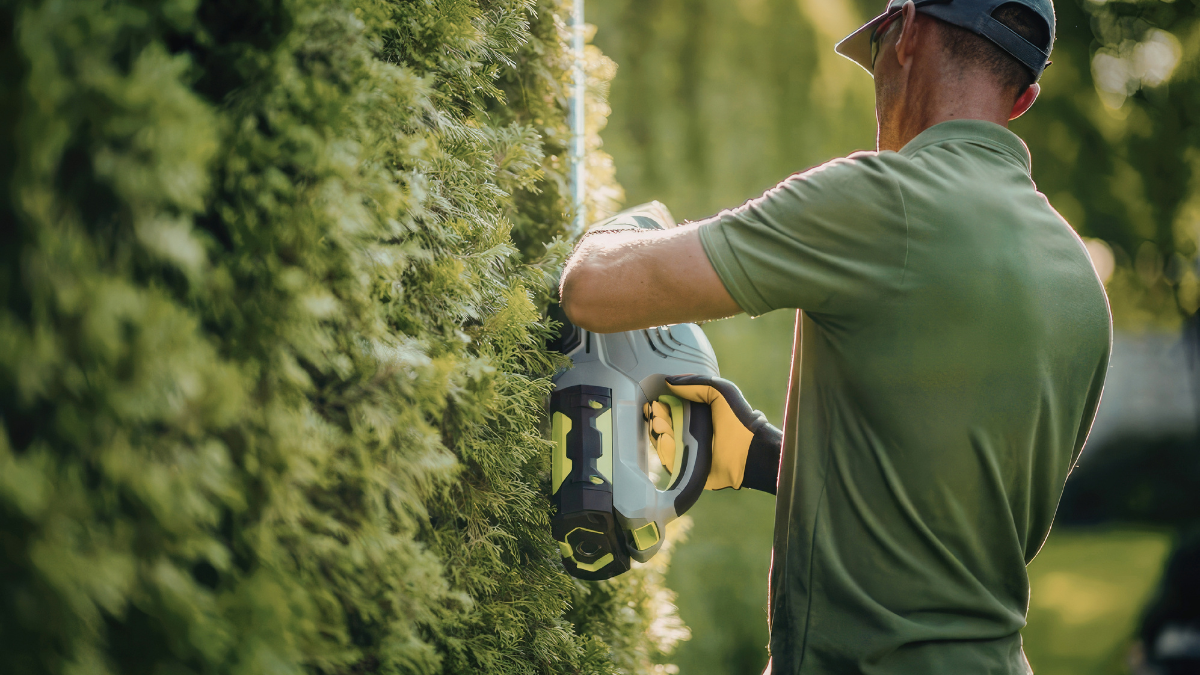
Hedges make excellent boundaries. They provide privacy, soften noise and give birds and other wildlife somewhere to live. They can also cause remarkably bitter disputes when one grows too tall, spreads into the garden next door or is cut much harder than its owner expected.
The main rules of hedge law UK homeowners need to understand are these: there is no universal maximum hedge height, but a council may intervene where a qualifying evergreen or semi-evergreen hedge is more than two metres high and adversely affects a neighbour’s enjoyment of their home or garden. You may normally cut branches or roots that encroach onto your land, but only as far as the boundary and without entering the neighbour’s property or causing avoidable damage.
Ownership is a separate question. A hedge is not automatically shared merely because it marks the boundary, and neither neighbour acquires a free hand to cut the whole hedge simply because one face grows into their garden.
During my years in legal practice, I found that hedge disputes often followed a familiar pattern. One neighbour saw routine maintenance; the other saw the destruction of something they had nurtured for 20 years. By the time anyone checked the deeds or measured the boundary, both sides had become firmly convinced that the law was entirely on their side.
This guide explains the law applying in England and Wales. Scotland and Northern Ireland have their own property law and high-hedge regimes.
You may also find this helpful: Tree root and branch liability UK.
Quick answer: What does hedge law say?
There is no general law requiring every residential hedge to remain below two metres.
A hedge exceeding two metres may fall within the high-hedge legislation if it is formed wholly or predominantly by a line of at least two evergreen or semi-evergreen trees or shrubs, forms a barrier to light or access and adversely affects the reasonable enjoyment of a domestic property because of its height.
You may normally cut growth from your neighbour’s hedge that crosses the legal boundary into your property. You must stop at the boundary, must not enter the neighbour’s land without permission and should take care not to destabilise, kill or seriously damage the hedge.
The cut material continues to belong to the hedge owner. The orthodox course is to offer it back. If the owner does not want it, dispose of it properly rather than throwing it into their garden.
Before cutting, check whether the hedge contains protected trees or active bird nests and whether any other restrictions apply.
Contents
- Is there a legal maximum height for a hedge?
- Who owns a boundary hedge?
- Can I cut my neighbour’s hedge?
- What should happen to the hedge cuttings?
- My neighbour cut my hedge without permission
- Can cutting a hedge amount to criminal damage?
- Do I need permission to plant a hedge?
- Who has to maintain a boundary hedge?
- When is a hedge a legal nuisance?
- Does my neighbour have a right to light or a view?
- What is a high hedge in law?
- How do I complain to the council about a high hedge?
- What will the council consider?
- What is a high-hedge remedial notice?
- Does the high-hedge procedure cover root damage?
- Can I cut a hedge during bird nesting season?
- Are hedges protected by Tree Preservation Orders?
- What if the hedge is in a conservation area?
- Can a countryside hedge be removed?
- What if a hedge obstructs the road or pavement?
- Can my neighbour remove the boundary hedge?
- How should a hedge dispute be approached?
- Frequently asked questions
- The practical rule: Stop at the boundary and start with a conversation
Is there a legal maximum height for a hedge?
No. There is no general rule saying that a residential hedge must be no more than two metres high.
The two-metre figure is the threshold at which the statutory high-hedge complaint procedure may become available. It is not an automatic height limit and does not mean that every hedge exceeding two metres must be reduced.
Unlike a fence or wall, a hedge does not ordinarily require planning permission simply because it exceeds two metres. Planning conditions, restrictive covenants or estate rules may nevertheless control the type, position or height of planting on a particular property.
A council will act only after receiving a valid complaint, investigating the circumstances and deciding that the hedge’s height adversely affects the reasonable enjoyment of a home or its garden or yard. Even then, the council decides what action is reasonable; it does not simply apply a universal two-metre rule.
Who owns a boundary hedge?
There is no standard rule that the hedge on the left or right belongs to a particular homeowner.
Government guidance confirms that there is usually no central record identifying who owns the hedge, wall, tree or fence between two properties. The Land Registry title plan normally shows only the general position of the boundary rather than the precise line or ownership of individual plants.
The available evidence may include:
- the title registers and title plans;
- older conveyances and transfers;
- T-marks and accompanying wording;
- the position of the main stems;
- evidence of who planted the hedge;
- historic photographs and plans; and
- agreements between current or former owners.
The position of the stems can be important, but it should not be considered in isolation. A hedge originally planted by agreement along the boundary may have a different ownership history from one planted wholly within a single garden.
Is a hedge on the boundary automatically jointly owned?
No. A hedge may be jointly owned where the evidence shows that it was planted astride the boundary for both properties or was otherwise intended to be shared. But its position alone does not automatically establish joint ownership.
If the evidence is unclear, avoid carrying out drastic work until ownership and the boundary position have been investigated. Cutting one face of encroaching growth is very different from reducing the height, removing stems or uprooting the entire hedge.
For more detail on interpreting boundary documents, read Boundary fence rules UK.
Can I cut my neighbour’s hedge?
You may normally cut branches, shoots or roots that cross from your neighbour’s land into your property.
The right is usually described as a common-law right of abatement. You do not generally need the hedge owner’s permission to remove encroaching growth from your own land.
However, the right has firm limits.
You may cut only as far as the legal boundary. You cannot lean across the boundary to cut the neighbour’s side, enter their garden without permission or reduce the overall height where the relevant growth is not encroaching onto your land.
You should also carry out the work competently. Excessive cutting of branches or roots may destabilise or kill a hedge or tree. If careless work causes damage or creates a danger, you may be liable for the consequences.
Official government guidance confirms that branches and roots may be trimmed to the property boundary but warns that doing more may result in legal action for damage.
Do I have to ask my neighbour first?
There is no universal requirement to obtain permission before cutting encroaching growth back to the boundary.
Nevertheless, giving advance notice is usually sensible, particularly where:
- ownership or the boundary is uncertain;
- substantial cutting is proposed;
- the hedge contains mature trees;
- root cutting may affect stability;
- access may be needed; or
- the work is likely to change the hedge’s appearance significantly.
A brief conversation can prevent a routine trim being interpreted as a deliberate attack on the hedge.
Can I reduce the height of my neighbour’s hedge?
Not merely because it is too tall for your liking.
Your common-law right normally allows you to remove only the growth extending across your boundary. It does not entitle you to reduce the top of a hedge situated on your neighbour’s land.
Where the hedge qualifies under the high-hedge legislation, the appropriate route is to try to reach agreement and, if that fails, consider a formal council complaint.
What if the top of the hedge overhangs my garden?
You may cut the part that actually crosses into your property, but no further.
This can leave an uneven appearance, particularly where the hedge leans across the boundary. That aesthetic problem does not enlarge the legal right to cut.
What should happen to the hedge cuttings?
Branches, fruit and other material removed from a neighbour’s hedge continue to belong to the hedge owner.
You should offer the cuttings back. The owner may accept them or agree that you can dispose of them.
Do not simply throw the material over the fence. Apart from being unnecessarily provocative, leaving unwanted waste on somebody else’s property may itself amount to trespass or unlawful depositing of waste.
Where the owner declines the material, you are responsible for disposing of it properly.
My neighbour cut my hedge without permission
The first question is not simply whether permission was given. It is whether the neighbour remained on their side of the legal boundary and limited the work to encroaching growth.
If they cut only growth extending onto their own land, they may have acted within their common-law rights even though you were not consulted.
The position is different if they:
- crossed the boundary;
- entered your garden without permission;
- cut the top or your side of the hedge;
- removed main stems;
- uprooted the hedge; or
- carried out work so severe that it caused substantial damage or death.
Cutting beyond the boundary may amount to trespass and wrongful interference with property. Compensation can include the reasonable cost of restoration or replacement, although the measure of damages depends on the circumstances and proportionality.
Take dated photographs as soon as possible. Record what the hedge looked like before and after the work, keep any CCTV footage or messages and obtain an arboricultural opinion if the hedge may not recover.
Can cutting a hedge amount to criminal damage?
Potentially, but not every badly judged trim is a criminal offence.
Under the Criminal Damage Act 1971, a person commits an offence if, without lawful excuse, they intentionally or recklessly destroy or damage property belonging to another.
A neighbour exercising the lawful right to cut encroaching growth to the boundary is not committing criminal damage merely because the hedge owner dislikes the result.
The position may be different where somebody knowingly crosses the boundary, deliberately destroys the hedge or acts recklessly as to serious damage. Whether the criminal test is met depends on ownership, intention, lawful excuse and the nature of the damage.
Civil remedies are often more relevant to ordinary hedge disputes, particularly where the main issue is the cost of repair or replacement rather than deliberate vandalism.
Do I need permission to plant a hedge?
You can normally plant a hedge wholly within your own land without your neighbour’s permission.
Do not plant stems on the legal boundary or allow planting operations to encroach onto the neighbour’s land without agreement. A hedge that starts as a line of small plants can become several metres wide, so leaving adequate space for future growth and maintenance is usually wise.
Before planting, check:
- the property deeds and restrictive covenants;
- planning conditions affecting open-plan frontages;
- estate-management requirements;
- visibility requirements near a road or driveway;
- underground services; and
- whether the chosen species is suitable for the available space.
Leyland cypress and some laurels grow quickly and can become expensive to control. A slower-growing species may take longer to establish but cause fewer difficulties later.
If you agree to plant a hedge on or close to the boundary, record its position, ownership and future maintenance in writing.
Who has to maintain a boundary hedge?
There is no general rule requiring each neighbour to maintain “their side” of every boundary hedge.
Responsibility may depend upon ownership, the deeds, a covenant, an agreement, a lease, a planning condition or the need to prevent reasonably foreseeable damage.
A neighbour who does not own the hedge may choose to trim encroaching growth on their land. That does not necessarily make them responsible for maintaining the hedge as a whole.
Equally, the hedge owner is not automatically obliged to keep the neighbour’s face neat simply because it is inconvenient for the neighbour to reach. The owner may nevertheless face liability where the hedge becomes dangerous, causes actionable damage, obstructs a highway or breaches a remedial notice or enforceable covenant.
Can I enter my neighbour’s garden to cut my hedge?
Not without permission or another legal right.
Ownership of the hedge does not create an automatic right to enter adjoining land. Arrange access in advance and agree how plants, lawns or other property will be protected.
Where access is refused, the legal position will depend on the nature and necessity of the proposed work. Do not simply enter and assume ownership of the hedge gives you permission.
When is a hedge a legal nuisance?
The word “nuisance” is often used loosely to describe anything irritating. Private nuisance is a legal cause of action with more demanding requirements.
A hedge may potentially create an actionable nuisance where, for example, its roots or branches cause substantial interference with neighbouring land or physical damage that the hedge owner could reasonably be expected to address.
Ordinary leaf fall, minor shading and the presence of insects or birds will not usually be enough by themselves.
Liability for root damage is particularly fact-sensitive. The mere presence of roots beneath neighbouring land does not automatically make the hedge owner liable for every crack or defect. The cause of the damage, foreseeability, notice and the reasonable steps available to the owner all matter.
For a detailed explanation, see Tree root and branch liability UK. Modern nuisance law emphasises reasonableness between neighbours and reasonable foreseeability rather than imposing automatic liability whenever roots cross a boundary.
Does my neighbour have a right to light or a view?
There is no general legal right to preserve a favourite view or to receive uninterrupted sunshine throughout a garden.
Rights of light are a separate and technically complex area of property law, generally concerning light passing through defined apertures in buildings. They should not be confused with the statutory high-hedge complaint process.
The high-hedge legislation gives councils a specific power to consider whether the height of a qualifying hedge adversely affects the reasonable enjoyment of domestic property. That can include the effect on light to the house, garden or yard, but the council must balance the interests of both properties and the wider surroundings.
A hedge is not automatically actionable simply because it causes some shade.
What is a high hedge in law?
The legislation is contained in Part 8 of the Anti-social Behaviour Act 2003.
For the statutory procedure, a high hedge is so much of a barrier to light or access as:
- is formed wholly or predominantly by a line of two or more evergreen or semi-evergreen trees or shrubs; and
- rises to more than two metres above ground level.
The hedge must be growing on land owned or occupied by somebody else, and the complainant must own or occupy domestic property whose reasonable enjoyment is adversely affected by the hedge’s height.
Does a single tree count as a high hedge?
No. A single tree or shrub does not fall within the statutory high-hedge procedure, regardless of its height.
Other legal principles may apply if a single tree causes damage, presents a danger, is protected or encroaches over the boundary.
Do deciduous hedges count?
A hedge must be wholly or predominantly evergreen or semi-evergreen.
A mixed hedge may qualify if evergreen or semi-evergreen plants predominate. A wholly deciduous hedge will not normally fall within the statutory definition.
Government guidance explains that semi-evergreen means retaining some live or green leaves throughout the year. Beech or hornbeam retaining dead leaves in winter does not qualify on that basis alone.
Do gaps in the hedge prevent a complaint?
Not necessarily.
A hedge may still form a barrier despite some gaps. The question is whether the gaps significantly reduce its overall effect as a barrier to light or access.
A line of widely separated trees may fall outside the definition if it does not operate as a hedge-like barrier.
Where is the height measured from?
The hedge is measured from ground level, usually at the base of the trunks or main stems.
If it grows on a bank or in a raised bed, official guidance indicates that the measurement should ordinarily be taken from natural ground level rather than simply from the top of an artificially raised feature.
How do I complain to the council about a high hedge?
The council procedure is intended to be a last resort, not the first move in a neighbour disagreement.
Before making a complaint, you should take reasonable steps to resolve the matter yourself. These may include speaking to the hedge owner, writing politely, proposing a manageable height, obtaining quotations or trying mediation.
A council can reject a complaint if it considers that reasonable attempts at settlement have not been made.
Step 1: Check that the hedge qualifies
Confirm that the hedge:
- consists of a line of at least two trees or shrubs;
- is wholly or predominantly evergreen or semi-evergreen;
- exceeds two metres;
- forms a barrier to light or access; and
- adversely affects your reasonable enjoyment of domestic property because of its height.
The complaint cannot be used to resolve root damage, ownership, the legal boundary, leaf fall or general complaints about maintenance.
Step 2: Record your efforts to reach agreement
Keep copies of letters, emails and messages. Record the dates of conversations and any proposals made.
Avoid exaggerated or abusive language. The council will normally give the hedge owner details of the complaint, so write on the assumption that the neighbour will read it.
In practice, I found that a calm chronology was far more persuasive than pages of accusations. What did you ask for? When did you ask? What was the response? How does the hedge affect particular rooms or parts of the garden? Those details are far more useful than saying the neighbour is “impossible”.
Step 3: Gather evidence of the effect
Useful material may include:
- photographs taken at different times of day and year;
- a plan showing the hedge and affected property;
- approximate measurements;
- details of affected windows, rooms and garden areas; and
- an explanation of why the effect is serious.
The Government publishes detailed guidance on complaining to the council about high hedges, including information about assessing light loss.
Step 4: Submit the complaint and fee
Contact the relevant local authority for its form, procedure and current fee.
Councils set their own complaint fees, so the amount varies. Check the council’s website rather than relying on a national estimate.
What will the council consider?
The council must decide whether the height of the hedge adversely affects the reasonable enjoyment of the complainant’s home, garden or yard and, if so, what action is appropriate.
It should consider evidence from both sides and balance matters such as:
- the effect on daylight and sunlight;
- the position and orientation of the properties;
- the distance between the hedge and affected areas;
- privacy and security;
- the hedge’s contribution to the neighbourhood; and
- the practical effect of reducing it.
The council is not determining hedge ownership, awarding compensation or settling the precise boundary. It is deciding a specific statutory complaint concerning the hedge’s height. There is no fixed deadline for determining a complaint.
What is a high-hedge remedial notice?
If the council concludes that action is justified, it may issue a remedial notice.
The notice identifies the work that must be carried out and the period allowed. It may also require ongoing maintenance so that the problem does not recur.
The legislation does not prescribe one standard height. The appropriate reduction depends on the particular circumstances.
A council cannot require:
- complete removal of the hedge;
- work likely to kill or destroy it; or
- reduction below two metres above ground level.
This does not mean the council must order a reduction to exactly two metres. It may decide that a greater height is appropriate.
What happens if the owner ignores the notice?
Failure to comply with a remedial notice is a criminal offence and can result in a fine.
The council may also enter the land, carry out the required work and recover its reasonable expenses from the hedge owner.
Can either neighbour appeal?
Yes. The complainant may appeal where no remedial notice is issued or where they consider the required work insufficient. The hedge owner or occupier may appeal against the notice or argue that the requirements go too far.
In England, appeals are dealt with through the Planning Inspectorate. In Wales, they are dealt with on behalf of Welsh Ministers by Planning and Environment Decisions Wales. The usual deadline is 28 days from the relevant decision or notice.
Does the high-hedge procedure cover root damage?
No. The Anti-social Behaviour Act procedure expressly excludes problems caused by roots. A council considering a high-hedge complaint cannot award damages for subsidence or require root work under that procedure.
Root damage must be addressed through the ordinary principles of nuisance, negligence, insurance and property law.
Can I cut a hedge during bird nesting season?
There is no single statutory “nesting season” during which every domestic hedge is automatically protected from all cutting.
The main nesting period is generally described as March to August, but birds can nest outside those dates. The legal question is whether an active nest or protected bird is present, not merely the date on the calendar.
Under the Wildlife and Countryside Act 1981, it is an offence intentionally to take, damage or destroy the nest of a wild bird while it is in use or being built, or intentionally to take or destroy its eggs. Additional offences protect specially listed birds from intentional or reckless disturbance at or near a nest.
Before cutting, inspect the hedge carefully. If there is an active nest, postpone work or obtain appropriate ecological advice.
Are there separate rules for agricultural hedgerows?
Yes. In England, hedgerows on or next to qualifying agricultural land are subject to separate management rules, including a general prohibition on cutting or trimming between 1 March and 31 August. There are exemptions, including for hedgerows within or marking the boundary of a private garden.
Those agricultural rules are separate from the Wildlife and Countryside Act, which still applies whenever active nests are present. Different agricultural and environmental arrangements may apply in Wales.
Are hedges protected by Tree Preservation Orders?
A Tree Preservation Order normally protects trees, not ordinary shrubs or a hedge simply because it is a hedge.
Trees growing within a hedge may be protected. An old hedge that has effectively developed into a line of substantial trees may also contain vegetation capable of protection as trees.
Before cutting mature trees forming part of a hedge, check with the local planning authority. Consent may be required even where branches overhang your property.
What if the hedge is in a conservation area?
Being in a conservation area does not automatically protect every ordinary hedge or shrub.
However, qualifying trees within the hedge may be protected by conservation-area controls. In England, anyone proposing certain work to a tree in a conservation area must generally give the local planning authority six weeks’ notice unless an exception applies. Wales has corresponding planning controls, and the local authority should be consulted before work to substantial hedgerow trees.
The safest approach is to check before cutting rather than assume that the right to remove encroaching branches overrides statutory tree protection.
Can a countryside hedge be removed?
Some countryside hedgerows are protected under the Hedgerows Regulations 1997.
The regulations do not generally apply to ordinary hedges within or bordering a domestic garden. They can apply to qualifying rural hedgerows associated with agricultural, forestry, common or protected land.
Where the rules apply, a person proposing removal usually has to notify the local planning authority. The authority has 42 days to issue a retention notice or permit removal; removing a protected hedgerow without following the procedure can lead to enforcement action.
What if a hedge obstructs the road or pavement?
A landowner can be required to cut back a hedge that obstructs a highway, interferes with visibility or blocks a road sign or streetlight.
If the owner fails to comply, the highway authority may carry out the work and seek to recover the cost.
This is separate from the high-hedge complaint procedure. A hedge can create a highway problem even if it is less than two metres high and causes no loss of light to a neighbouring home.
Can my neighbour remove the boundary hedge?
That depends on ownership.
A neighbour may normally remove a hedge that belongs entirely to them and stands wholly within their land, subject to covenants, planning conditions, wildlife protection, protected trees and countryside hedgerow rules.
They should not remove a hedge that belongs to you or is jointly owned without agreement.
Removing the physical hedge does not itself move the legal boundary. The invisible property line remains where the title evidence and legal principles place it.
If the hedge is the clearest physical evidence of a disputed boundary, photograph and measure it before any work takes place. Once roots, stems and old planting lines have been excavated, reconstructing the historic position becomes much harder.
How should a hedge dispute be approached?
Check the boundary and ownership first
Obtain the title registers, title plans and any older deeds referred to in them.
Do not assume that the Land Registry red line identifies the exact position of every stem. Most registered titles show only general boundaries, and government guidance acknowledges that hedge ownership is often not recorded.
Separate the different issues
Ask what the dispute is actually about:
- ownership of the hedge;
- the position of the boundary;
- encroaching growth;
- excessive height;
- root damage;
- dangerous trees;
- wildlife protection; or
- an alleged covenant.
Different legal problems have different remedies. A high-hedge complaint will not decide ownership or compensate for root damage. A right to cut encroaching branches does not permit reduction of the entire hedge.
Put the practical proposal in writing
Rather than demanding that the hedge be “sorted out”, propose a specific height, width, frequency of trimming and division of cost.
Record whether access is needed and who will remove the cuttings. Where the hedge is shared, record whether the agreement concerns maintenance only or also acknowledges ownership and the boundary.
Consider mediation
Mediation can be particularly effective in neighbour disputes because it allows practical arrangements that a court might not impose.
The agreement might cover seasonal trimming, access for contractors, replacement species, cost sharing and communication before future work.
Where the hedge problem has developed into a wider disagreement, my practical guide to neighbour disputes explains how to raise the issue, keep useful evidence, consider mediation and escalate matters proportionately.
Treat proceedings as a last resort
Court proceedings may be appropriate where a hedge has been destroyed, land has been trespassed upon or serious damage is occurring. But the cost and hostility can quickly become disproportionate.
A formal neighbour dispute may also need to be disclosed when one of the properties is sold.
My guide to property litigation costs UK explains the principal financial risks.
Frequently asked questions
What is the legal height of a hedge in the UK?
There is no universal maximum height.
In England and Wales, a qualifying evergreen or semi-evergreen hedge must exceed two metres before the statutory council complaint procedure can apply. That does not make every hedge over two metres unlawful.
Can I make my neighbour cut their hedge?
You cannot ordinarily compel a neighbour to trim a hedge simply because you dislike its height or appearance.
You can cut encroaching growth to your boundary. Where the hedge satisfies the statutory high-hedge test and seriously affects enjoyment of your home or garden, you may be able to complain to the council after trying to resolve the matter informally.
Can my neighbour cut my hedge without permission?
They may generally cut branches or roots extending onto their land, but only to the boundary.
They cannot cut your side, reduce the overall height from your land, enter your property or carry out excessive work merely because part of the hedge overhangs.
Can I cut the top of my neighbour’s hedge from my garden?
Only to the extent that the top growth physically extends across your boundary.
You cannot reach across and reduce the portion situated on your neighbour’s land.
Can I throw hedge cuttings back?
No. Offer them to the owner. If the owner refuses them, dispose of them properly.
Does a hedge have to be evergreen for a council complaint?
It must be wholly or predominantly evergreen or semi-evergreen. A wholly deciduous hedge will not normally qualify.
Does one tall tree count as a high hedge?
No. The statutory procedure requires a line of at least two trees or shrubs.
Can the council order a hedge to be removed?
No. The council cannot require complete removal or work likely to kill or destroy the hedge.
Can the council make a hedge lower than two metres?
A remedial notice cannot require reduction below two metres above ground level.
Can I complain about hedge roots through the high-hedge procedure?
No. Root damage is expressly excluded and must be dealt with separately.
Who owns a hedge growing on the boundary?
There is no automatic answer. The deeds, position of the stems, history of planting and any agreement between the owners must be considered.
Do I have to maintain the side facing my neighbour?
There is no general rule making the hedge owner responsible for trimming every face for the neighbour’s convenience.
The deeds, an agreement, a remedial notice or the need to prevent danger or damage may create a specific responsibility.
Is it illegal to cut a hedge between March and August?
Not automatically for an ordinary domestic hedge.
You must not damage or destroy an active wild-bird nest. Separate seasonal cutting restrictions apply to certain agricultural hedgerows, with exemptions including private-garden boundaries.
The practical rule: Stop at the boundary and start with a conversation
Most hedge law can be reduced to two principles.
First, your rights normally stop at the legal boundary. You may deal with growth entering your property, but you do not acquire control over the whole hedge.
Second, two metres is not a universal height limit. It is the starting threshold for a carefully defined council procedure, not permission to cut a neighbour’s hedge down yourself.
Before taking action, establish who owns the hedge, check the boundary and statutory protections, photograph the existing position and explain calmly what outcome you are seeking.
A hedge can recover from a hard cut. Relations between neighbours sometimes take rather longer.
Last legally reviewed: 22 July 2026
This guide is based on general principles of English and Welsh law, is intended for informational purposes only, and does not constitute legal advice or establish a professional relationship.