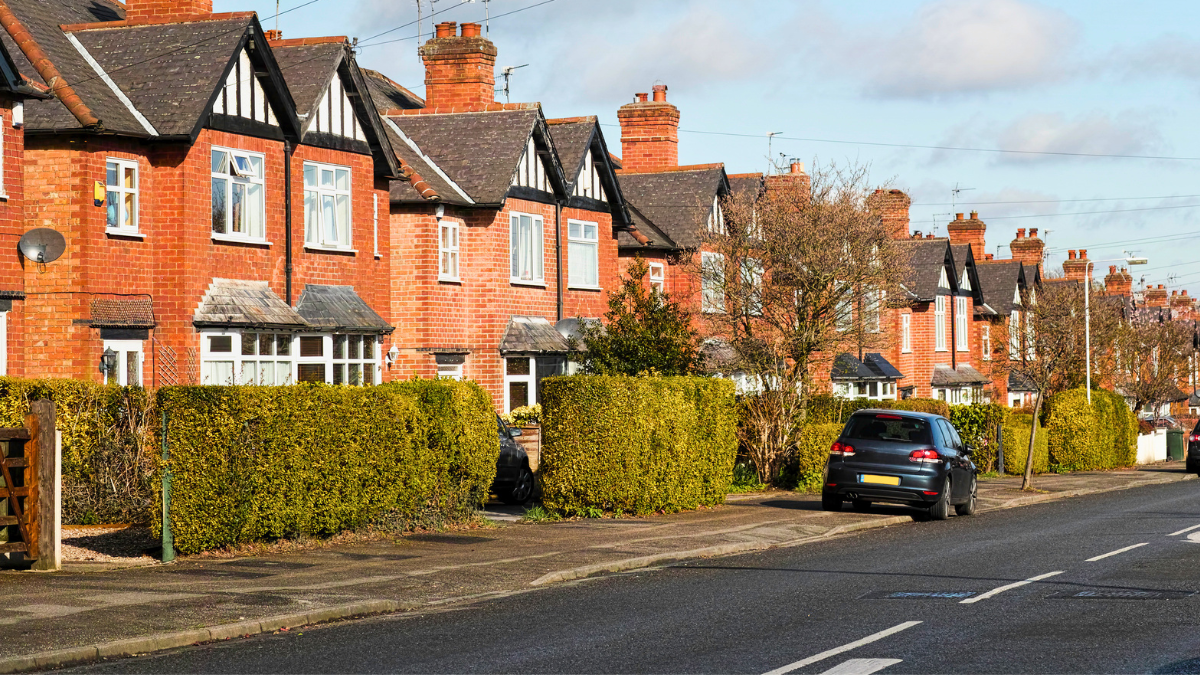
A homeowner removes the front wall, paves the garden and begins parking a car there. The pavement and kerb outside remain untouched.
A neighbour then parks on the road across the opening. The homeowner cannot drive in and may be unable to drive out.
It looks like a blocked driveway. Legally, however, the important feature is not the paving, gates or empty space in the front garden. It is the public footway between the road and the property.
Where there is no dropped kerb or properly constructed vehicle crossing, parking across the entrance will not normally amount to the specific civil parking contravention of parking beside a dropped footway. The homeowner may also have no lawful right to drive regularly over the ordinary pavement.
That does not give drivers complete freedom to park badly. Yellow lines, parking bays, pavement-parking controls, dangerous parking and unnecessary obstruction may all lead to enforcement.
During my years in legal practice, I found that parking disputes often began with both neighbours feeling that the answer was obvious. One saw an unmistakable driveway. The other saw an unrestricted piece of public road. In law, appearances are not always decisive.
This guide explains the rules applying in England and Wales.
Quick answer: Can someone park across a driveway without a dropped kerb?
Parking across a paved front garden with an ordinary full-height kerb is not normally the dropped-footway parking contravention under section 86 of the Traffic Management Act 2004.
The council will therefore not usually be able to issue a Penalty Charge Notice merely because the vehicle is outside what the householder calls a driveway.
Other restrictions may still apply. A driver must obey yellow lines, parking-bay restrictions, clearways and other traffic controls. They must not park dangerously or cause an unnecessary obstruction.
The Highway Code also advises drivers not to park in front of an entrance to property. That advice does not, by itself, make every such instance a parking offence. (gov.uk)
A paved front garden is not the same as a vehicle crossing
Paving the front garden can create an off-road parking area or hardstanding within the homeowner’s land.
It does not create a right to drive across the public pavement or verge.
The highway land outside the property remains under the control of the highway authority. A vehicle crossing—commonly called a dropped kerb—normally involves lowering the kerb and strengthening or reconstructing the footway so that it can bear vehicle weight without damaging the surface, underground services or pedestrians’ route.
Removing a wall, installing gates or laying paving behind the boundary does not alter the legal status of the pavement.
A homeowner may therefore have a perfectly lawful paved garden but no lawful means of driving a vehicle between it and the road.
What does section 86 say about dropped kerbs?
Section 86 of the Traffic Management Act 2004 prohibits parking in a special enforcement area beside a footway, cycle track or verge where:
- it has been lowered to meet the carriageway; or
- the carriageway has been raised to meet it,
for the purpose of assisting pedestrians, cyclists or vehicles crossing between the carriageway and neighbouring land.
Yellow lines and signs are not required for this particular prohibition.
Where the kerb and footway remain at their ordinary height, the statutory description is not met simply because the garden behind them resembles a driveway. (legislation.gov.uk)
Does the dropped kerb have to be authorised?
The wording of section 86 focuses on the physical lowering or raising and the purpose for which it was done. It does not expressly say that the crossing must have been formally authorised before the parking prohibition can apply.
That does not make an unauthorised alteration acceptable.
A homeowner cannot safely lower the kerb privately and then claim the full protection of an approved crossing. Unauthorised work to the highway may be reversed, and the council may recover its costs or take other enforcement action.
The practical distinction is therefore:
- a full-height, unaltered kerb will not normally fall within section 86; but
- the status of an apparently lowered but unauthorised kerb may require investigation by the council.
The reliable solution is an approved vehicle crossing, not a homemade substitute.
Can you park across a lawful dropped kerb?
Generally not where section 86 applies.
A council exercising civil parking-enforcement powers may issue a Penalty Charge Notice to a vehicle parked on the carriageway beside a dropped footway used for vehicle access.
Individual councils have different enforcement arrangements. Some patrol all dropped footways, while others ordinarily act outside individual residential driveways only after receiving a complaint from the occupier.
Can the homeowner park across their own dropped kerb?
Section 86 contains an exception where the vehicle is parked outside residential premises by, or with the consent of, the occupier.
The consent must not be given in return for payment, and the exception does not apply to a shared driveway. Separate parking restrictions—such as yellow lines or a suspended bay—may still prohibit the parking. (legislation.gov.uk)
A neighbour should not assume that every vehicle across a residential dropped kerb is unlawfully parked. It may belong to the occupier or an authorised visitor.
What does the Highway Code say?
Rule 243 says drivers should not stop or park in front of an entrance to property.
The rule uses the words “DO NOT”, rather than “MUST NOT”. That distinction matters. “Do not” rules express road-safety guidance but are not necessarily backed by a specific offence covering every breach.
Rule 242 is different. It says:
You MUST NOT leave your vehicle or trailer in a dangerous position or where it causes any unnecessary obstruction of the road.
That rule refers to section 22 of the Road Traffic Act 1988 and regulation 103 of the Road Vehicles (Construction and Use) Regulations 1986. (gov.uk)
Parking across an entrance can therefore be inconsiderate without automatically being an offence. It may become enforceable where the vehicle is dangerously positioned, causes a genuine unnecessary obstruction or breaches another parking restriction.
Is driving across the pavement without a dropped kerb illegal?
A homeowner should not treat an ordinary pavement as a free vehicle crossing.
Rule 145 of the Highway Code says that motorists must not drive on or over a pavement, footpath or bridleway except to gain lawful access to property or in an emergency. (gov.uk)
Local highway authorities consistently require a properly approved vehicle crossing before a footway or verge is used regularly for access.
How does section 184 work?
Section 184 of the Highways Act 1980 applies where an occupier habitually drives, or permits vehicles to be driven, across a kerbed footway or verge adjoining premises.
The highway authority can serve a notice:
- requiring the use to stop; or
- imposing conditions governing the crossing.
It may also arrange for a proper crossing to be constructed and recover the reasonable cost from the relevant owner or occupier.
Knowingly using the crossing in breach of conditions imposed under section 184—or knowingly allowing that use—is a criminal offence.
It is therefore slightly misleading to describe section 184 as creating one instant automatic offence whenever a tyre passes over an ordinary pavement. It provides a structured enforcement regime, backed by criminal sanctions for breach of imposed conditions.
The practical message remains straightforward: regular use of an unstrengthened footway is not a lawful substitute for applying for a vehicle crossing.
Who pays if the pavement is damaged?
The person responsible may be liable for damage to paving, kerbs, verges or underground services.
Ordinary footways are not necessarily constructed to withstand repeated vehicle movements. Repairs can involve more than replacing a cracked paving slab if utility covers, pipes or cables beneath the surface have been affected.
What if a car is blocking the entrance?
The answer depends partly on whether a vehicle is trying to enter or leave.
Preventing a vehicle from driving onto the property
Where the garden is empty and there is no dropped kerb, parking across the opening will not ordinarily amount to the section 86 contravention.
The homeowner may also have no lawful vehicle access over the pavement. The council or police is therefore unlikely to treat the situation in the same way as obstruction of an approved driveway.
The vehicle can still be dealt with if it breaches yellow lines, a controlled bay, another restriction or the general law on dangerous or obstructive parking.
Preventing a vehicle from leaving
Police forces often treat a vehicle that prevents somebody from driving out of a driveway more seriously than one merely preventing entry.
For example, Metropolitan Police guidance says that blocking entry is not normally a police matter, whereas preventing the occupier’s vehicle from leaving may justify assistance. Avon and Somerset Police similarly accepts reports where parking prevents a person from leaving a driveway. (met.police.uk) (avonandsomerset.police.uk)
That is not a guarantee that the vehicle will be ticketed or removed.
Police must consider whether an actual unnecessary obstruction or danger exists. The fact that the homeowner’s car reached the garden only by crossing an unauthorised pavement may complicate the position considerably.
Anyone genuinely blocked in should contact the relevant police force through its online reporting service or non-emergency number. Use 999 only where there is an immediate danger or emergency.
Does the neighbour have a right to park there?
Not in the sense of owning or reserving the road space.
A homeowner does not own the piece of public highway outside their house. Neither does the neighbour.
A driver may be able to park there lawfully where:
- there is no parking restriction;
- the vehicle is correctly positioned;
- it does not create danger or unnecessary obstruction; and
- no dropped-footway prohibition applies.
That is different from having a permanent entitlement to the space.
The homeowner cannot reserve it using cones, bins or other objects. Placing unauthorised items on the highway may itself amount to an obstruction. My guide to a neighbour saving a parking space with cones explains the position.
What about yellow lines and parking bays?
The absence of a dropped kerb does not override ordinary parking controls.
Single and double yellow-line restrictions normally apply from the centre of the road to the highway boundary, including the adjoining pavement and verge.
A vehicle may also contravene:
- permit or residents’ parking restrictions;
- limited-waiting bays;
- loading restrictions;
- clearways;
- school entrance markings;
- pedestrian-crossing restrictions;
- pavement-parking controls; or
- the double-parking prohibition.
The correct enforcement body depends on the restriction. Councils generally deal with civil parking contraventions, while dangerous or genuinely obstructive parking may remain a police matter.
Can you put up a “keep clear” sign?
A sign on the homeowner’s gate may alert drivers to the requested access, but it does not create a statutory parking restriction.
Nor can a homeowner paint lines or words on the road.
Some councils provide a white access-protection marking—often called an H-bar—across an approved dropped kerb. This is generally advisory rather than a separate enforceable parking restriction. Its purpose is to make the entrance more obvious.
A white line is not a substitute for obtaining an approved dropped kerb.
Can the homeowner use a portable kerb ramp?
Not safely without the highway authority’s approval.
A loose rubber, timber or metal ramp placed in the gutter or against the kerb can:
- obstruct the highway or drainage channel;
- create a trip or cycling hazard;
- move into the carriageway;
- damage the kerb; and
- interfere with road drainage.
It does not convert the pavement into an approved vehicle crossing.
The homeowner should not alter the kerb, pavement or verge personally. Highway work must be authorised and carried out according to the local authority’s requirements.
How do you apply for a dropped kerb?
The application is made to the relevant highway authority. GOV.UK provides a service to find the correct council and apply for a dropped kerb. (gov.uk)
The council may consider:
- whether there is enough room to park completely within the property;
- pedestrian and road safety;
- visibility;
- proximity to junctions and crossings;
- street trees and street furniture;
- drainage;
- the number and width of nearby crossings; and
- the condition and construction of the proposed hardstanding.
Local minimum dimensions and design requirements vary. The vehicle must normally fit within the property without overhanging the pavement.
Permission is not guaranteed simply because neighbouring properties have crossings. Their approvals may have been granted under different policies or physical conditions.
Is planning permission also required?
Sometimes.
A dropped kerb or vehicle crossing is not always a planning matter, but planning permission may be required where, for example:
- access is onto a classified or trunk road;
- the property has been divided into flats;
- structural or retaining work is proposed;
- a boundary wall requires separate permission;
- the property is listed or within a protected area; or
- permitted-development rights have been removed.
Highway approval and planning permission are separate. Obtaining one does not automatically provide the other. The Planning Portal provides current guidance on planning permission for dropped kerbs. (planningportal.co.uk)
What about paving the front garden?
The paving itself may require planning permission.
In England, traditional impermeable surfacing covering more than five square metres generally requires permission unless the runoff is directed to a permeable area within the property. Permeable paving is treated more favourably.
Wales has corresponding rules requiring suitable permeable construction or drainage arrangements. The Welsh Government explains the current position in its guidance on planning permission for paving a front garden. (gov.uk) (gov.wales)
Surface water should not simply be discharged across the pavement and into the road.
What should the homeowner do?
The most effective answer is to regularise the access.
Check whether a vehicle crossing is likely to meet the council’s requirements before spending more money on paving, gates or landscaping. Apply for planning permission first where the authority requires it.
Until approval is obtained:
- do not alter the pavement or kerb;
- do not use loose ramps;
- avoid driving regularly across the ordinary footway; and
- do not reserve the highway with cones, bins or homemade markings.
Where somebody has parked across the entrance, first check whether another restriction is being broken. If the vehicle is genuinely preventing a car from leaving and appears to cause an obstruction, report the facts accurately to the relevant police force.
Do not describe the crossing as council-approved if it is not.
What should the person parking do?
The fact that there is no dropped kerb does not make deliberate confrontation wise.
Rule 243 of the Highway Code advises against parking in front of property entrances. A driver should also consider whether a vehicle may need to leave, whether the parking narrows the road dangerously or whether pedestrians and emergency services can pass safely.
A driver who is unsure should park elsewhere rather than try to establish a point of law with two tonnes of metal.
Being technically outside the section 86 prohibition is of little comfort if the parking causes an actual obstruction or turns a minor disagreement into years of hostility.
For broader problems involving street parking, private spaces and shared access, see Parking disputes with neighbours and Shared driveway problems.
Frequently asked questions
Is it illegal to park across a driveway without a dropped kerb?
Not automatically.
The specific section 86 prohibition ordinarily requires a lowered footway, lowered verge or raised carriageway meeting the statutory description. Other parking offences and restrictions may still apply.
Does opening the front wall create a driveway?
It may create an entrance into the private garden, but it does not create a lawful vehicle crossing over the public pavement.
Can the council issue a PCN?
Usually not merely for blocking an entrance behind a normal full-height kerb.
The council may issue a PCN if another enforceable restriction applies.
What if the kerb has been lowered privately?
An unauthorised lowering creates a separate highway issue. Report the circumstances to the council rather than assuming it is legally equivalent to an approved crossing.
Can I park across my own dropped kerb?
The Traffic Management Act contains an exception where a vehicle is parked outside residential premises by or with the occupier’s consent.
The exception does not apply to shared access, consent given for payment or separate restrictions such as yellow lines.
Does the Highway Code make parking across any entrance illegal?
No.
Rule 243 advises drivers not to park in front of an entrance. An offence may arise where the vehicle is dangerous, creates unnecessary obstruction or breaches another legal restriction.
Can the police remove a vehicle blocking me in?
Potentially, depending on whether the vehicle is causing a genuine obstruction and on the police force’s policy and resources.
There is no automatic removal service for every driveway complaint.
Can I move the parked car myself?
Do not push, tow, damage or interfere with another person’s vehicle.
Moving it may expose you to liability for damage and can create additional safety and legal problems. Report an enforceable obstruction to the appropriate authority.
Can I put cones outside the entrance?
Not without lawful authority.
The road remains public highway, and cones or bins used to reserve it may themselves obstruct public use.
Will a white H-bar prevent parking?
It may discourage parking but is generally advisory. It does not create the dropped footway or replace the underlying legal restriction.
Can the council refuse my dropped-kerb application?
Yes.
Safety, visibility, garden depth, trees, street furniture, drainage and the cumulative loss of on-street parking may all be relevant under the council’s local policy.
What if neighbours already have dropped kerbs?
That does not guarantee approval.
Policies, road conditions and planning controls may have changed, and each application is assessed according to its own location and circumstances.
The practical distinction: A parking area is not a vehicle crossing
The simplest way to understand the law is to separate the two pieces of land.
The paved garden belongs to the homeowner. The pavement and kerb do not.
Work inside the garden cannot, by itself, create a right to drive across the public highway or prevent other drivers parking on the road.
Equally, the absence of a dropped kerb is not permission to park dangerously or trap another vehicle without consequence. The actual position of the car, the existence of other restrictions and the degree of obstruction still matter.
In my experience, these disputes became much clearer once the parties stopped debating whether the garden “obviously looked like a driveway” and looked instead at the status of the crossing.
Where no approved crossing exists, the lasting solution is usually to apply for one—not to conduct a daily argument over the parking space outside.
If the parking problem has developed into a continuing conflict, my guide to resolving neighbour disputes explains how to approach the neighbour, record repeated incidents and involve the correct authority without escalating matters unnecessarily.
Last legally reviewed: 24 July 2026
This article is based on general principles of English and Welsh law, is intended for informational purposes only, and does not constitute legal advice or establish a professional relationship.